
It may sound a little strange but the first wagon I ever bought nearly ended my collecting career. It was one of my better finds with maybe 95-98% of its original paint. It was, and remains, a phenomenal survivor in amazing condition. In those early days of learning, it was a great piece to study and absorb. So, what was the problem? It all boiled down to my naivety. Ultimately, the condition was so strong and my experience so weak that I wrongly expected to find the same quality everywhere I went. That ridiculous assumption would be the first of many lessons these old machines have doled out.
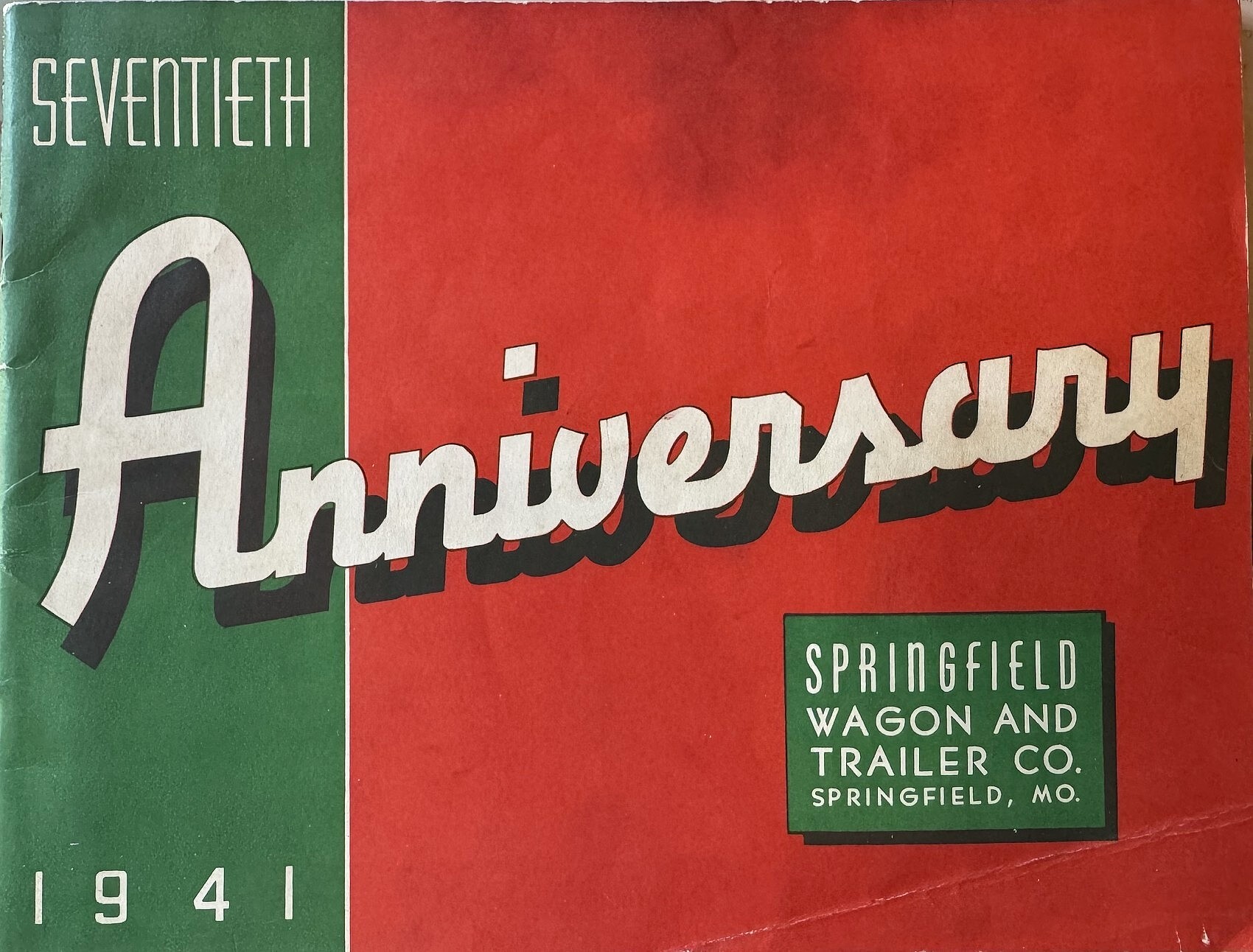
Original literature, information, and imagery in our Wheels That Won The West® Archives stretches from the early 1800s through the mid-1900s. It is a treasure trove of materials helping identify lost parts of the past.
Like most folks, I still have an eye for pieces with significant amounts of original paint. However, as time has progressed, my 'collector code' has changed. I now tend to focus on overall levels of rarity. It's a process which includes more elements than a simple glance at remaining paint. What defines the rarer pieces? As I explained years ago in my 'Borrowed Time' book, in addition to CONDITION, other elements that can point to desirable pieces include AGE, ORIGINALITY, COMPLETENESS, FEATURES, DESIGN, LOCATION OF MANUFACTURE, BRAND, and PROVENANCE. Of course, there's also plenty of room left for INDIVIDUAL PREFERENCE. For me, the more of these points that stand out in a single vehicle, the more likely it is to attract strong attention.
I'll give you an example. Years ago, I heard of a wagon being sold at what amounted to a tractor auction. As I reviewed online photos, a quick glance showed an old, dirty, and unkept wagon. After closer review, though, I started to see bright orange paint and pinstriping. The edges of the felloes on the running gear looked crisp and undamaged... kinda like it wasn't ever used or used very little. Iit appeared that some careful cleaning was all this piece needed to be a showstopping survivor. Additionally, the brand was one that still gets a lot of attention in the wagon world. It was an original, triple box Peter Schuttler with brakes, folding endgate, spring seat, and footboard. Plus, it still had the original tongue, doubletree and singletrees. That correct completeness rarely happens. So, I decided to roll the dice and travel to the auction. I arrived the day before the sale and was immediately overwhelmed. There were more iron-wheeled tractors and hit and miss engines than I could count. Off to itself was the wagon I'd been looking at online. I thought to myself, 'Surely, no other wagon folks would be here.' This was clearly a tractor auction... AND it's in the middle of nowhere! This was yet another lesson I learned. Just saying the word 'auction' seems to bring out wagon enthusiasts faster than a hound on a jackrabbit!
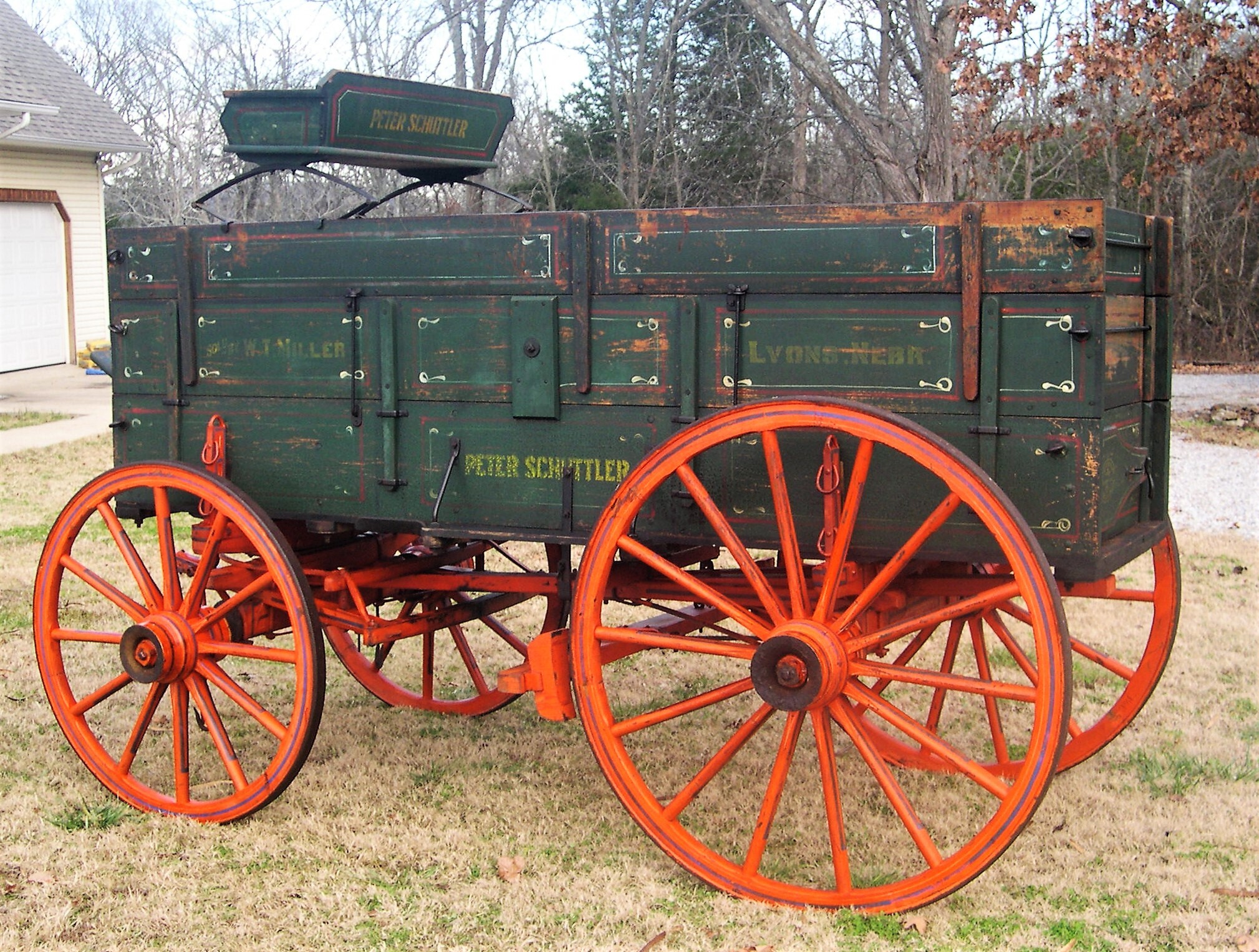
So, when the auctioneer set in the bid, folks instantly and feverishly began bidding on the wagon. Hey! I wanted this! Ha! So, why all the energy? It was simple. The collector stars were aligning... CONDITION, BRAND, ORIGINALITY, FEATURES, COMPLETENESS, PROVENANCE, and INDIVIDUAL PREFERENCE were literally igniting the pace of the auction. The strongest forms of rarity always include more than CONDITION alone. In fact, it's possible that, in some cases, the condition of the piece might be nearly irrelevant. Here's what I mean...

This section of a promotional flyer from Joseph Murphy's wagon works dates to 1881. It is one of the more scarce artifacts in the Wheels That Won The West® collection.
I know a number of folks - including myself - that would love to find a Murphy wagon. They were built in St. Louis by Joseph Murphy and later by his sons. The wagons were built from 1825 until around 1900. According to Mr. Murphy, the brand produced roughly 200,000 wagons in that time frame. As of this writing, not one has been located and conclusively identified. That's Zero, Nada, Zip, Goose Eggs! Not one! There's more evidence for Santa Clause's existence than a Murphy wagon! Driving a lot of the Murphy lore is the distinction the builder acquired while building huge freight wagons for the Santa Fe Trail. Today, this history and legacy keep the brand at the top of every western wagon wishlist.
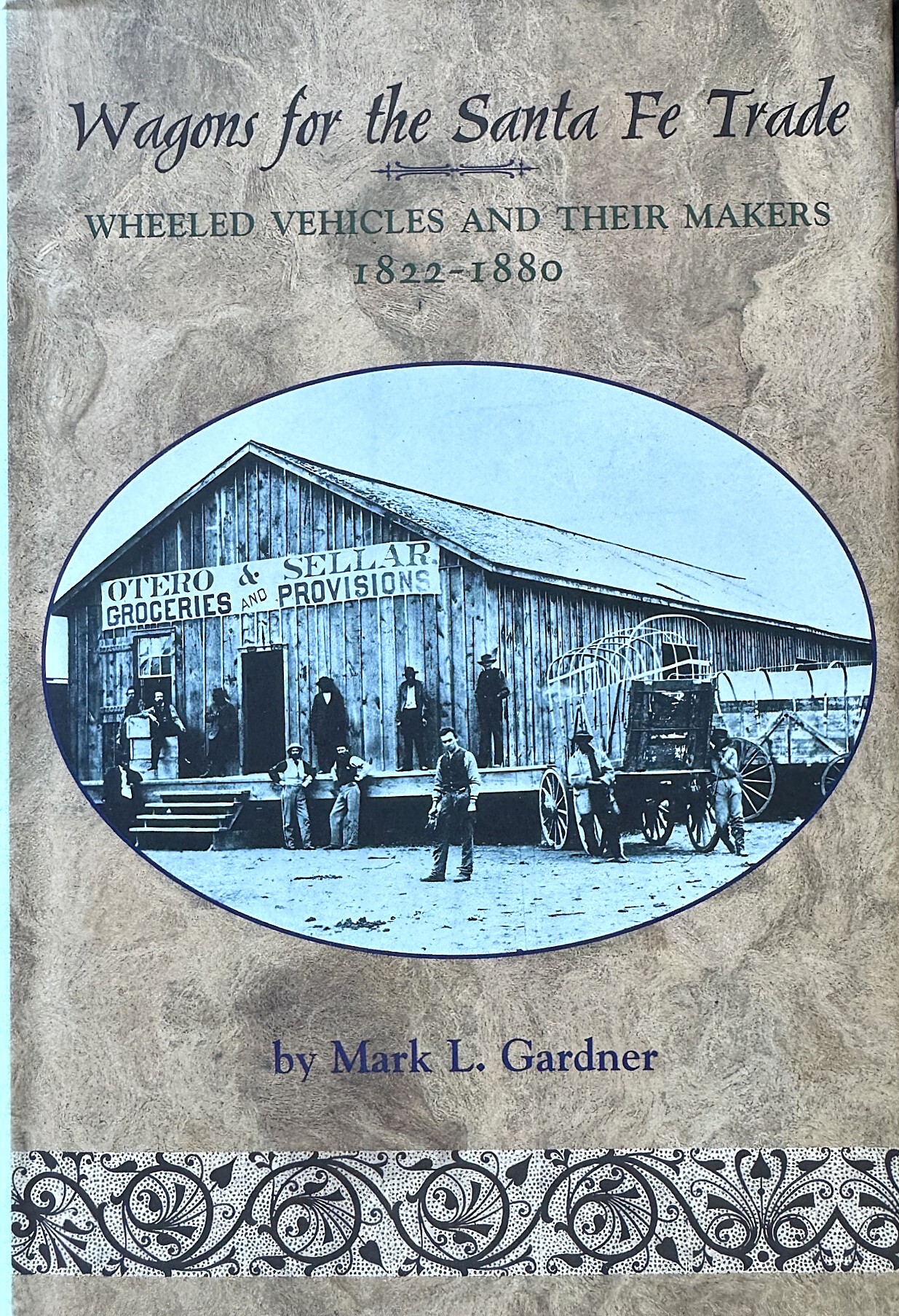
Mark Gardner's book, 'Wagons For The Santa Fe Trade," is also a good reference related to early western wagons.
From my perspective, even wood-wheeled survivors in poor condition can be highly desirable if the brand and age can be tied to days of the Old West. Why? Because notable names on wheels that were present prior to the 1890s are extremely scarce! Brands like Whitewater (not Montgomery Ward pieces), Kansas, Jackson, Murphy, Espenschied, and other mega-brands confirmed to have been built during the frontier-era are not only highly desirable but equally tough to find. In fact, I know of no early survivors of the brands I just mentioned. Yet, they are repeatedly called out in early newspaper accounts and other articles as being among the more popular brands during the 1850s, 60s, 70s, and 80s. In fairness, others were also profiled as favorites. Names like Peter Schuttler, Bain, Newton, Studebaker, Milburn, Moline, Mandt, Kentucky, Fish Bros. Cooper, Mitchell, Stoughton, Weber, Abbot-Downing,M.P. Henderson, Luedinghaus, and more were also among the early brands seen on the frontier. Certainly, this is not a complete list, but it does give us an idea of the value applied to quality transportation even in the 1800s.
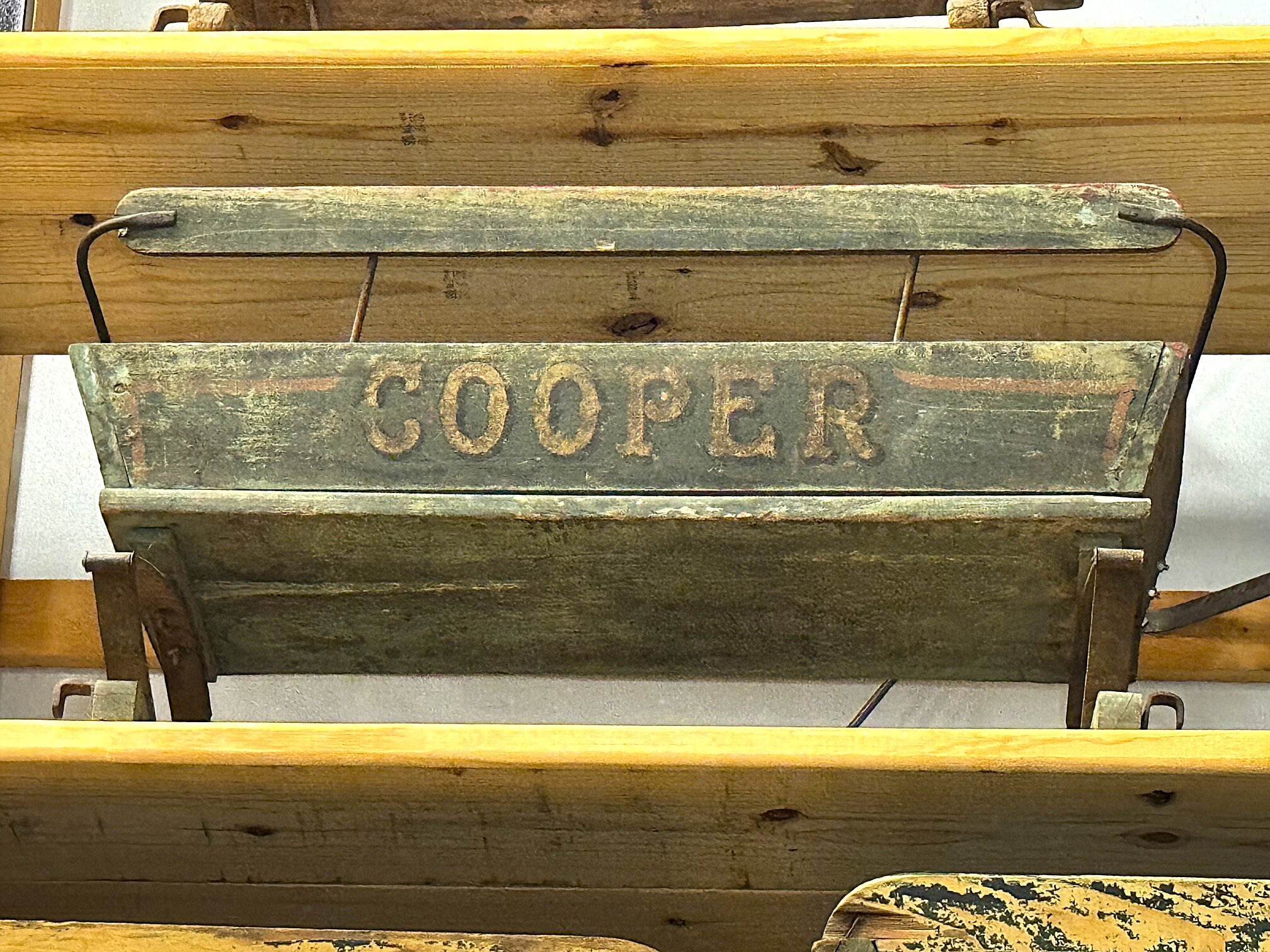
A.A. Cooper in Dubuque, Iowa achieved a strong reputation for his wagons during the days of the Old West. This brand, from any era, is tough to come across in unrestored condition today. Shown is an original, Cooper spring seat from the early 1900s.
At the end of the day, most people can recognize a wagon with better paint and solid wheels - although some have trouble identifying a repainted piece or other collecting cues mentioned above. It's a point that shouldn't be missed. Why? Because, if you learn how to value the other elements in collecting and avoid the trap of homing in on CONDITION alone, you just might walk away with a bargain - and a story - that you'll always be proud to share.
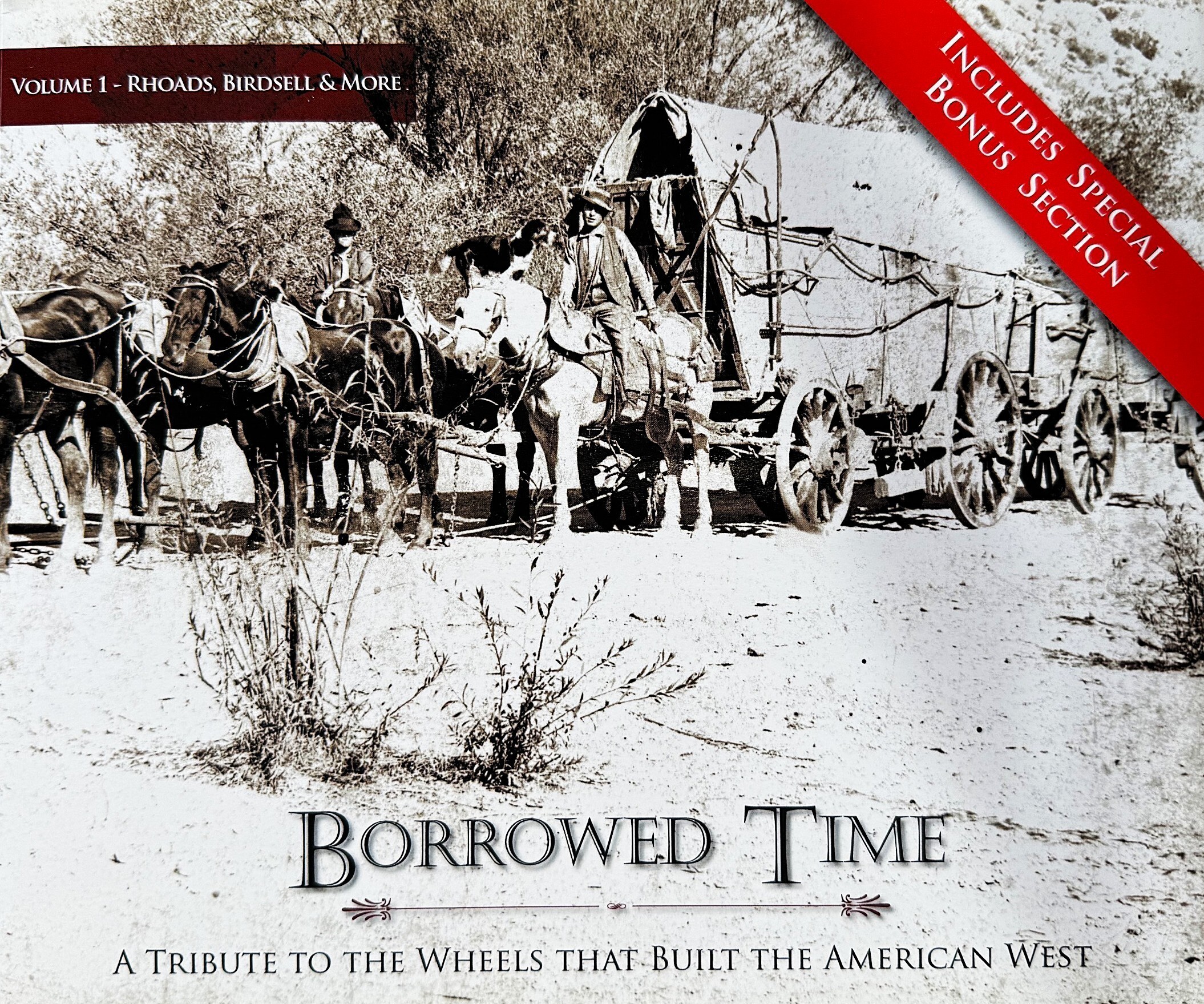
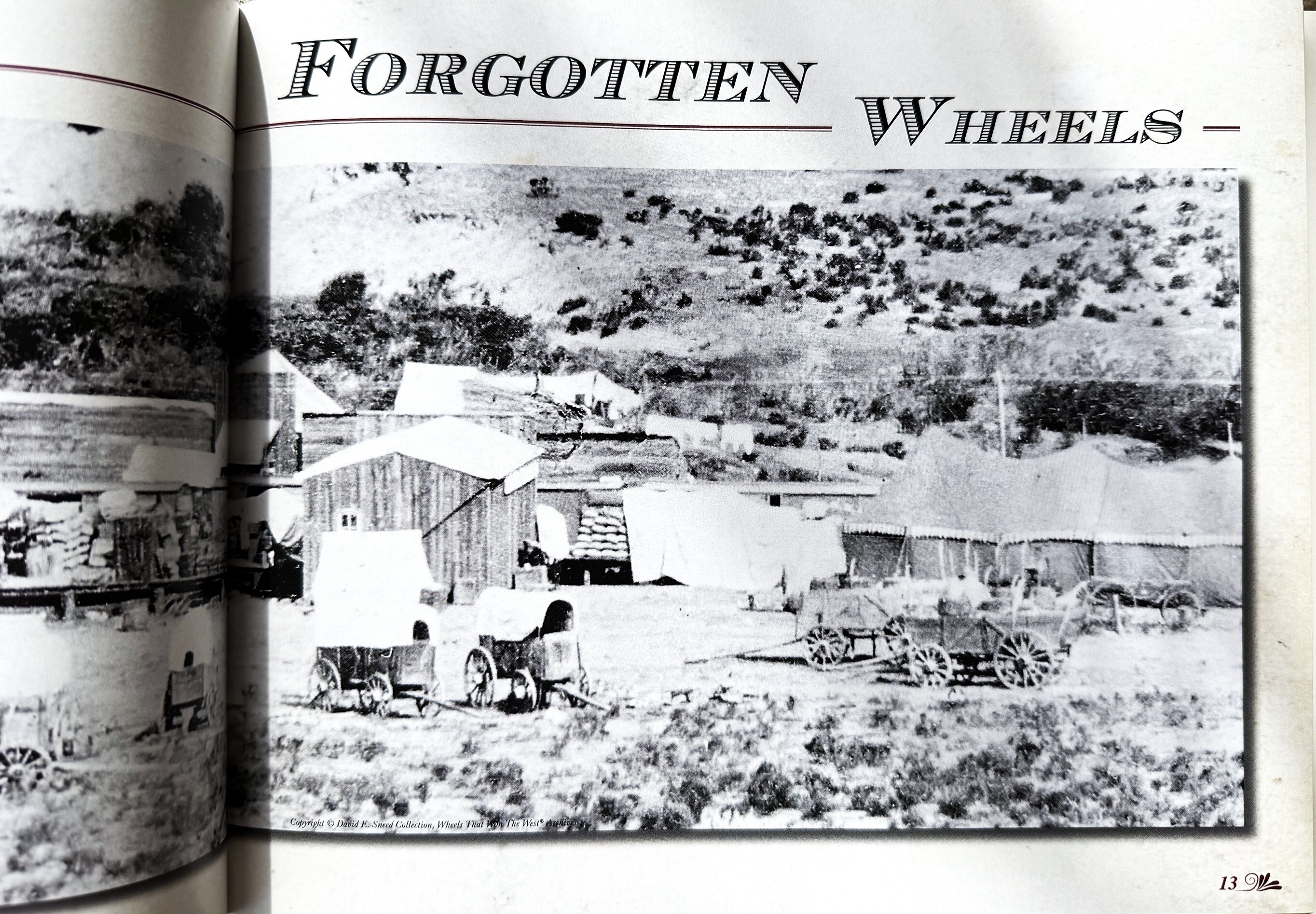
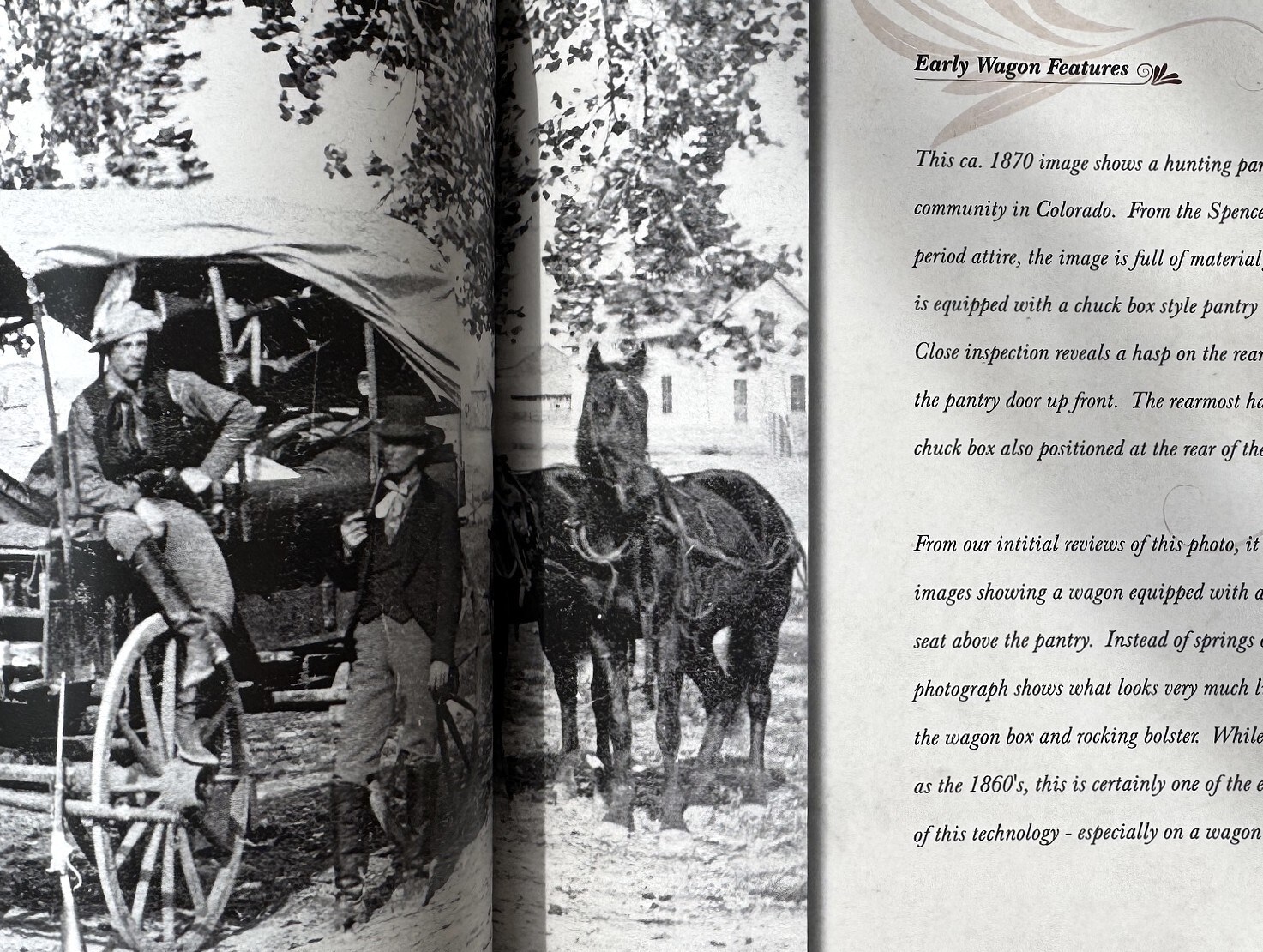
The images immediately above and below are excerpts photographed from the 'Borrowed Time' book. Copyright © David E. Sneed, All Rights Reserved.
BORROWED TIME BOOK
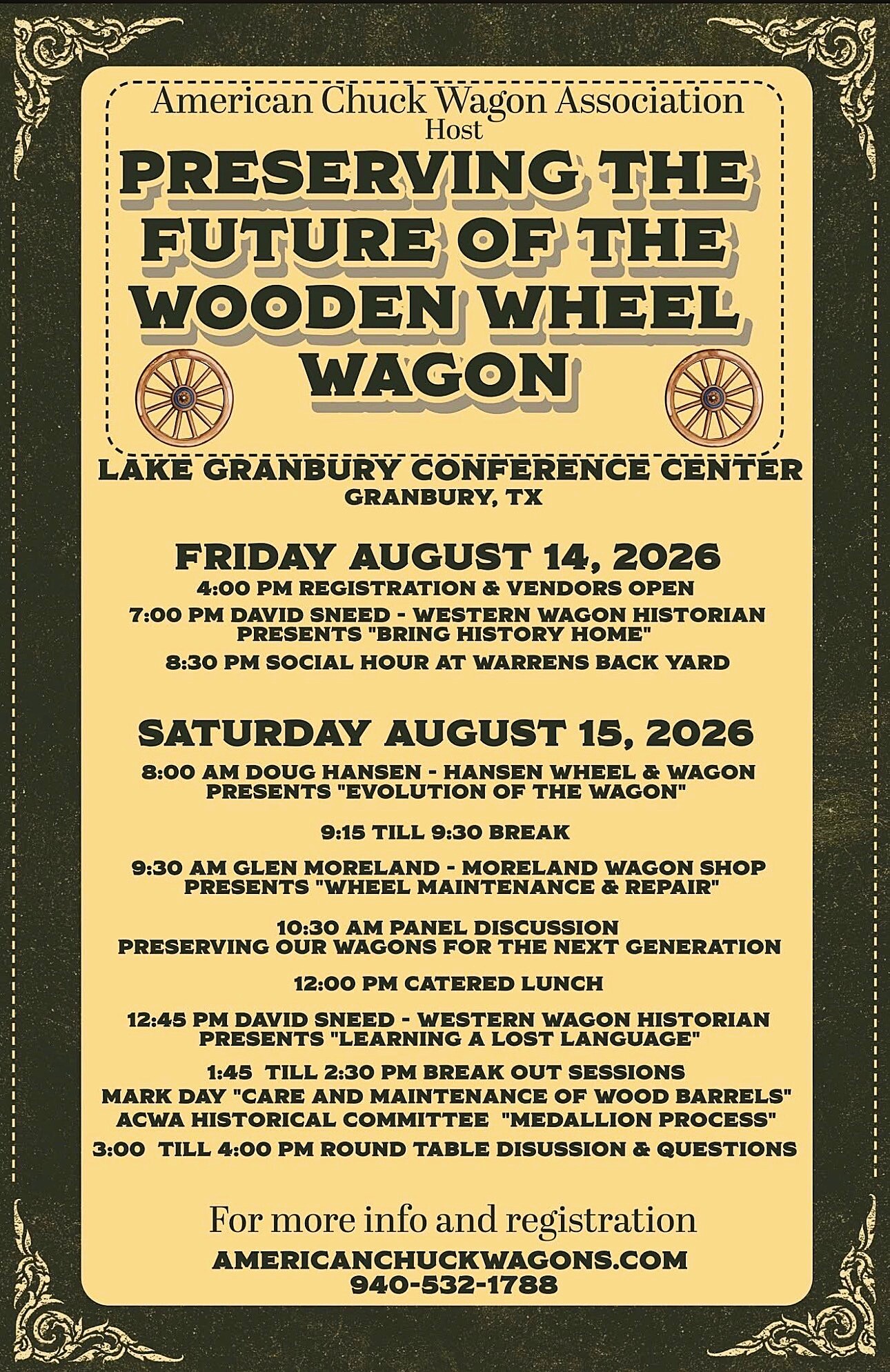
Earlier in this post, I mentioned the 'Borrowed Time' wagon book that we printed years ago... 2011 to be exact. As a privately-published piece, that run of books was very short and we did not plan to produce any additional copies. However, we continue to receive questions about how to find this work and have decided that since this is the 15th Anniversary of its printing as well as the 250th Birthday of this great country of ours, we will produce a VERY FEW more. For those who have been asking, fair warning, these books will not last long. They are being sold on a first-come basis and when they're gone, they're gone. Borrowed Time includes 150 pages of details on wagon collecting, individual features, brands, misnomers, discoveries, and other details. It is not a comprehensive study as no single volume could contain that wealth of material. However, I do recommend it as an asset to any wagon enthusiast's library. We have started work on additional volumes, but 'Borrowed Time' is the first and will likely always be the scarcest. As long as these latest copies haven't sold out, we will try to have some at the ACWA event in Granbury, Texas in mid-August 2026. If you want to purchase one at the event, let us know soon enough and we'll do our best to hold it for you.
If you're remotely interested, I would recommend sending us an email asking for a copy to be reserved in your name. We will do that for a limited time. Just let us know if you want the book at the event or before. Our email is info@wheelsthatwonthewest.com Cost is $150 plus $20 shipping/packaging. We do accept checks. Of course, no shipping/packaging charges will apply at the Texas event. As always, feel free to reach out if you have any questions.
Have a great week!
David
Ps. 20:7