
Back in the 1980s, the Wendy's restaurant chain had a commercial poking fun at the 'processed' chicken from competitors. In that TV spot, the saying 'Parts is parts' became humorously associated with cheaper, less desirable chicken meals. Today, that same phrase has become a joke attached to anything considered insignificant.
To that point, much of the population still views America's antique wagons as if they're all in the same category. As long as it has the perceived 'look' of an Old West piece, that's all that seems to matter before some will throw down four and five figures for a set of wheels. A wagon's a wagon, right? Wrong. Clearly, some are well worth the investment but others... well, I've seen some doozies and no one wants to believe they got took for a ride. It's an incredible thought to ponder but I regularly hear of folks buying pieces and accepting tales for truth with nothing substancial to back it up. To borrow from the iconic phrase, some still believe that 'Parts is Parts' and all old wagons are comparable. In reality, that thinking can cause us to miss some of the most intriguing 'parts' of our past.
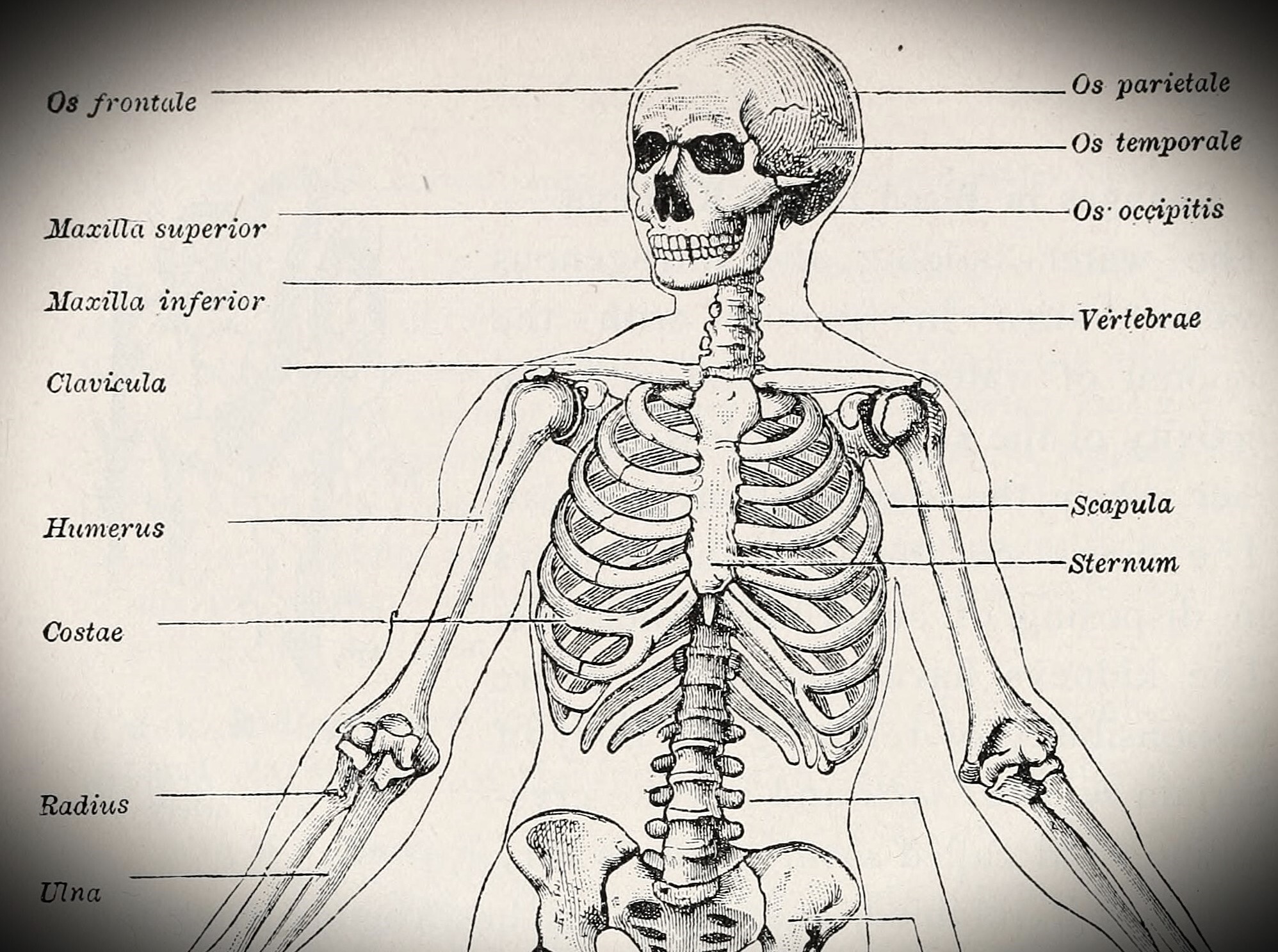
It's easy to see that parts are more than parts when we're studying human anatomy. Every piece has a function, purpose, and story to tell. It's a similar situation with early vehicle construction. The individual and collective whole of the parts provides a forensic analysis of sorts, allowing us to the opportunity to uncover previously unknown details like the maker, age, and other data. Image courtesy of Wiki Commons.
For me, the history of these aged transports is what I really enjoy collecting. Condition is important but I want a story to go with the piece. For that reason, to me, the brand and age can combine to be an enticing reason to invest in these rolling icons. To that point, over a dozen years ago, a friend reached out to let me know of an estate auction taking place in Iowa. What got my attention was a high-wheel (54-inch) wagon with remnants of maker markings on the sides. The old machine wasn't pretty by many collector standards. Some of the end gates were missing, the weathered running gear had been sloppily repainted eons ago, the tongue was cut, there was evidence of bug infestation, and the seat had been repaired; not exactly a rousing picture that would excite a lot of collectors. However, the old set of wheels turned my head because it carried a scarce and legendary name. Plus, every part of it said pre-1900. In fact, it was closer to the mid-1880s than the turn of the twentieth century. Confirmed pieces from that era are notoriously hard to find.
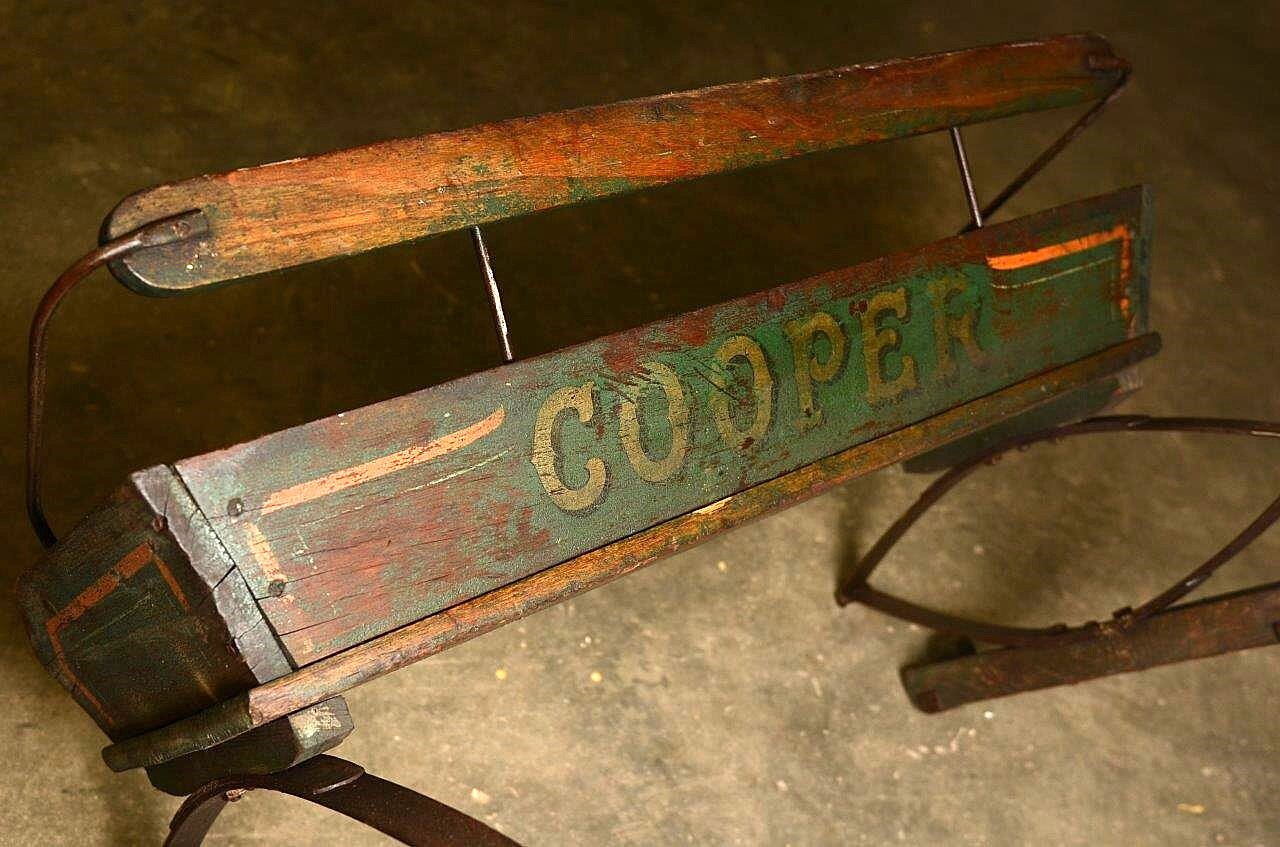
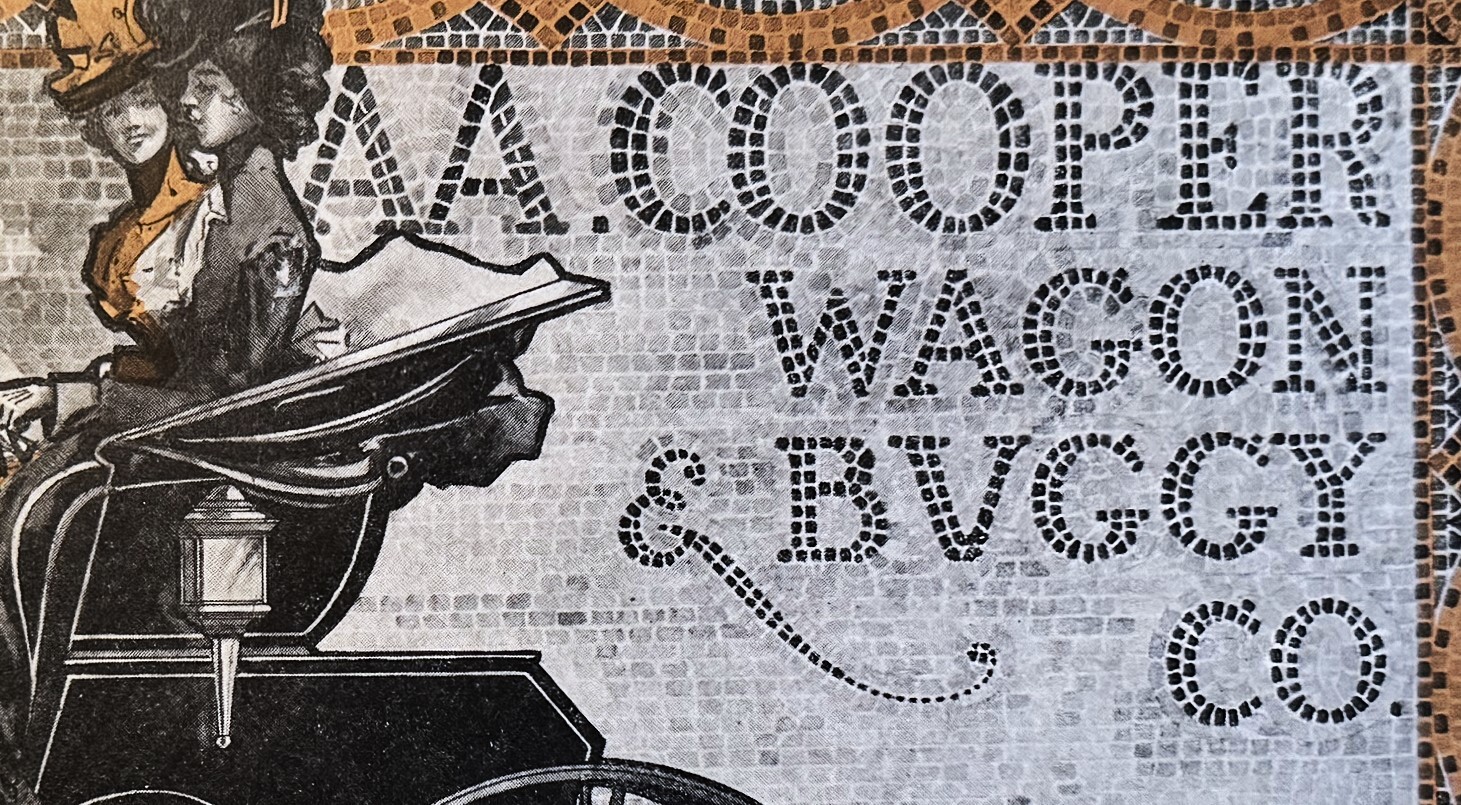
The brand logo and other signage on the box and gear was from the 'Cooper' firm out of Dubuque, Iowa. With beginnings dating to more than 175 years ago, Cooper is known to have been a preeminent western name in the 1800s. Still, the brand is far from an easy one to come across today. I wrote about this find over a dozen years ago, on November 6, 2013. From overall construction and original paint (under the overpaint) to the maker marked skeins, stenciling, and matched box/gear, there were many original 'parts' that held background details on this wagon. One of them was the 'cold-rolled' brake lever and ratchet. A circular washer on the unique system was abbreviated to read, "Cleveland Hardware Co." This company dates back to the 1870s but, in 1886, they began producing wagon and carriage hardware made from rolled steel blanks. Believe it or not, the successor to this firm is still doing business today within the holdings of the W. E. Hoban Company. According to their website, the firm "specializes in forging, machining, and assemblies with top-tier quality standards..." It's another interesting chapter in the highly-technical story of America's first transportation industry.
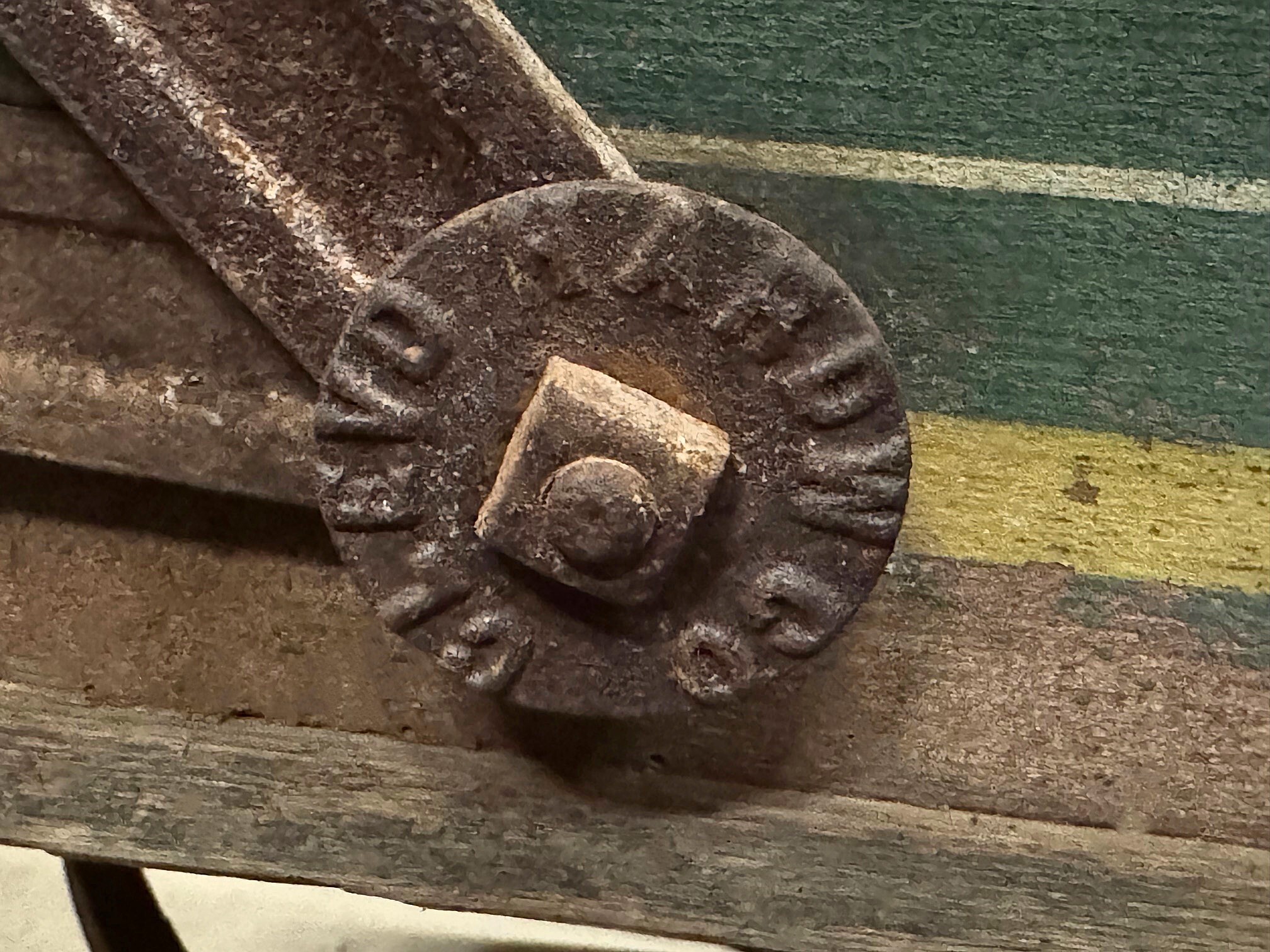
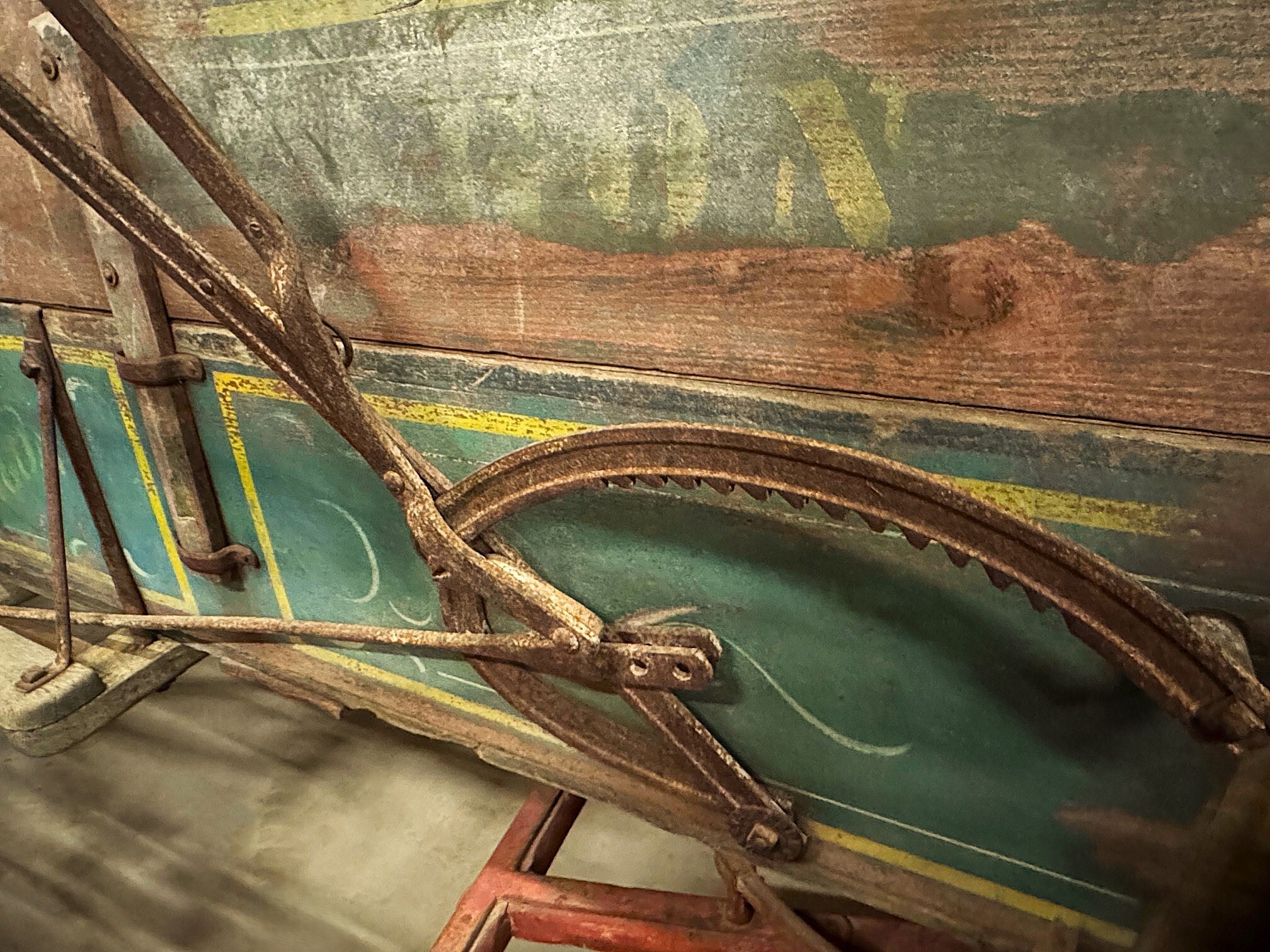
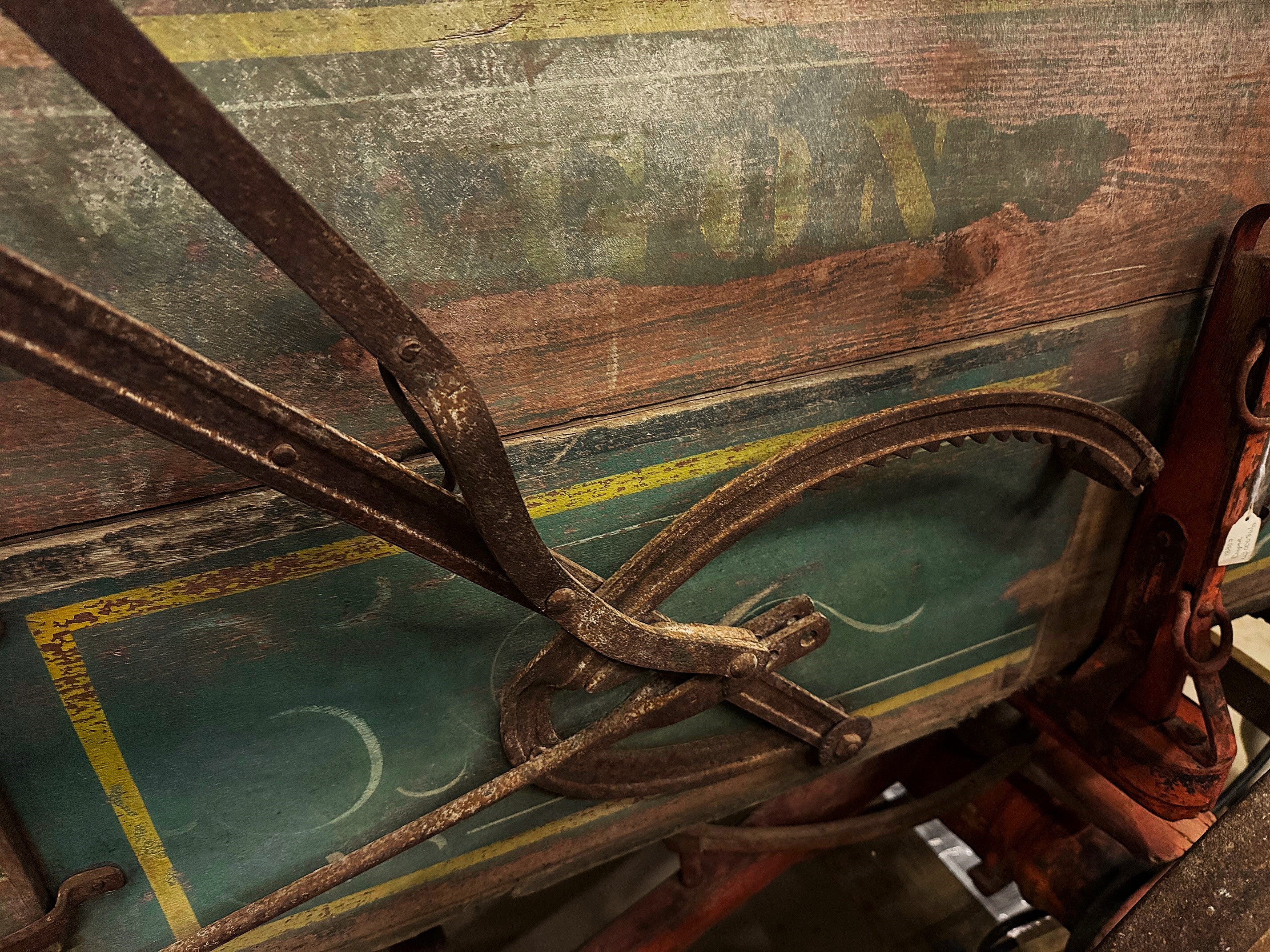
Again and again, small details can combine with other particulars to help narrow down otherwise 'impossible-to-know' facts. The actual brake design was patented in 1877. However, from additional research and data in our archives, we know that Cleveland Hardware began offering these brakes around 1886. While reviewing our original Cooper literature, we were able to look even closer by focusing on the changes in paint and construction features on this wagon brand during different time periods. The combination of design elements, construction methods, paint configurations, and the brake from Cleveland will put the vehicle solidly in the late 1880s to 1890 timeframe. Beyond speculation, the research puts the information in a supportable timeframe versus someone's best guess assurances. This is the kind of research we're pleased to offer to collectors who truly want to know what they have.
While this Cooper wagon never traveled more than a hundred miles from its birthplace (until I purchased it), it remains a scarce survivor...one that shows us exactly how things were done by this legendary brand near the end of the large scale Texas cattle drives as well as other historic western events like the surrender of Apache leader, Geronimo, the opening of the Oklahoma Land Rush, and death of outlaw Belle Starr. Also during this period, Buffalo Bill's Wild West shows were attracting millions as they portrayed the legacy of the American West.
Building an undeniable vehicle history takes work but it can add a tremendous amount of pride and lasting value to a set of wheels. On the flipside, not doing the homework or misinterpreting a vehicle can bring a heavy dose of regret. Even so, determining a build date requires strong familiarity with the evolution of technology, feature introductions, brand design developments, and recognizing potential inconsistencies in a survivor. Absent this knowledge, the door is wide open for a plethora of feral guesswork. Unfortunately, folks are errantly steered on a regular basis. The evaluation process we employ is one we've proven over a number of decades. Likewise, we've used it for virtually every vehicle in the Wheels That Won The West® collection and other private parties.
Ultimately, parts are always more than parts and understanding what a vehicle is saying doesn't have to feel like the ramblings and uncertainties of the Wild West - even if it's from that era.
Psalm 20:7