
Putting a square peg in a round hole... it's an old adage referencing the merging of uncomplimentary or unrelated things. I see this quite often in the world of antique wagons and stages. Sometimes, it's as simple as noticing a mismatched bolster on a wagon. At other times, the incongruencies are harder to see. Each of these circumstances can lead us into another world; a near-forgotten place where wheels were wood, tires were steel, and horsepower was just as critical for hauling loads as it is today.
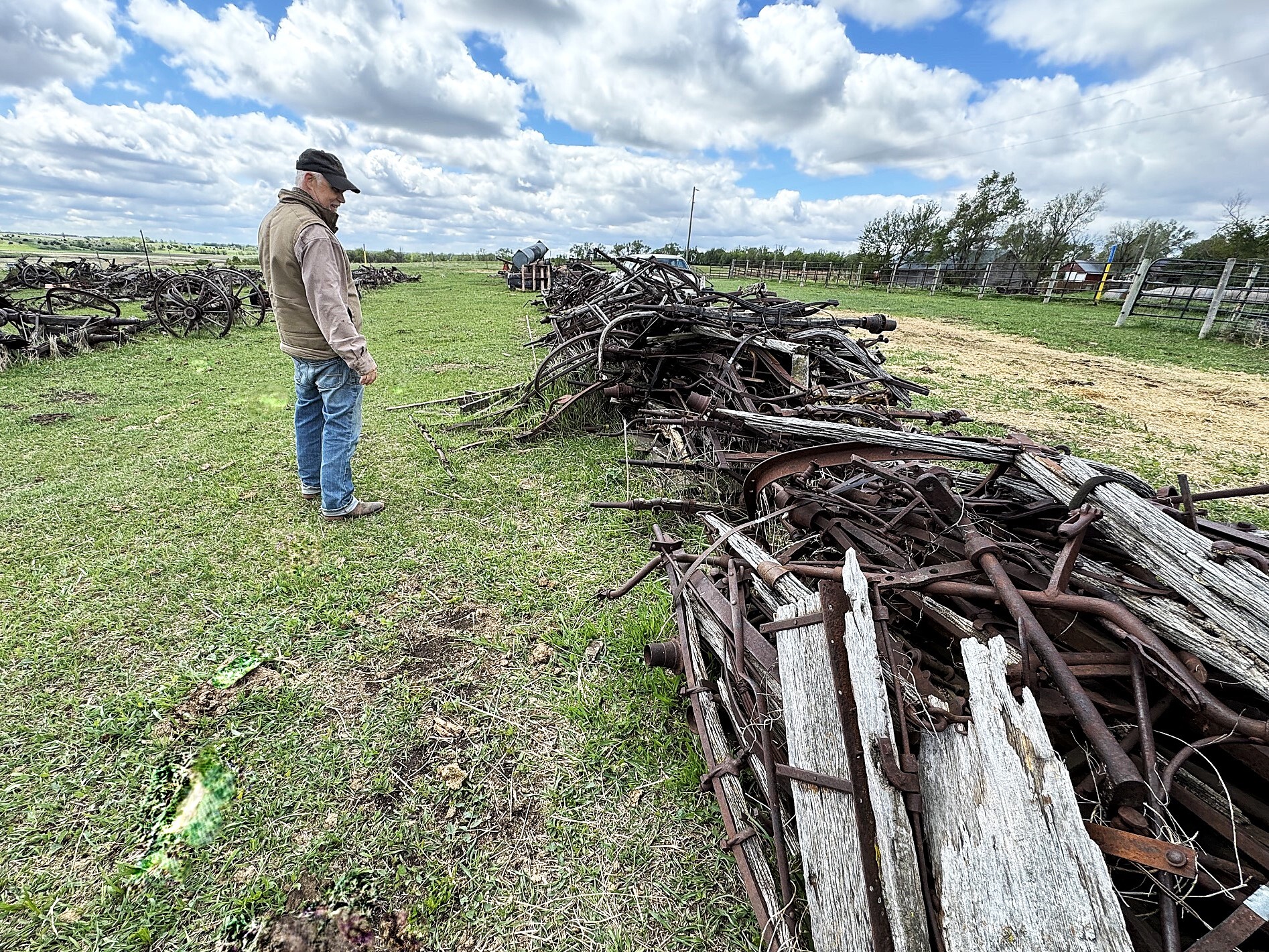
This week, we took another trip. This time, we headed out to pick up some early blacksmithing and wheelwright equipment. After some cleanup, the pieces will be part of the interpretive story shared in our Wheels That Won The West® collection. Since we were just a few hours away, I decided to pick up a few things at Hansen Wheel & Wagon Shop in South Dakota. While there, I noticed a few additions to their available wagons. I also spent a little more time exploring the vehicle boneyards Doug has on site. I can usually find something in the near-endless rows to occupy more time and study. Some things, though, are easy to miss. Why? Because there's so much to see, it's easy to overlook the details, taking in the whole forest while missing the special nature of an individual tree.
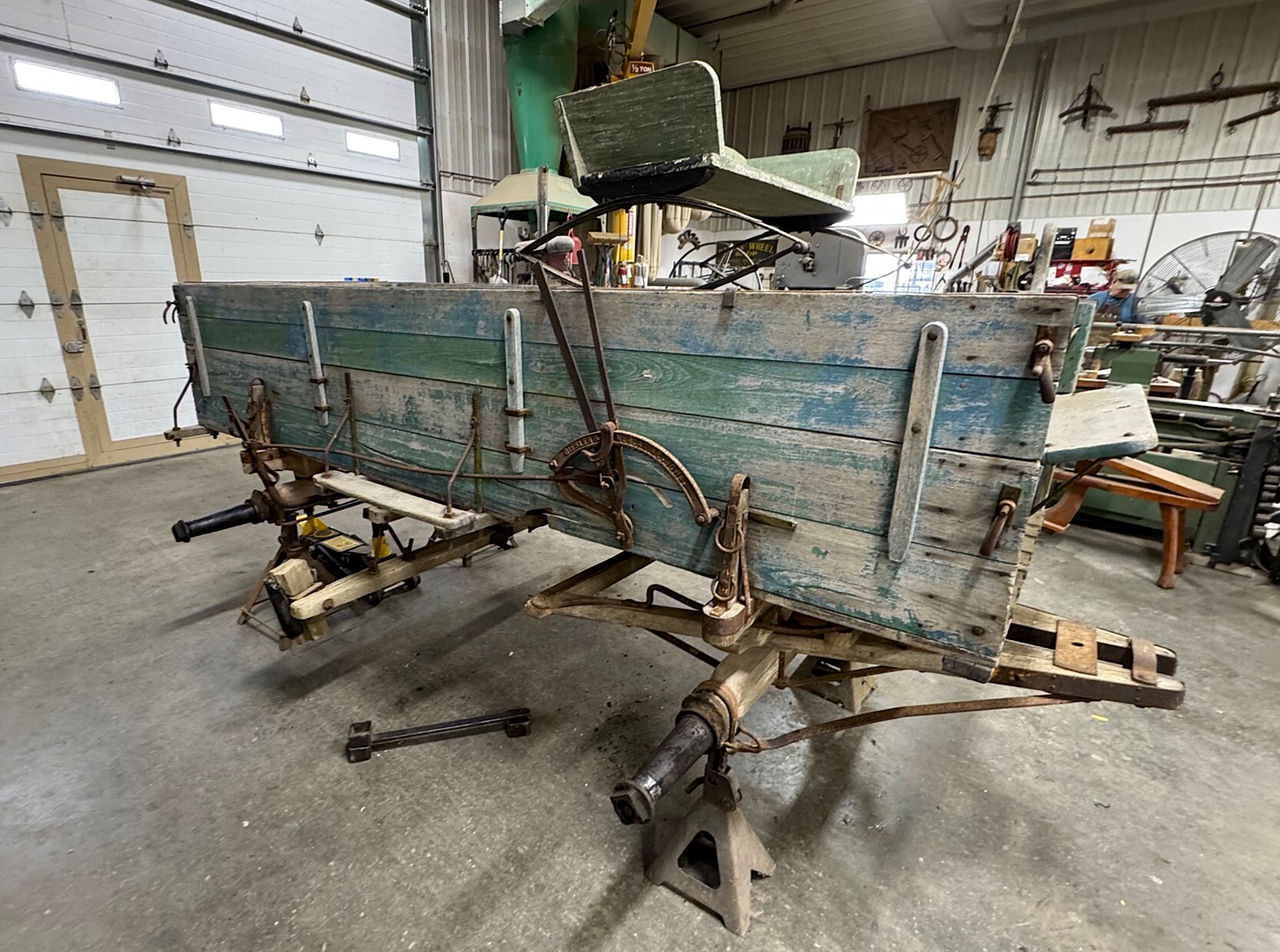
Just outside Hansen's main office, a stiff tongue wagon sat on jack stands with the wheels removed. It was a common-looking farm wagon that I could have easily overlooked. The time-worn, late model Owensboro wasn't exactly a museum piece. Most of the paint on this low-wheeled survivor was long gone. However, there were a few telltale signs sharing partial histories of the piece. Among those markers was the faded Owensboro logo on the box. It had a Geisler brake with squeeze handles and the rear bolster on the running gear retained a 'Tennessee' branded logo. It was an immediate flag, indicating a different maker to the running gear. Tennessee is a brand that originated with the firm of Cherry, Morrow and Co. in Nashville, Tennessee. The business was eventually absorbed by Kentucky Wagon Company of Louisville, Kentucky.
So, just to keep the genealogical record straight on this wood-wheeled machine, the box was made by a company in Owensboro, Kentucky. The running gear (undercarriage) has roots to a Tennessee group yet was built by another firm in Louisville, Kentucky. The brake hails from Muscatine, Iowa but the most interesting part was something almost hidden at the back of the wagon. Anchored to the back of the rear axle and bolster and surrounding the reach was a cast reach box. It was no ordinary square plate with a hole for the reach.This one carried a unique offset design with embossed numbers. The relatively small part did not come from Tennessee or Kentucky. It was made by a legendary brand in South Bend, Indiana. That name? Studebaker. So, why would a Studebaker part be on a 'Tennessee' wagon made in Kentucky? I'm glad you asked. I've written about this connection more than once, but this is the first time I've seen Studebaker connected to the Tennessee brand. Check out an article I originally wrote for Farm Collector magazine more than two decades ago... I posted it to our website last year on 6-16-25. You can find it in the 'Archived' blogs. It's titled "A Kentucky Studebaker."
Like many major brands, the Kentucky Manufacturing Company produced wagons under multiple labels including Kentucky, Old Hickory, Tennesse, and eventually, Studebaker. The Studebaker connection happened after the legendary South Bend firm ceased building wagons at the end of 1920. Soon after, the Kentucky factory struck a deal with Studebaker allowing them to use the Studebaker name, patterns, and parts. Hence, we see what is likely a 1920s-era Tennessee wagon running gear with an original Studebaker part. This wagon serves as another reminder that we should be very careful not to quickly judge a vehicle. Many contain hidden stories that can open up a new level of appreciation.
Ultimately, understanding the design and business heritage of these brands can help pull dates and other pieces of the past back from the lost. It's a focus on forensic investigation that I never get tired of repeating - mainly because we can learn so many things in the process. There's a lot to take in at Hansen Wheel & Wagon Shop but a few of the highlights from this trip included:
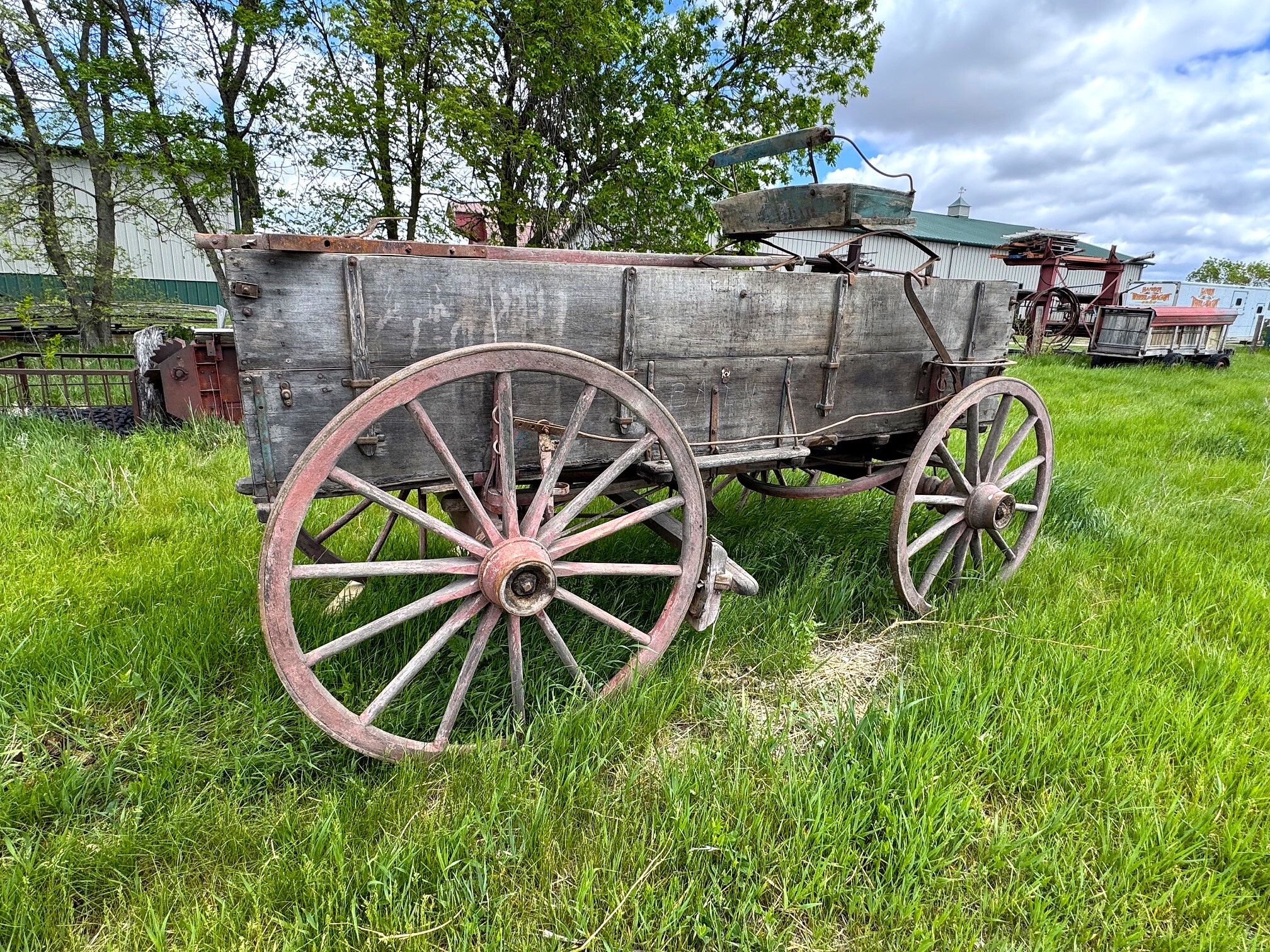
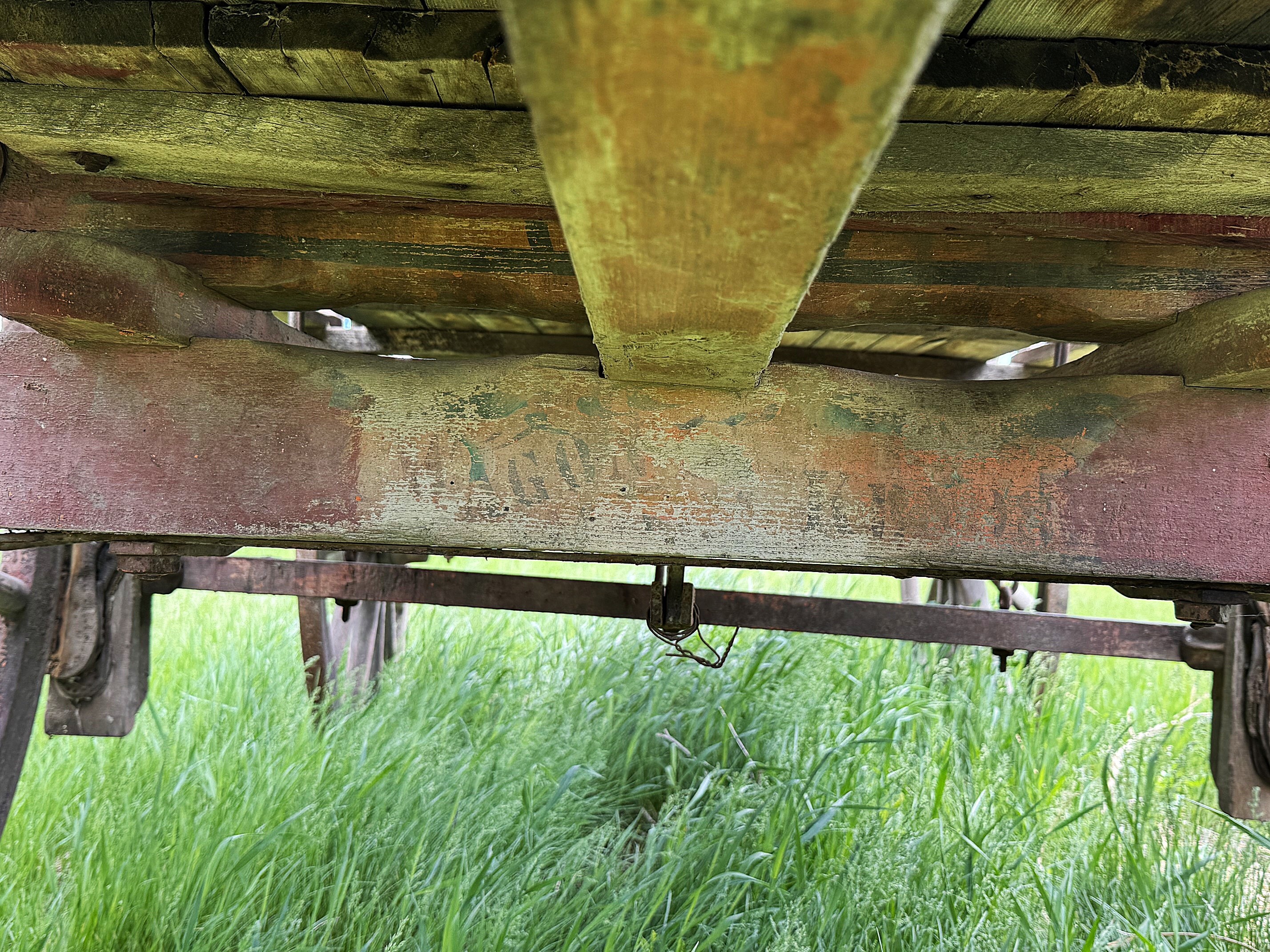
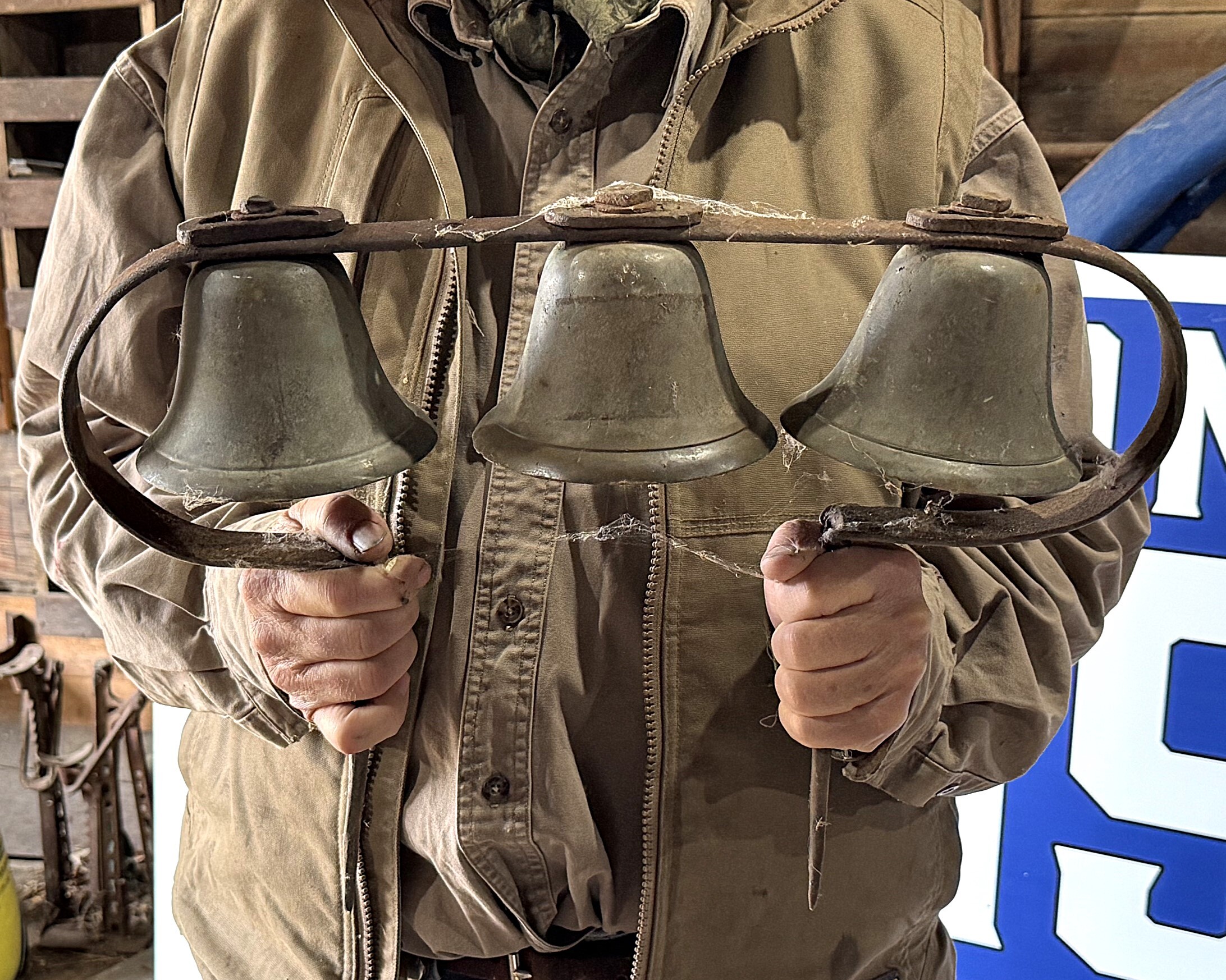
This original Bain wagon is weathered and dirty but includes an earlier logo design and construction features. I suspect the old barn paint can be carefully removed from the running gear to reveal even more original paint on this rig. What a distinct and historic chuck wagon this could be!
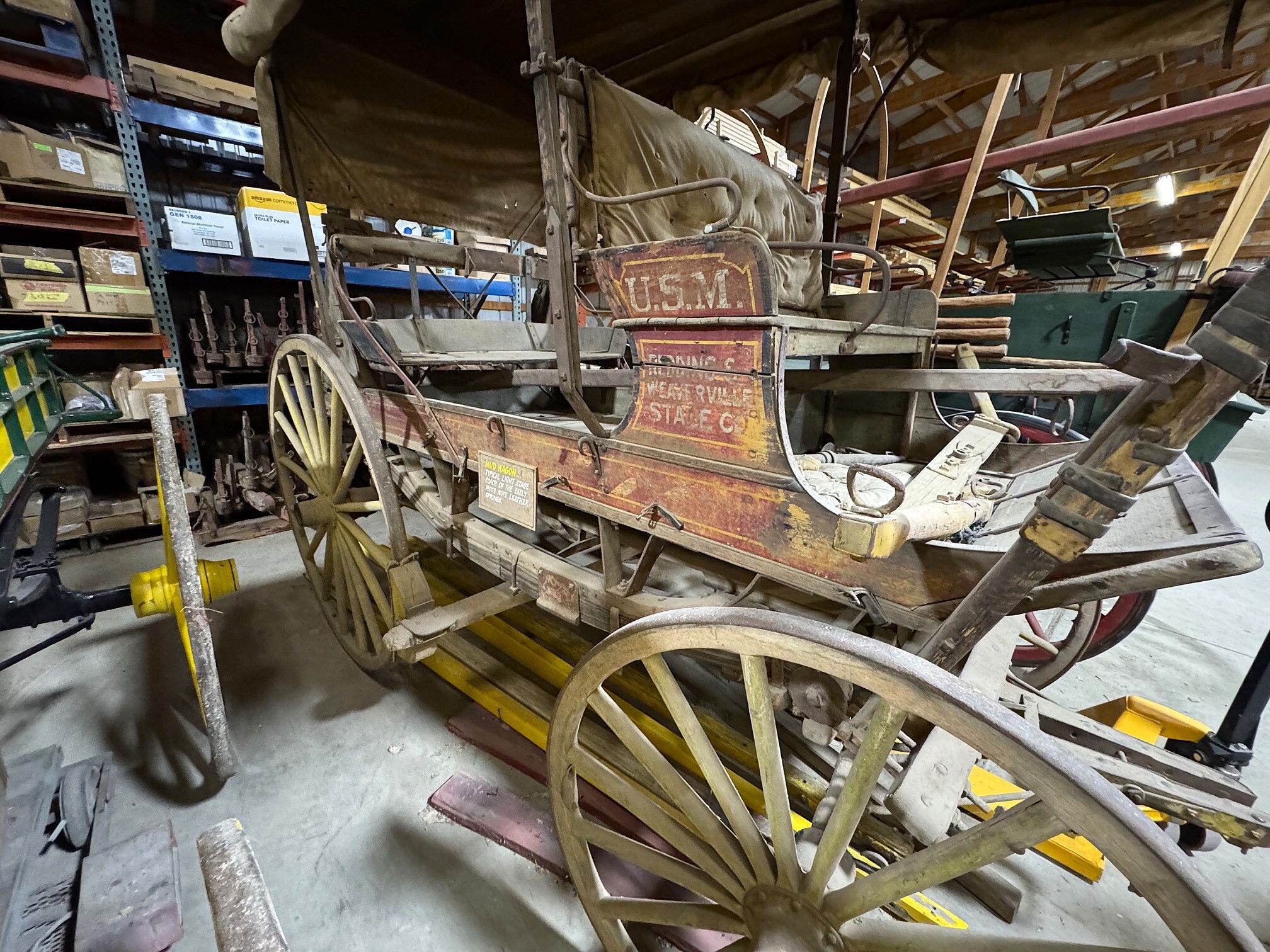
I've previously studied this original, California stage wagon. It is one of the rarer, western staging vehicles a person will come across - especially in the condition it's in.
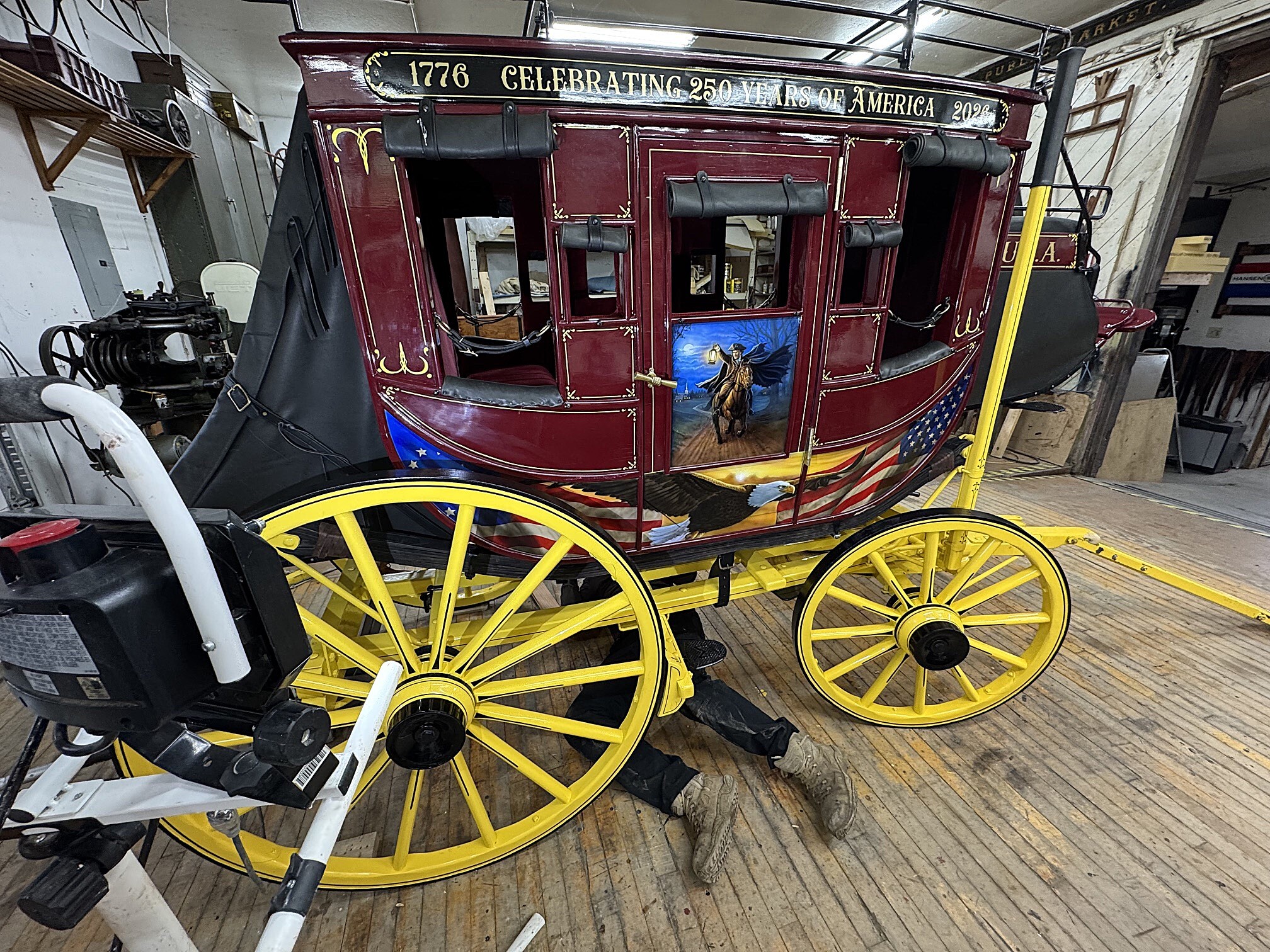
Celebrating America's 250th Anniversary, this three-quarter-size Concord Coach features custom murals, striping, and lettering.
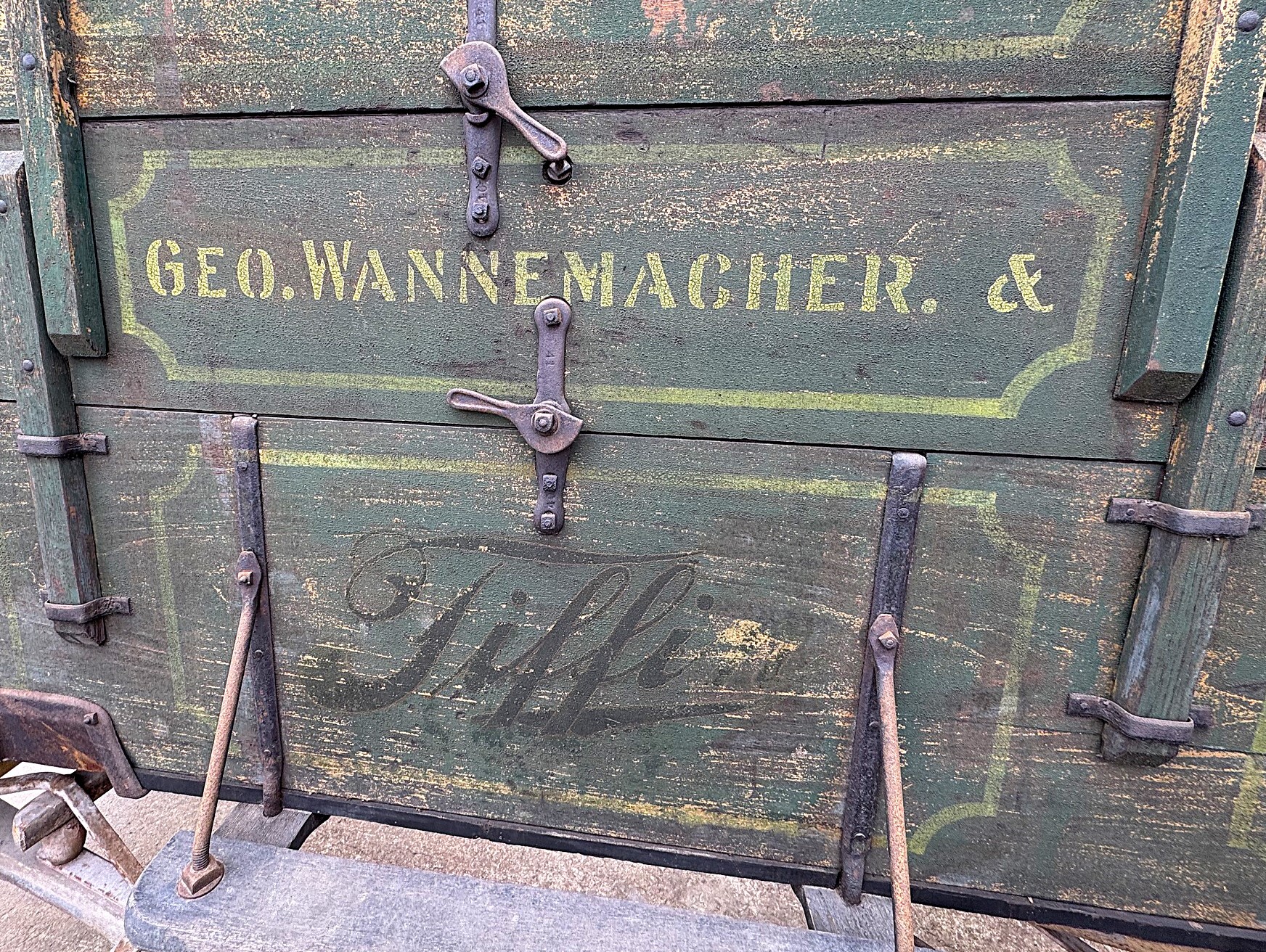
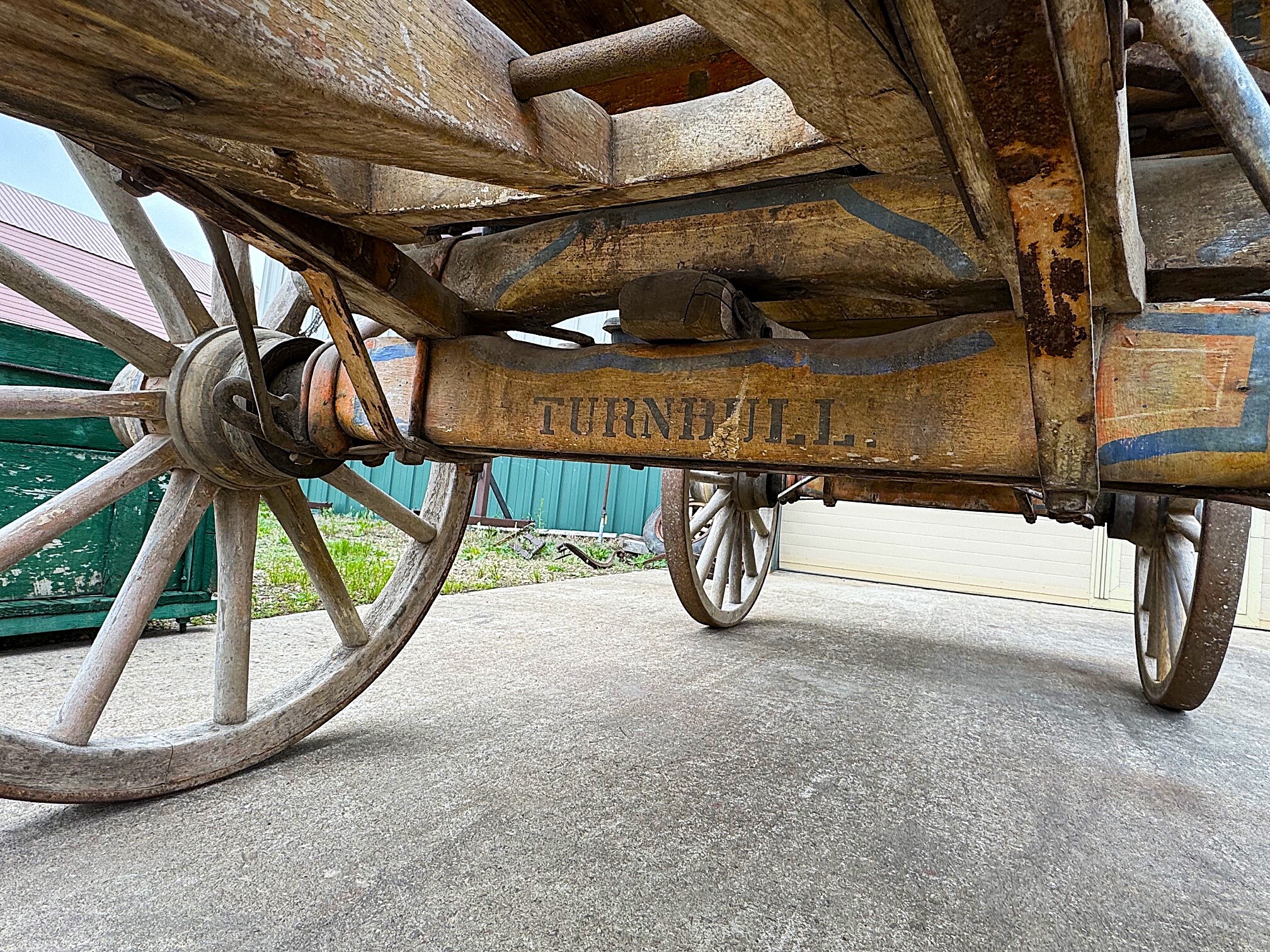
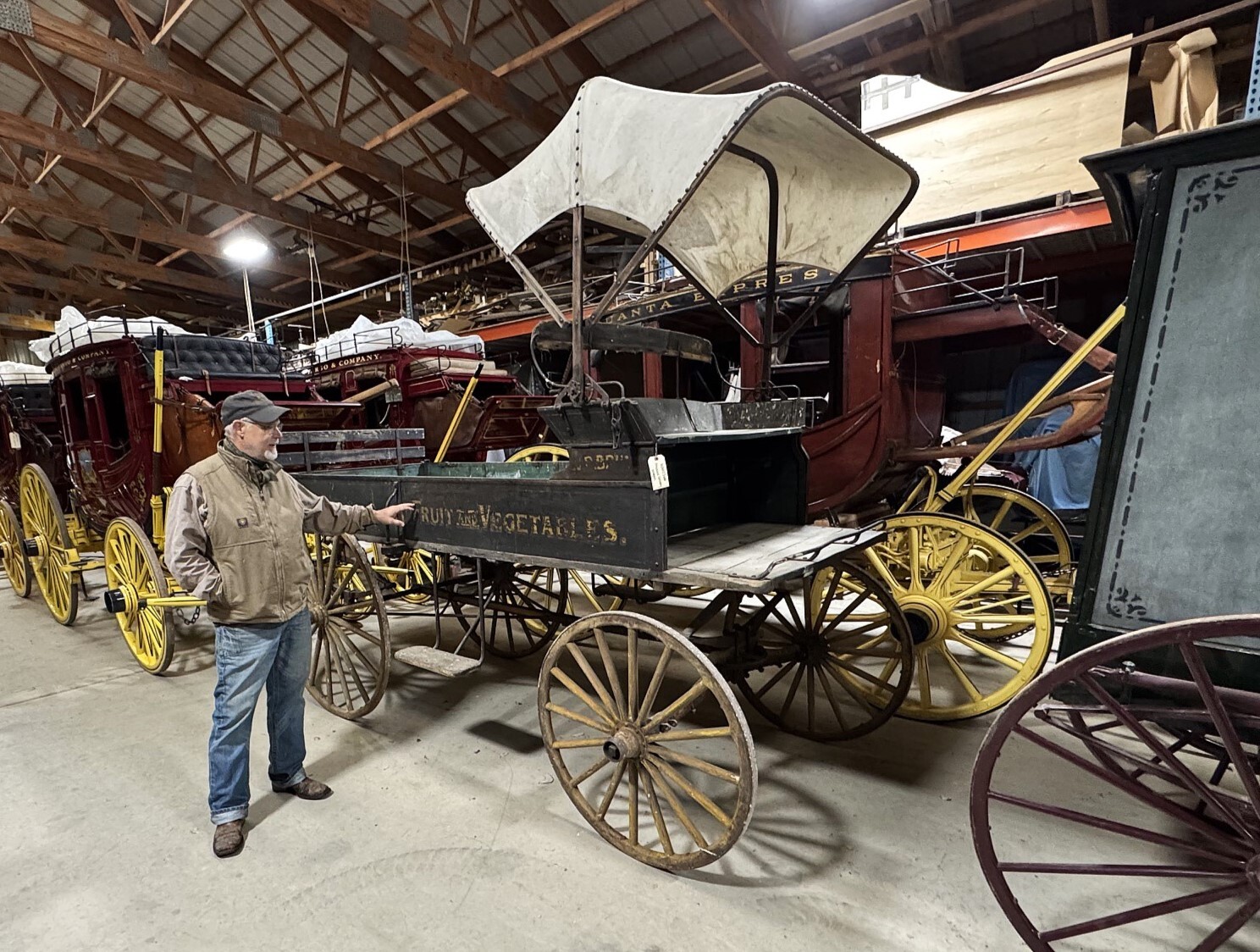
This original business wagon with period gold leaf lettering is an incredible survivor.
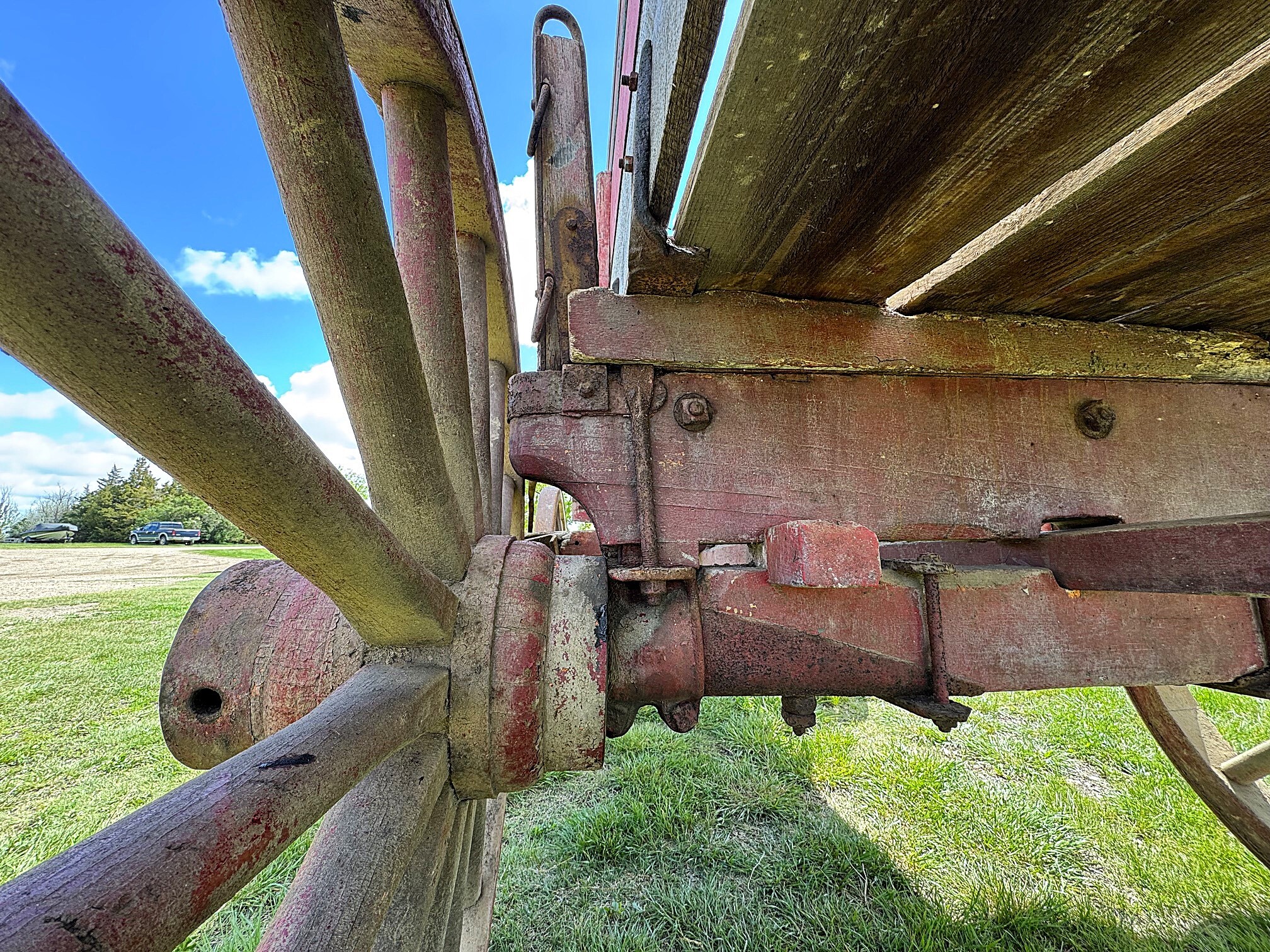
Something else I've never seen... a Peter Schuttler running gear with linch pin wheels! Even more intriguing is that we uncovered the manufacturing date of 1912! Some later circus wagons employed linch pins, but most farm wagon uses of this design disappeared soon after America's Civil War. This angle shows just a few of the unmistakeable clues pointing to Schuttler.
The overall trip was another of my fast turnarounds but, as usual, I managed to come away with some great discoveries and plenty of material to literally write home about. Wherever you find yourself traveling, keep your eyes open. Wheeled treasures are still out there and you never know when and where the next gem will pop up!
Finally, and more importantly, this weekend, whether you're gathered around a chuck wagon, family table, living room, or grilling on the back deck, we join with you in honoring those who have given the ultimate sacrifice for America's security and freedom. It is an incredible blessing to live in the Land of the Free and Home of the Brave. To those who have served or are still serving and to the families of America's servicemen and women, we extend a heartfelt 'Thank You' as well.
Praying each of you have a Safe and Enjoyable Memorial Day Weekend!
David
Psalm 20:7