
Not long ago, I read a news story that focused on the identification of an old shipwreck. One of those interviewed about the discovery said, "It reminds us how much there is still to be found under our seas." While that's true, there's even more amazing history laying lost - right in front of us! A good portion of it doesn't require us to risk life and limb with tons of special equipment. Nor does it typically involve vast sums of wealth to finance the search and rescue missions. The main requirements? Patience, awareness, knowledge, and diligence. Such is the case with America's first transportation industry. Even with all we know, there's a tremendous amount more to be gleaned.
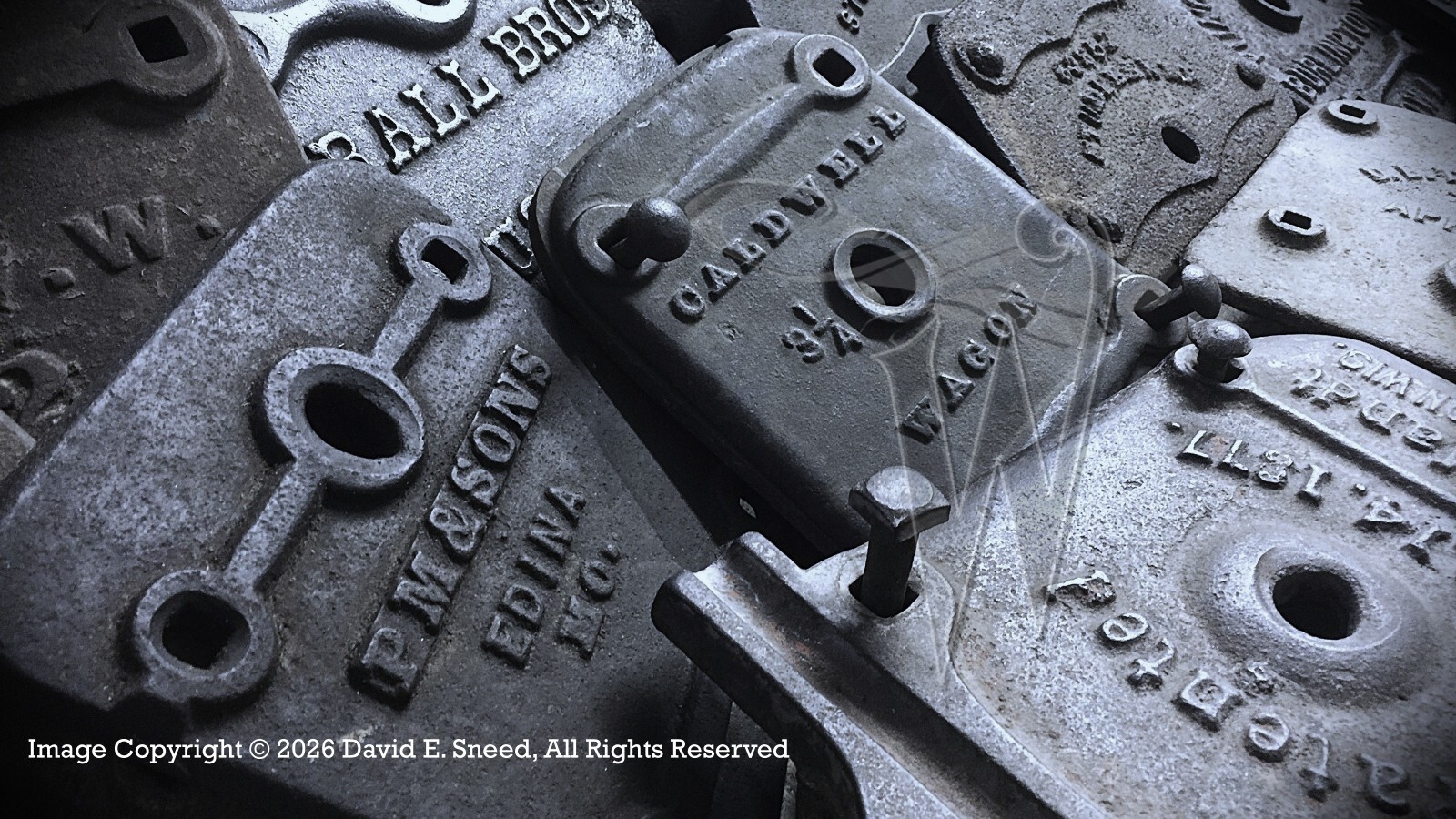
For instance, if you happen to own or are somehow responsible for (as with museums and organizations) an antique set of western wheels, how much do you truly 'know' about that part of the past? I'm not asking how much you've been told or believe but, rather, how much can be objectively supported with primary sources and proven as actual provenance. Some of that history can be determined from what the old set of wheels has to say about itself. In other words, things like... What are its design features? Why was it built in a certain way? Does it possess any patented features? What do the physical elements tell us? How much of it has been altered or changed? How have you documented the maker, build date, features, historical context, specifications, and other elements from the same timeframe?
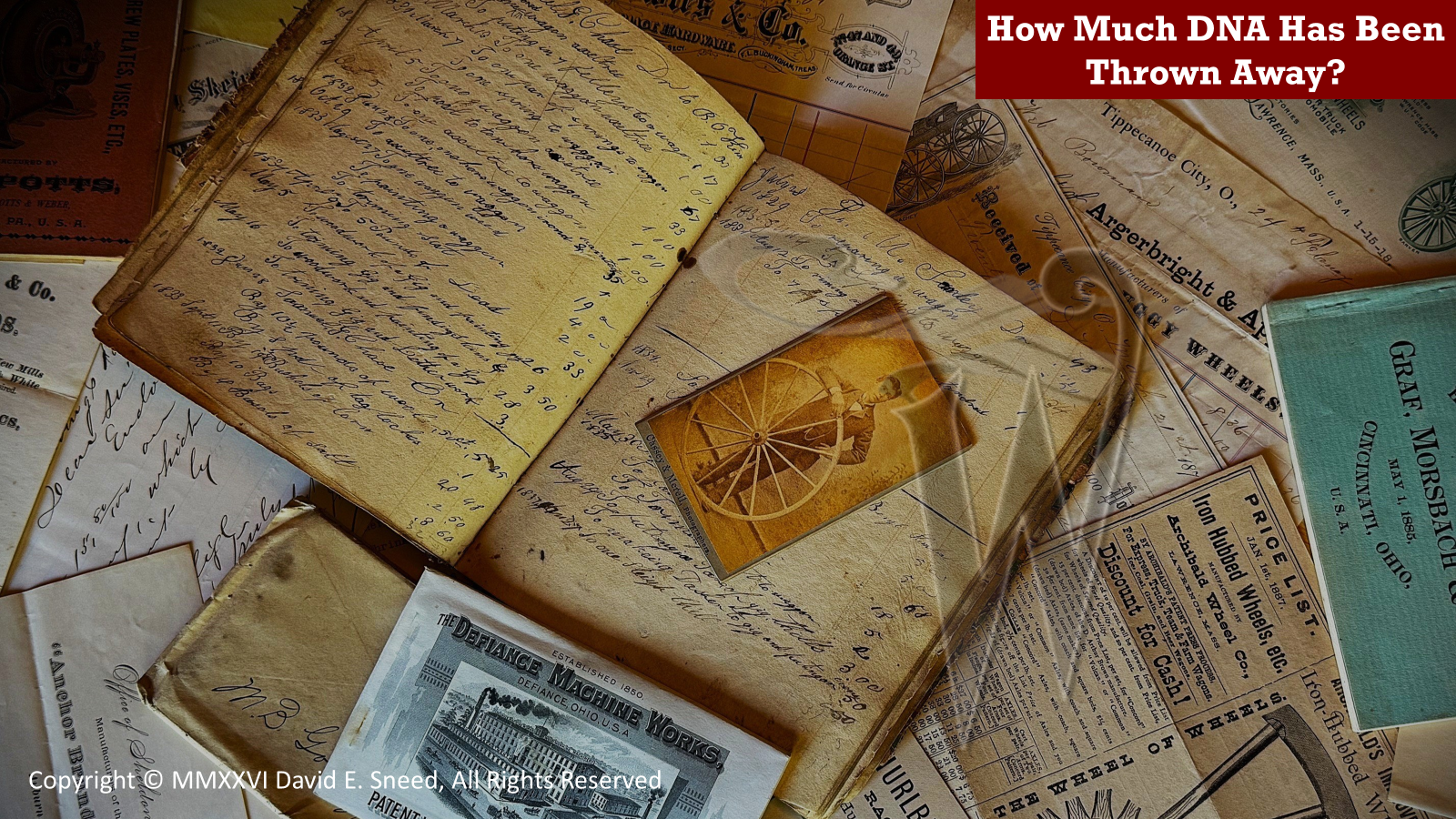
There's so much DNA from America's first transportation industry that has been unrecognized, thrown away, and allowed to drift into oblivion. Admittedly, even for a historian like me, some of the material can be mundane. Plus, just because something is 'rare' doesn't necessarily mean it has significant monetary value. However, some of these old wheels (and their parts) are very valuable and have tremendous stories to tell. There are countless wheeled legends from the frontier days of the U.S. that have seemingly just evaporated. Overlooked and underappreciated, too much is gone. As a result, many have used twentieth century pieces to profile an overly simplistic wagon; one of hundreds of thousands of apparently unsophisticated creations fumbling across the plains with emigrants, farmers, prospectors, cowboys, freighters, entrepreneurs, and dreamers on board. It's a picture that's far from the truth.
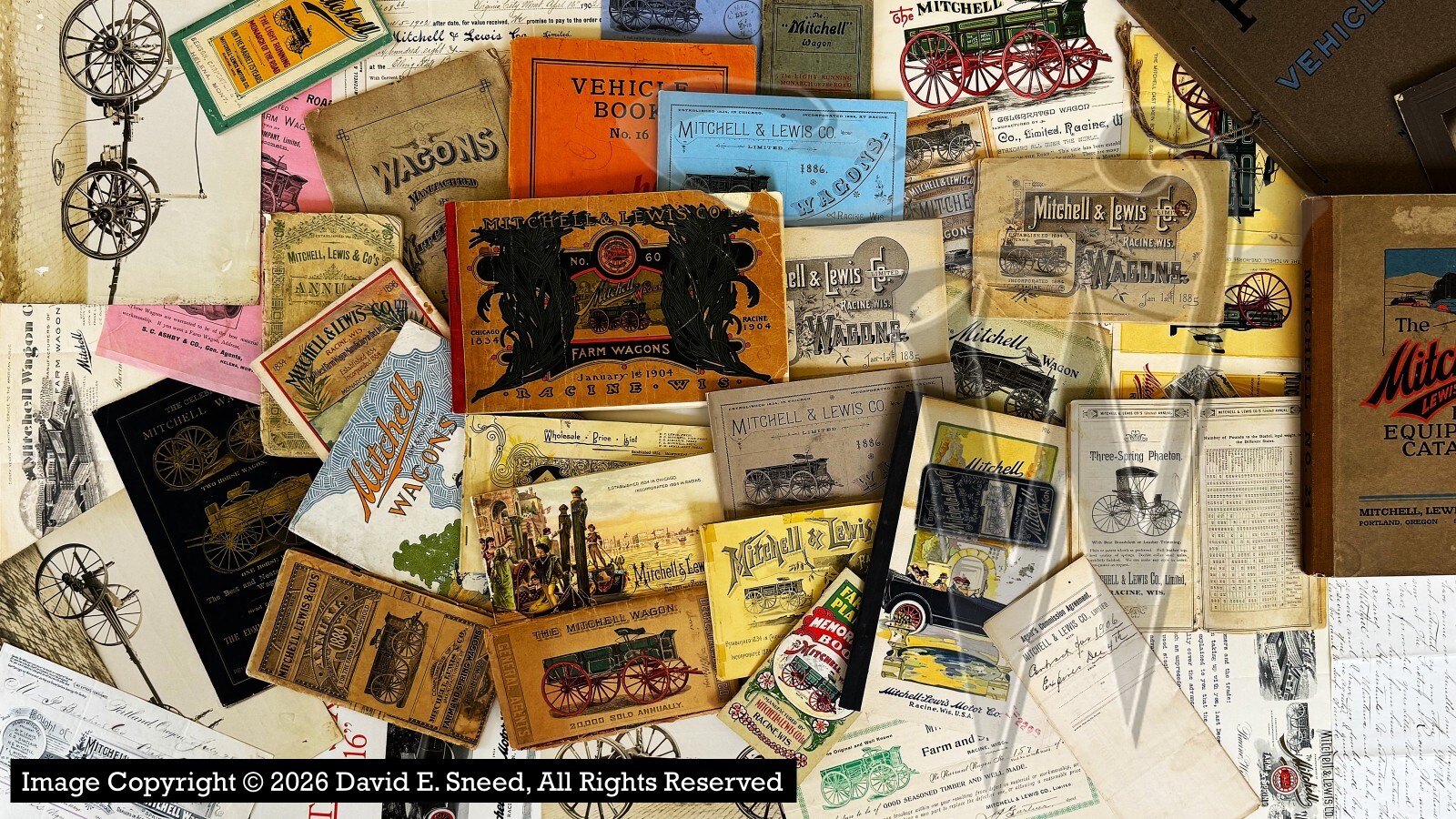
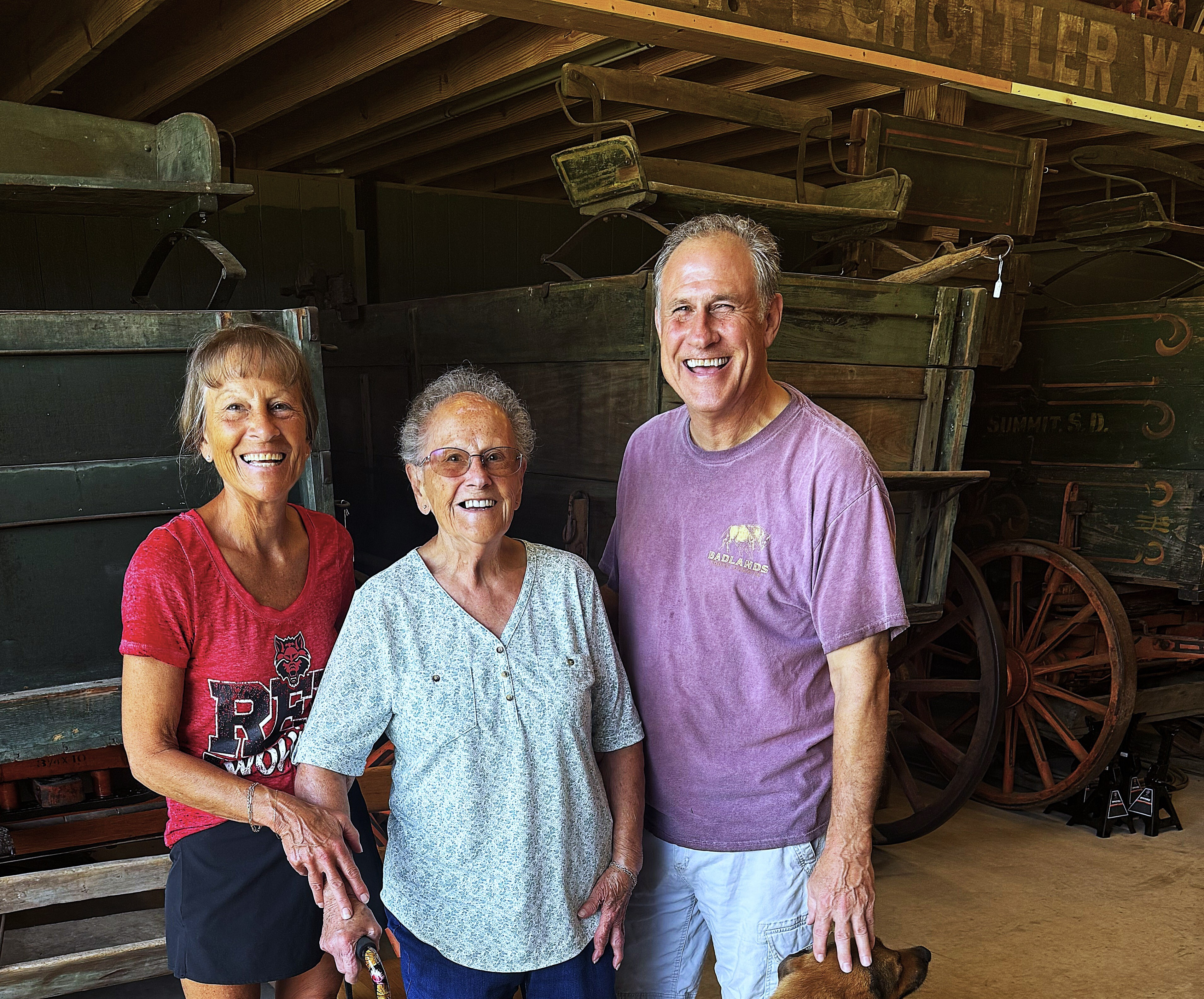
As can be the case with many subjects, the best stories often get overlooked. Recognizing what these early transports have to say has a huge impact on our appreciation for them and the treasures they hold. To that point, my ninety-year-old mother and younger sister recently came for a visit. Both wanted to see the collection. It's a lot to take in as the assembly involves roughly three and a half decades of recovery efforts. Reviewing the signs, seats, parts, promotions, photos, business correspondence, a sea of support elements, and the vehicles themselves can be overwhelming. The best part, though, is that everything - and I mean everything - has a story. The wheels of the Old West have a richness that many never realize and I'm confident they're the last true frontier of western research.
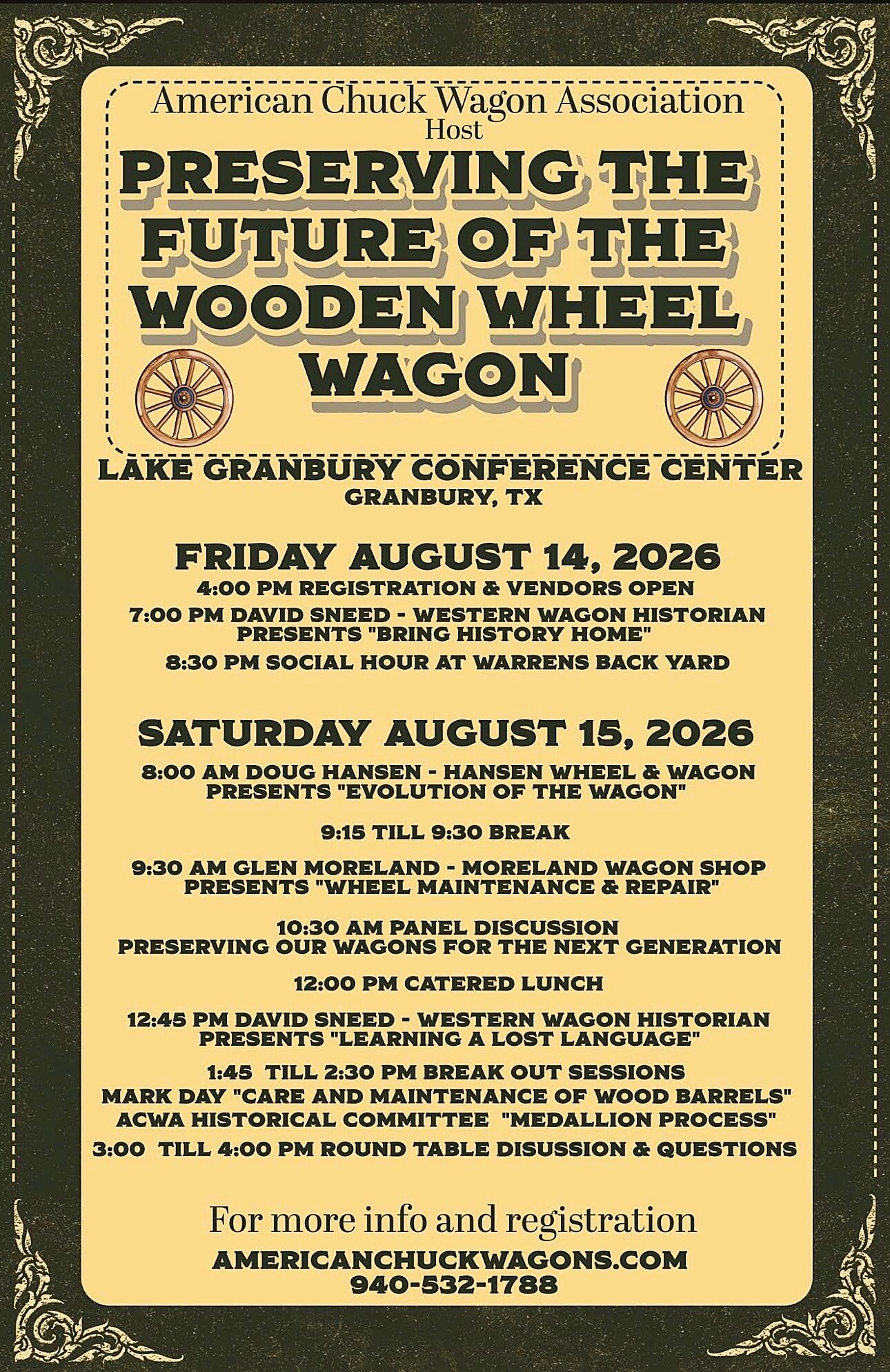
The process of learning to read and recognize the faces of western history is just part of what we'll be sharing during the western wagon conference in Granbury, Texas on August 14th and 15th, 2026. I'll say it again... do not miss this experience. It promises to be an extraordinary time with incredibly rare photos, details, and insights into a very deep part of our past.
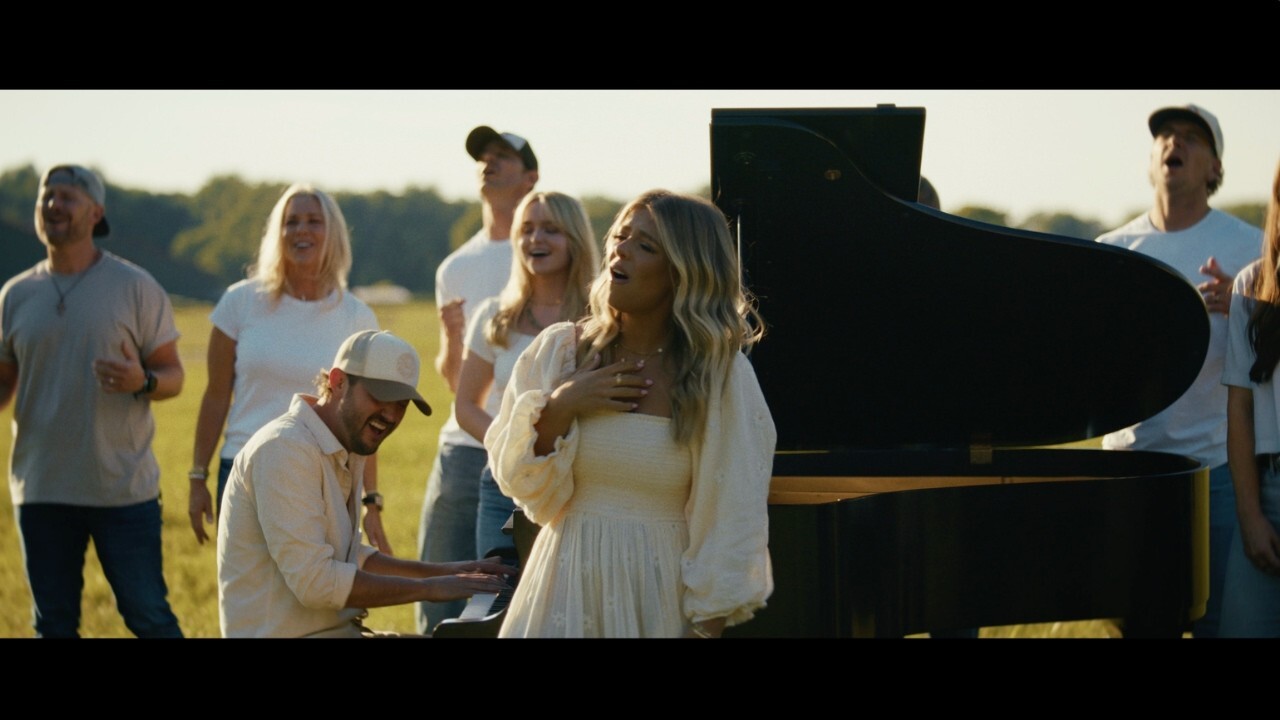
On a similar note, country singers Drew Baldridge and Anne Wilson recently released a song called, "Maker's Mark." While the song clearly references the opportunities we have to reflect our Maker and the blessings He's provided, there are also parallels to the wood-wheeled brands that built this country. In fact, there's a line in the refrain that mentions 'being the light in someone's dark.' I believe this conference will be a lot like that... Positive, encouraging, supportive, and eye-opening. There's definitely a lot to be illuminated. Additionally, with so much information to be shared, it's the ideal time to learn more about every maker's mark left on a particular set of wheels. Trust me, the info is there. We just need to look a little closer. In the meantime, I hope to see you soon and encourage you to pay it forward, being the light in someone else's dark...
Have a great weekend!
David
Ps. 20:7