
No cattle drive stories would be complete without referencing the originator of the chuck wagon, Charlie Goodnight. I've mentioned him before but, this time, we'll approach the topic from a little different angle. In light of the recent passing of Hollywood legend, Robert Duvall, it's natural to reminisce about many of his own great performances. Among those, the western epic, Lonesome Dove, can easily occupy plenty of discussions. While much of author, Larry McMurtry's story can be based on actual history, there are likely some who may not have read the early accounts that McMurtry had faithfully studied. In fact, Lonesome Dove borrows heavily from different portions of Charlie Goodnight and Oliver Loving's cattle drive experiences. When reading the retelling of the original story below, I think you'll find it easy to pick out the characters and, in a way, more deeply appreciate the rich authenticity of Lonesome Dove.
INSERT LONESOME DOVE BOOK PIC
Specifically, in the November 1924 issue of Frontier Times, published at Bandera, Texas, there is a somewhat lengthy article highlighting the relationship of Oliver Loving and Charlie Goodnight. The report leans heavily on a cattle drive story (with Goodnight & Loving) told by One-Armed Bill Wilson, who survived incredible odds and shared his firsthand account. Wilson passed away in 1922, prior to this being released in Frontier Times. Even though there is verbiage that is not typical of today's vernacular and understanding, the reflection gives incredible insight into a number of scenes from the Lonesome Dove television mini-series.Due to the length of the century-plus-old write-up, we've divided it into two parts....
PART ONE...
It was a strange funeral procession, that which followed the Goodnight and Loving trail in 1867 from Fort Sumner, New Mexico to Weatherford, Texas, a distance of 700 miles. Oliver Loving, the first to find an outlet for Texas cattle, had made his last long drive; and the western frontier with its trackless wildernesses and featureless wastes of prairie would know him no more.
The casket, in which lay the remains of this great pioneer, was carried in a wagon drawn by a mule team. Nine cowboys on horseback rode in front of the wagon and nine behind; these were followed by the chuck wagon and remuda. This escort was the Goodnight and Loving outfit which had delivered 2,500 head of steers into Colorado and now were homeward bound. The sad journey was singularly peaceful; not an Indian was seen during the whole time.
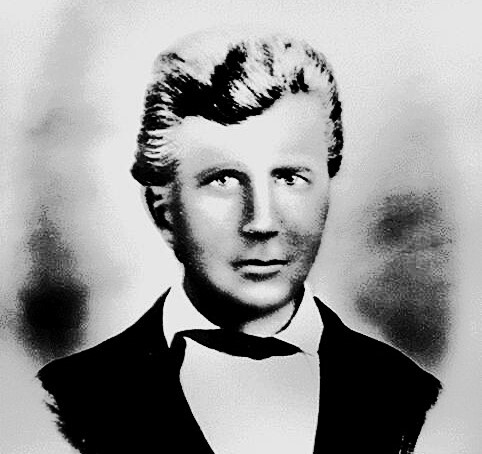
The first trail over which Texas cattle were driven to northern markets was blazed by Mr. Loving in 1859. Beginning in Palo Pinto County, Texas, it extended through the western cross timbers, on through Northwestern Texas and into Colorado as far as Denver.
During the Civil War, Mr. Loving ceased to drive his cattle north, but resumed in 1866. His cattle, during the war, were sold to the Confederates, but they never paid the $150,000 due to him.
In regard to conditions at the close of the Civil War, Emerson Hough says: 'The Civil War stopped almost all plans to market the range cattle, and the close of the war found the vast grazing lands of Texas fairly covered with millions of cattle which had no actual value. They were sorted and branded and herded after a fashion but neither they nor their increase could be converted into anything but more cattle. The demand for a market became imperative.'
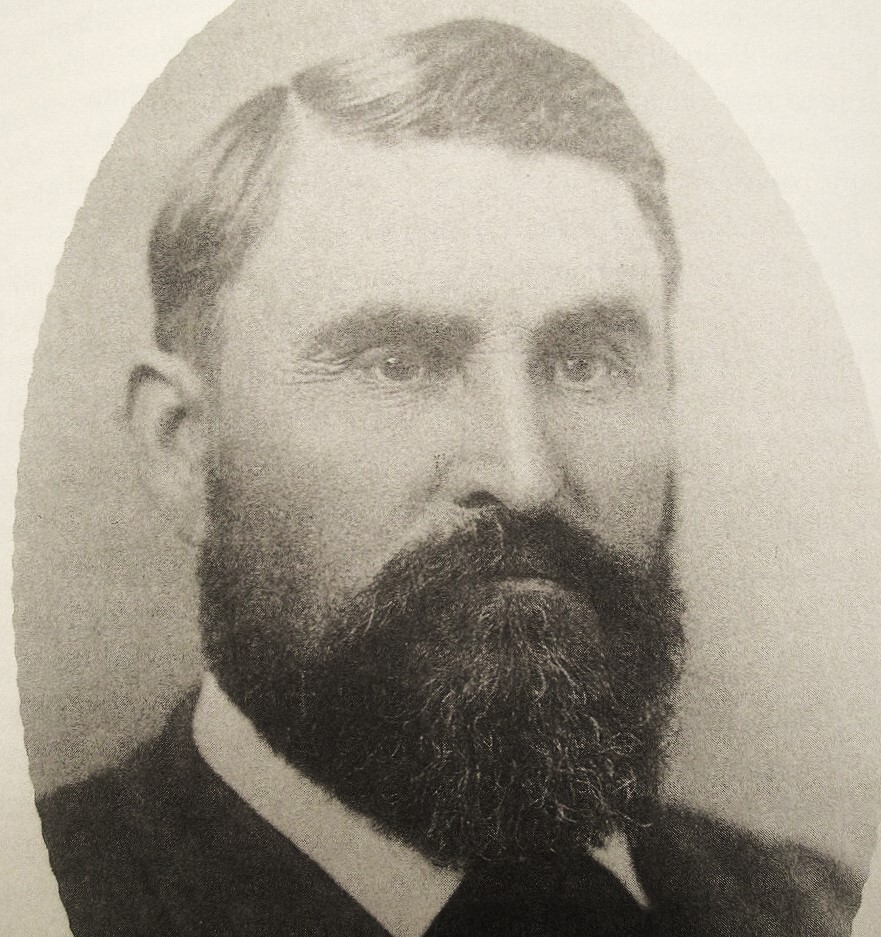
In 1866, Charlie Goodnight, afterward one of the leading cowmen of Texas, finding himself with plenty of cattle but no money, determined to push out to northern markets. Oliver Loving declared the project impossible. The Comanches and Kiowas, fierce nomadic tribes were prowling through the western country. Loving pointed out that no trail herd could escape them. Of this, Goodnight failed to be convinced, and in the end, Loving decided to go with him, taking a herd of his own.
In New Mexico and Colorado there were no cattle. A man was fortunate to be able to rent a milch (milk) cow for $5/month. At Fort Sumner, New Mexico, the government was needed. Goodnight and Loving proposed to supply it.
In 1866, they surveyed the Goodnight and Loving trail, perhaps the most famous of all the old cow trails. It began in Young County, Texas, and extended southwest to the Pecos River; here it turned northwest, following the course of the river four hundred miles to Fort Sumner and beyond. It then crossed the divide between the Platt and the Arkansas rivers seventy-five miles east of Denver. It ended at the mouth of Crow Creek.
The first part of the trail down to the Pecos was through good country with plenty of grass and water, but along the Pecos it was bleak and forbidding. There was little grass and the only semblance of tree life was the wild mesquite. In speaking of this country Colonel Goodnight recently said, 'The Pecos country was the most desolate I had ever explored. The river was full of fish, but besides the fish there was scarcely a living thing, not even birds and coyotes.' The country was again good along the upper Pecos and in Colorado.
Such was the trail over which Loving made his last drive.The events of this drive deserve a prominent place in the history of West Texas....
INSERT ANOTHER LONESOME DOVE PIC
Next week, we'll share much more of this firsthand account of Goodnight and Loving's partnership. Not only is this an incredible, real-life experience from the Old West, it's part of a masterful legacy called Lonesome Dove.
See ya next week!
David
Ps. 20:7