
I regularly receive questions asking when certain technologies or features came into use on old wagons. Awareness of those beginnings can open up a whole new world of understanding within America's first transportation industry. It can provide insights that help narrow down otherwise murky maker dates, confirm or deny authenticity levels, identify a manufacturer, add clarity to design purposes, and lead us closer to what was used, when, where, how, and by whom. Ultimately, it helps provide a better overall comprehension of these rugged machines.
Among the kinds of horse-drawn history that can be confusing are the individual parts, themselves. Reinforcing that thought, some of the more common inquiries I receive are focused on accessories like bolster springs and tongue springs as well as metal running gears. So, this week, we'll take a look at the beginnings of those parts and their design variations. Hopefully, the post will clear the air a bit, serving as a sort of waywiser, measuring progress and helping us stay pointed in the right direction.
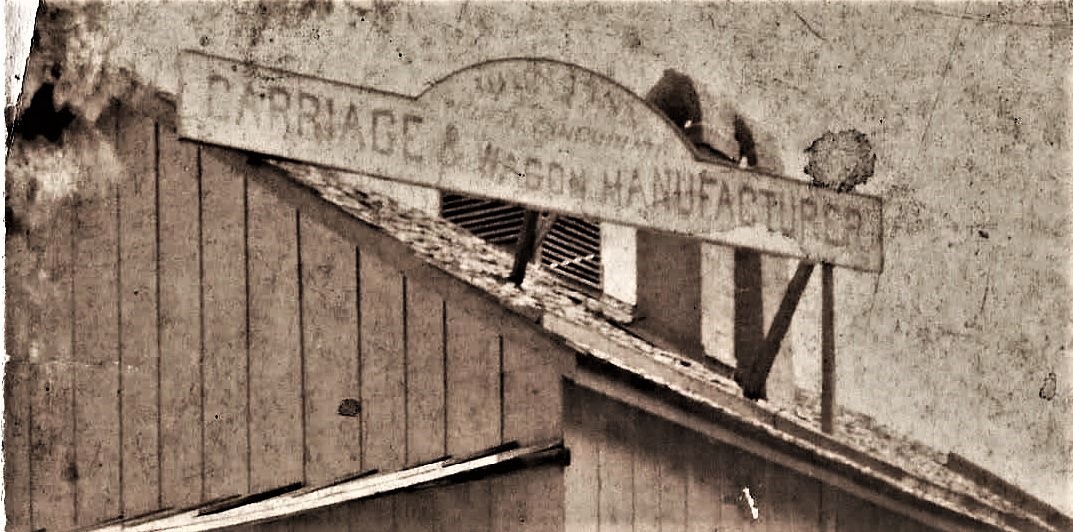
The American landscape was innundated with wagon and carriage makers and repairers during the nineteenth and early twentieth centuries. It requires considerable study to grasp the breadth of the business and the impact it had on virtually every part of the country.
BOLSTER SPRINGS...
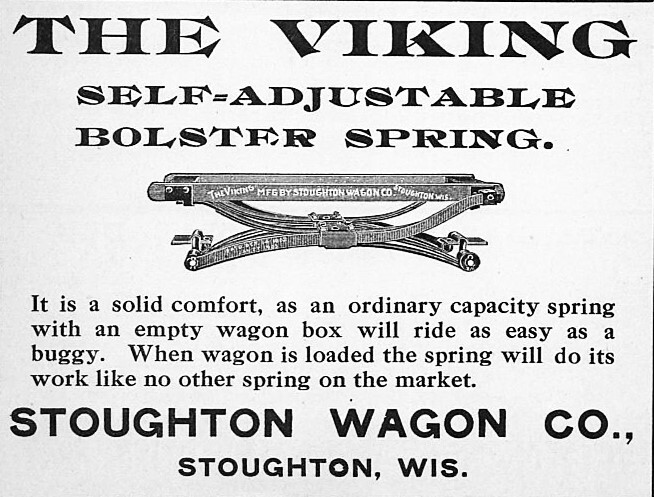
Over the years, I've had multiple people tell me that bolster springs are a twentieth century innovation reserved almost exclusively for farm wagon use. Hmmm... well, that's an interesting perspective. Unfortunately, it doesn't line up with period records. Springs, themselves, have a long history that easily pre-dates most all wheeled travel into the western sections of the U.S., let alone a timeframe when farm-style wagons were relegated to pure farm purposes.
Bolster springs - being defined as springs used on or as part of the bolster(s) of a vehicle running gear to help cushion the load - were covered by patents dating to at least as early as the 1840s. The 1860s and 70s saw even more patents and references of use, some of which will have similarities to designs used in the twentieth century.
Since bolster springs existed throughout a large portion of the 1800s, for me, the question isn't really 'whether' they were in use back then but what did those nineteen-century styles look like? Certainly, some types of surviving bolster springs were not used in the Old West. Other bolster springs, by the proclamation of period patents, photos, catalogs, and trade journals, clearly portray the use of these springs beyond farm purposes. Like so many wagons used in the West, much of what was used where and when came down to an individual's personal preference, budget, and needs.
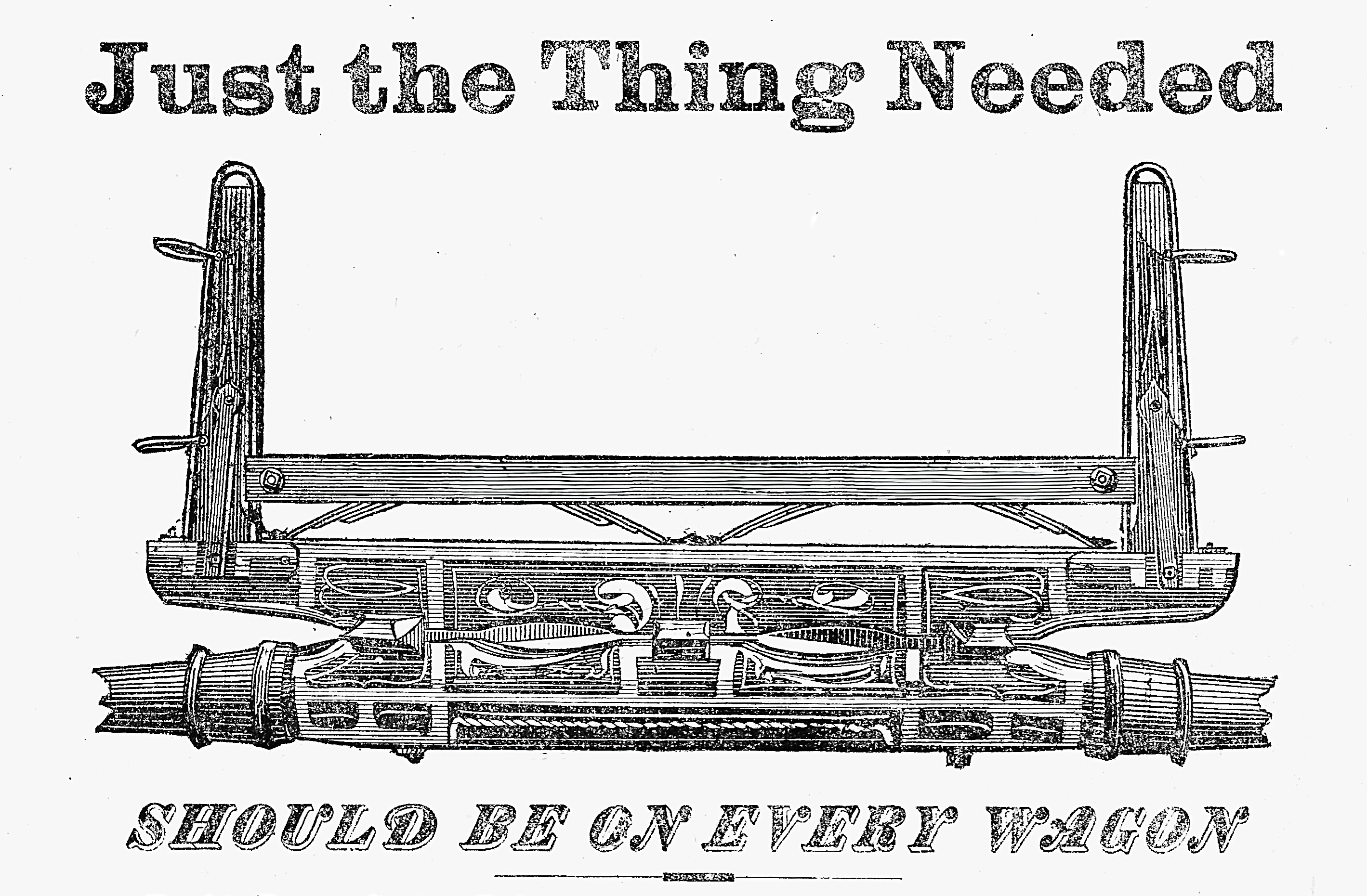
This portion of a broadside advertisement from the Wheels That Won The West® Archives is over 150 years in age. Bolster springs were promoted during some of the wildest portions of the Old West. Image Copyright © David E. Sneed, All Rights Reserved.
TONGUE SPRINGS...
While we're on the subject of springs, I also occasionally hear from some who believe that tongue springs were not available or used on the American frontier. Again, patent files in the 1850s, 60s, 70s, and 80s are literally full of innovations for these supports. Even the legendary Peter Schuttler wagon brand had multiple patents granted for tongue springs in the 1870s and 80s.
As with bolster springs, the question of whether tongue supports existed or not during the 1800s comes down to what the design looked like - not whether the technology was there, as it clearly was available. Denying the presence of an entire accessory category during certain timeframes is often due to a lack of awareness of just how active the wagon and carriage industry was in the nineteenth century. To best evaluate authenticity levels of a wagon, we need to literally be immersed in the doin's of the day, so-to-speak.
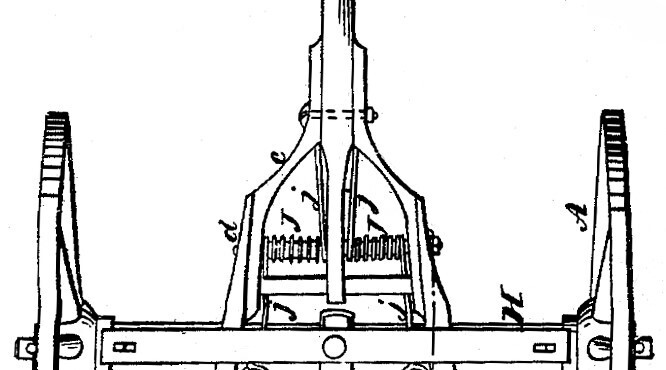
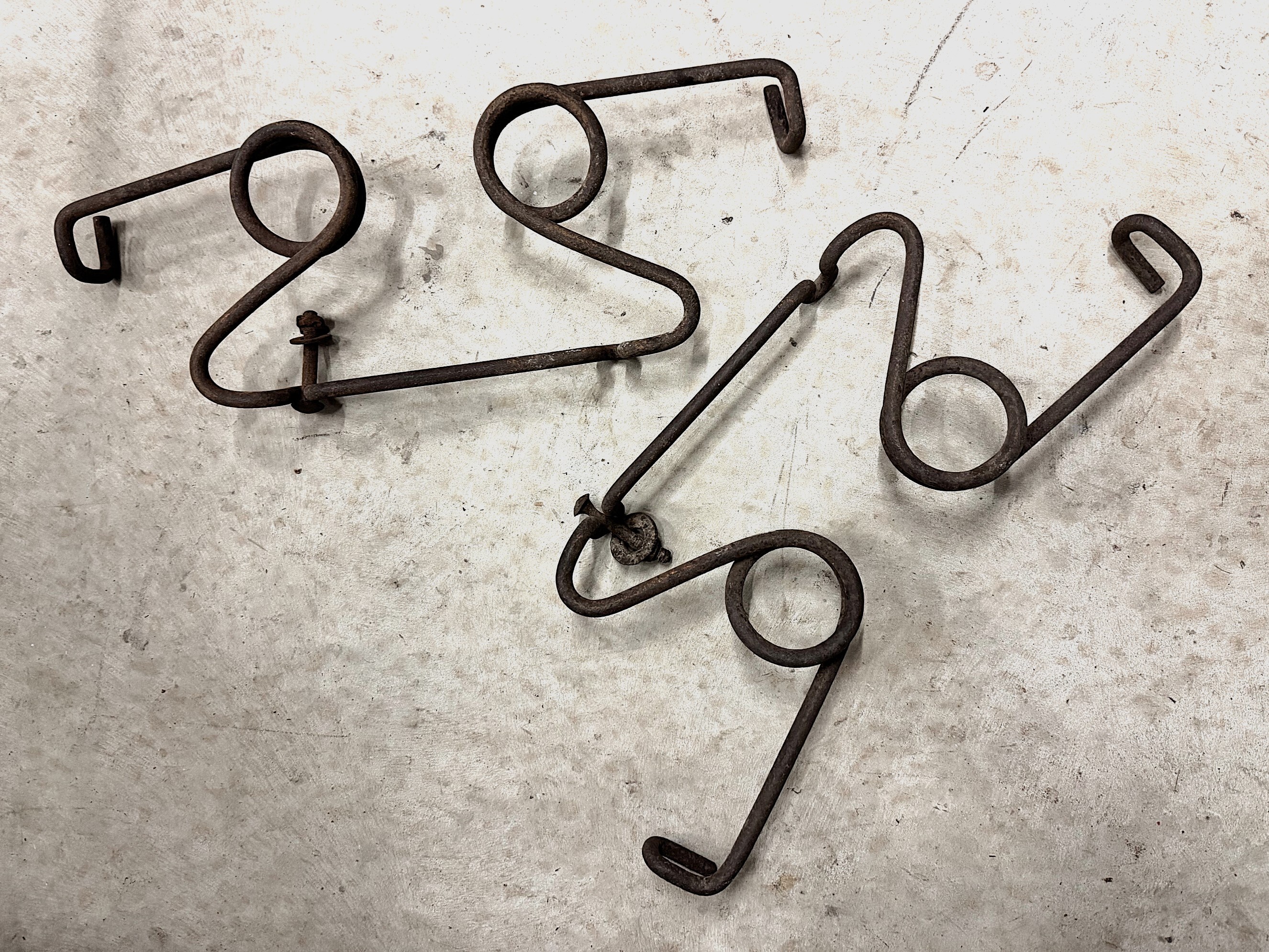
A portion of a tongue spring patent dating to the 1860s. Note the springs partially held by the tongue bolt. See below for a similar surviving set of springs. Image Courtesy of Wheels That Won The West® Archives
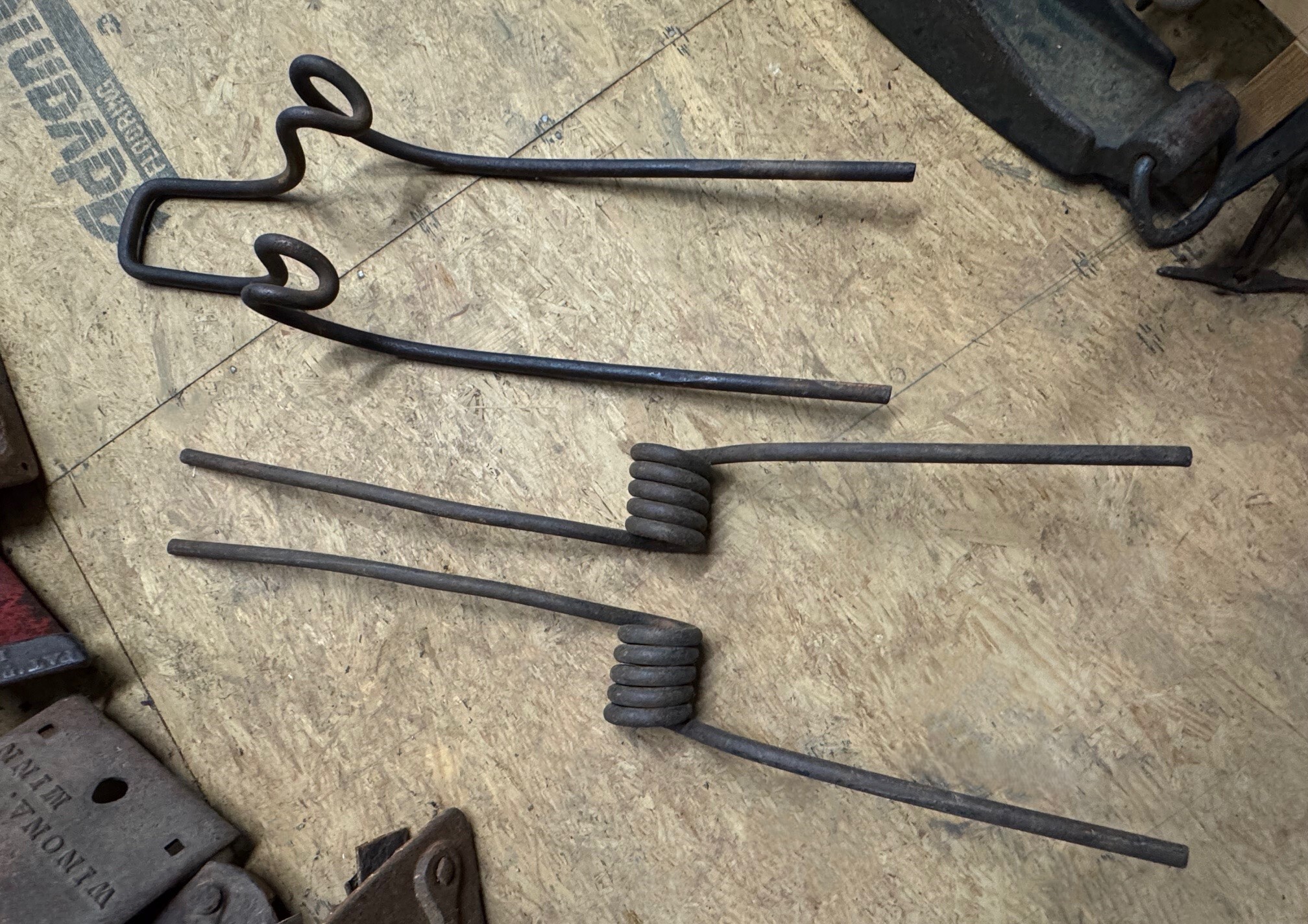
The two, separate springs in the lower part of this photo will closely match the nineteen-century patent immediately above. The single spring in the top half of the image is more reflective of designs used in the twentieth century. Imagery Copyright © David E. Sneed, All Rights Reserved.
METAL WHEELS AND RUNNING GEARS...
In the same vein of thought, over the years, many have approached me with the feeling that metal wagon wheels and metal running gears are strictly twentieth century creations. Sometimes that assumption is correct. In fact, very often the wheels and/or gear are definitely from the 1900s. However, this is not always the case. In fact, the idea for and creation of metal wheels, hubs, and/or metal running gears can be traced at least as far back as the 1830s! We're talking about looking rearward almost 200 years, well before the California Gold Rush, the great western cattle drives, and America's quest to expand west of the Mississippi. That's not to say these pieces were common, just that the concepts have existed that long. In fact, there are an incredible number of patents related to metal running gears and wheels in the century between the 1830s and 1930s. Some were even tested (and used) by the U.S. military. Repeating an earlier caution, this isn't to say that all surviving metal wagon wheels and gears are representative of those in the 1800s. Designs changed, evolved, and transitioned. Knowing what was done by whom, how, and when is often the key to recognizing brands and timeframes. Not every patent was put into production but many were. Again and again, to make true statements related to history we must have an accurate knowledge and awareness of what happened and when. Hearsay, tempting assumptions, personal beliefs, and modern experiences can be highly subjective with little to no historical truth.
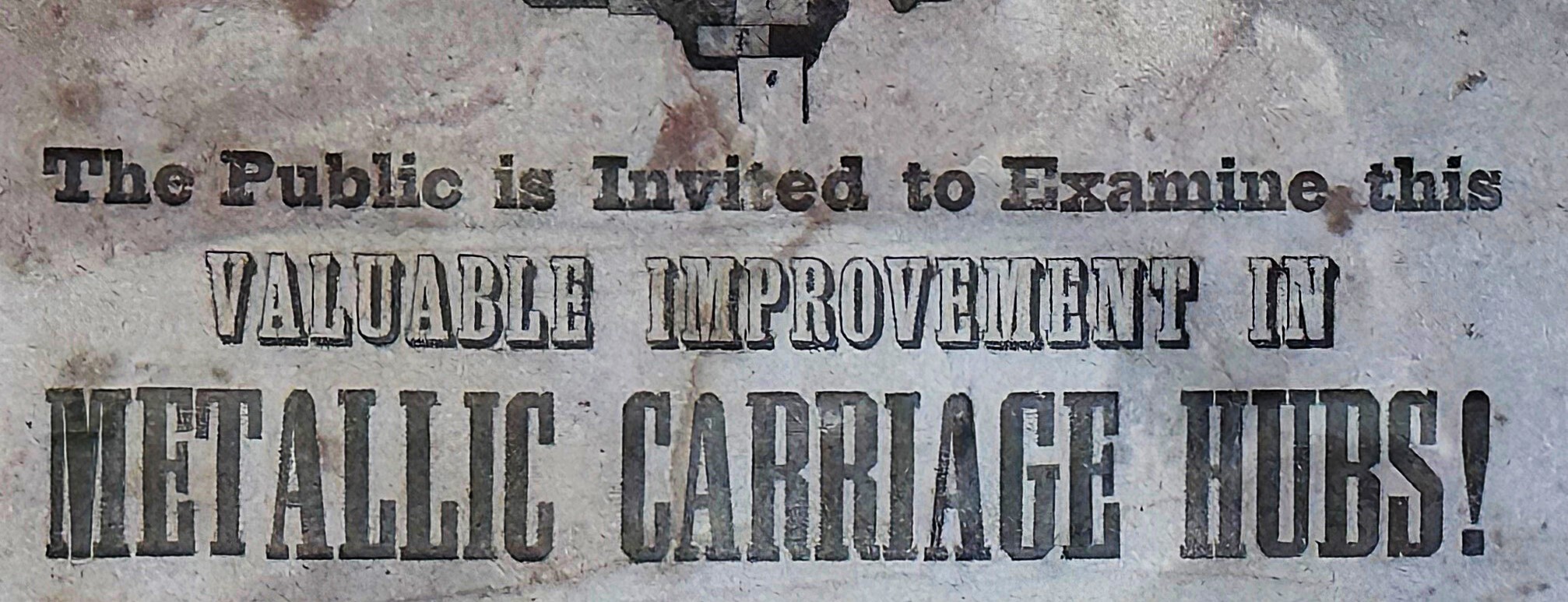
This portion of an early advertisement for metal hubs will date to the early days of America's Civil War. While this section references 'carriages,' other portions of the broadside point out benefits to wagons and heavier vehicles. This design predates the Archibald hub (common on later military vehicles) by at least a decade. Image Copyright © David E. Sneed, All Rights Reserved.
At the end of the day, metal wheels and running gears struggled to find acceptance during the majority of the 1800s. Only as time progressed with wagons truly becoming related to farm and trailer work did these metallic-gear-designs become more visible and accepted in the marketplace.
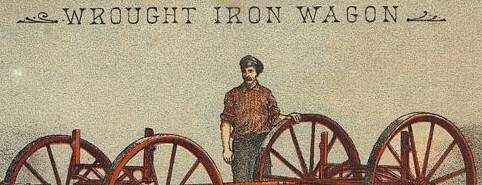
This portion of an 1882 circular for a metal wagon gear and wheels is one of the earliest surviving color advertisements for this innovation. This iron wagon gear was promoted as having the advantages of lightness, affordability, durability, less maintenance, and supposedly could carry five tons. Ironically, even though we've cropped the original image, you can also see bolster springs on the front and rear portions of the gear. Image Courtesy Wheels That Won The West® Archives, All Rights Reserved.
The three categories above are just a few of the countless areas that can be confusing and hard to wrap our minds around. To that point, when I first began studying these vehicles decades ago, the amount of misinformation was almost overwhelming. Sometimes, it seemed there was no truth as so many folks had their own feelings and many were adamant in their beliefs. As I gradually discovered, opinions don't always align with actual history. So, as our research began to grow, our collecting and cataloging began to show manufacturing patterns, innovations, and supportable facts that cleared the air. While there's still much to learn, this focus has given us a unique perspective from which to evaluate early wagons and western vehicles. So, the next time you hear historical assertions, it might be wise to ask if there's period documentation to back it up.
One other thing I'd like to share is that this story isn't meant to cause a difference of appreciation between nineteenth and twentieth-century vehicles. Instead, as the old country saying goes, it's about "getting the right collar on the right dog." In my evaluation processes, some twentieth century pieces are even more intriguing than older machines. At the end of the day, every surviving wagon and western vehicle has a history. In other words, each has a story that's unique to that set of wheels. The truth of that past is something we can't legitimately change by best guesses, hearsay, or personal assumptions. We can misinterpret yesterday but we can never alter the reality of it. Only by understanding the way things were can we fully appreciate and pass along accurate history to future generations.
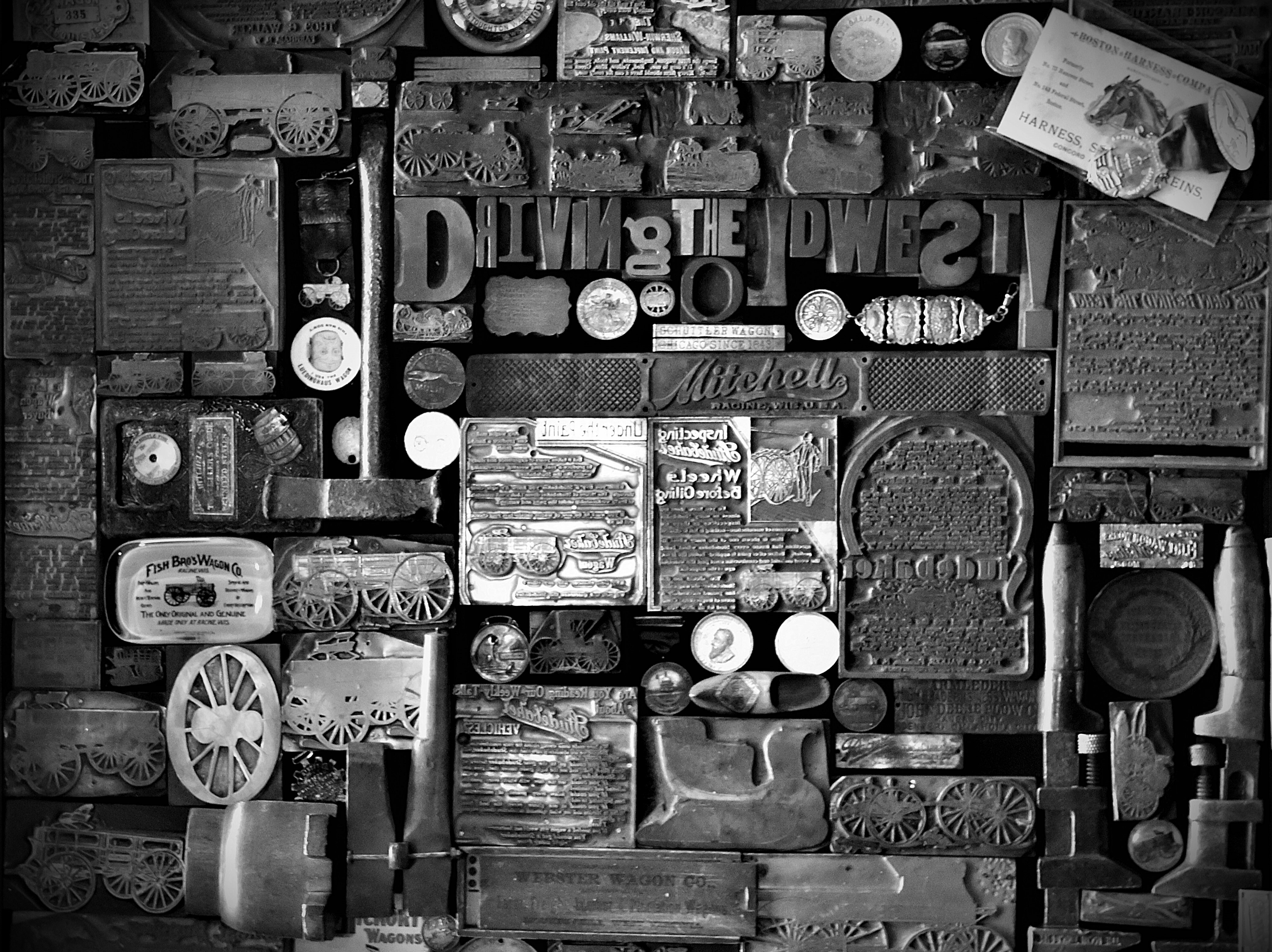
America's first transportation industry was full of extremely sophisticated business owners who excelled at competition, innovation, and profits. Image Copyright © David E. Sneed, All Rights Reserved.
It might seem that we should already know everything there is to know about old wagons and stages. Fact is, we all still have a lot to learn because there's a tremendous amount of information still buried in the annals of time. I know because we dig it up weekly. How feverish is any of our desires to learn? I can tell you this... with hundreds and hundreds of researched stories on our site, the A-I computer processing centers from around the globe have found us and have been furiously downloading and digitally digesting details from our website. I see that happening daily. Unfortunately, computers cannot outrun the depth of knowledge from firsthand experience. There's just too much material that still isn't on the internet - and some of it, we're committed to keeping proprietary to ensure there's never a chance for it to be misused.
Regrettably, there are also folks who still look at a wagon and assume it's old and original just because it 'has the look.' I've seen this happen over and over on social media as owners ask for more information about a wagon that is nothing more than a Frankenstein assemblage of parts from multiple other wagons. How do you break that news to someone? Those old wheels might be fine especially if there's no attempt to pass off the piece as an authentic example of a period vehicle. But, when the axles, wheels, box, end gates, brake, bow clips, and numerous other parts clearly belong elsewhere, it's a hard truth to pass along to an otherwise excited owner.
So, is there a need for factual interpretations of wagons and western vehicles? We think so and it's why we're determined to continue listening to the folks who were actually there when these old wheels were originally built and used. It's why our research focus is purely on primary source materials. It can be an arduous and slow process to uncover the hidden gems of information but, day after day, that's where you'll find us... Putting First Things First.
By the way, if you haven't yet SIGNED UP to receive notifications each time we add to the blogs, articles, and other parts of the Wheels That Won The West® website, it's super-easy to do. Just click on the SIGN-UP link in the upper right of your screen and type in your email address.That will allow us to keep you in the loop and help make sure you don't miss a thing. Have a great week!
Matthew 6:33