
I know quite a few western enthusiasts with great chuck wagons. Getting up close to these wheels, it's easy to see how the look and lore go well beyond movie and television nostalgia. The patina and seasoning on many of these icons reflect a crucial part of the American West. They completed and balanced the cowboy camp, providing a place for resting, refueling, repairing, recruiting, and reminiscing. Two folks you can often find around a chuck wagon are Charles Parker and John Arbuckle. They may not be instantly visible but, invariably, their work is apparent. Truth is, their lives, legacies, and brands have impacted folks for hundreds of years.
To understand the history lived by these men, we need look no further than in and around the old chuck box on a wagon. For those who might be unfamiliar with a chuck wagon, the chuck (food) box is what truly sets these machines apart. Positioned at the rear of the vehicle, that handmade, multi-purpose invention is built as a wooden workstation, table, cabinet, drawers, and catchall. It's purposely filled with items needed for cooking, eating, and even doctoring during a cattle drive or roundup. Among the often-used things in a chuck wagon is a coffee grinder or mill. I've seen both large and small grinders mounted to the back of original chuck wagons as well as handheld mills stashed in a cubby within the chuck box.
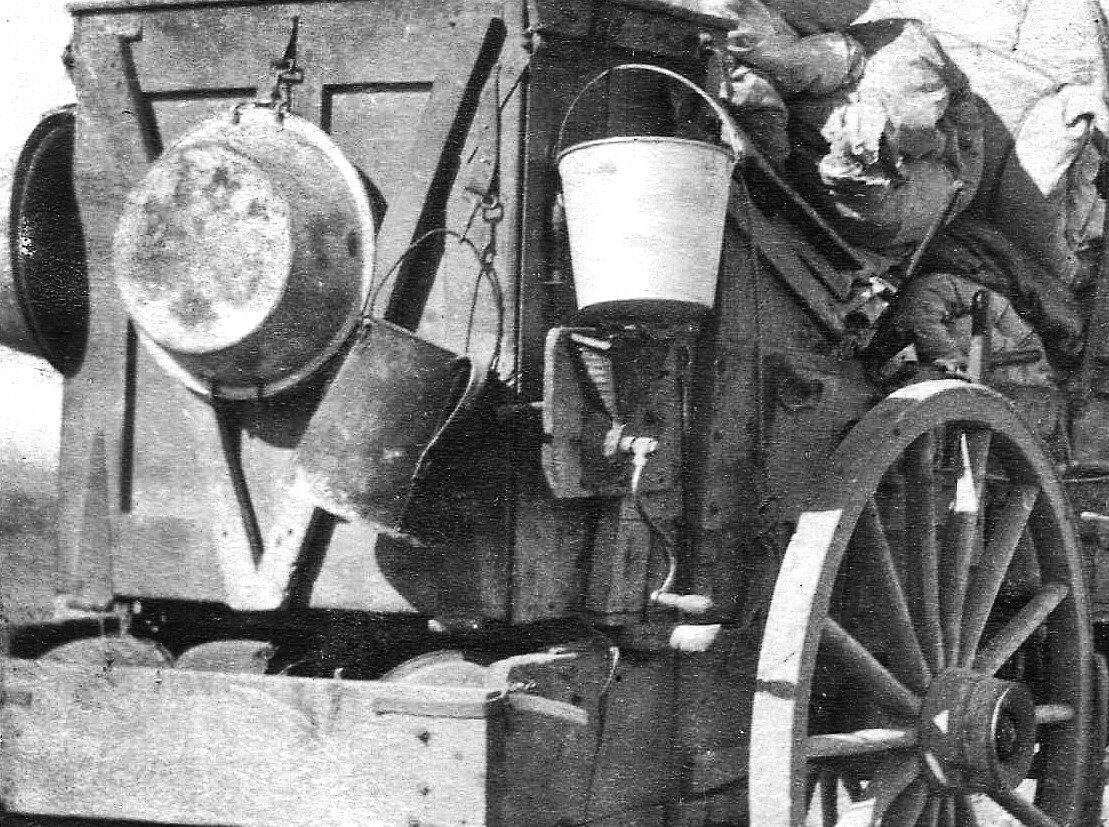
A good part of the time, that period grinder and the beans that go in it will each carry the names of Parker and Arbuckle. As a result, from chuck wagon and collector events to man caves and even museums, those names are well known.
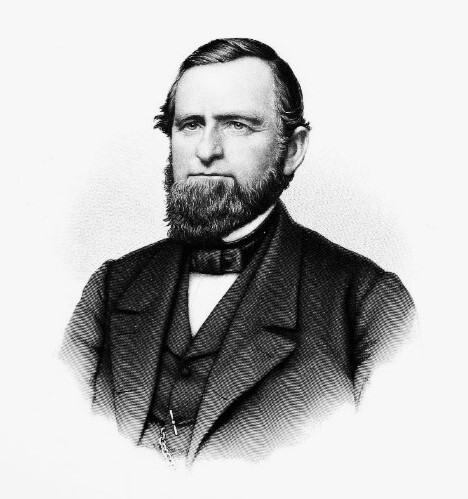
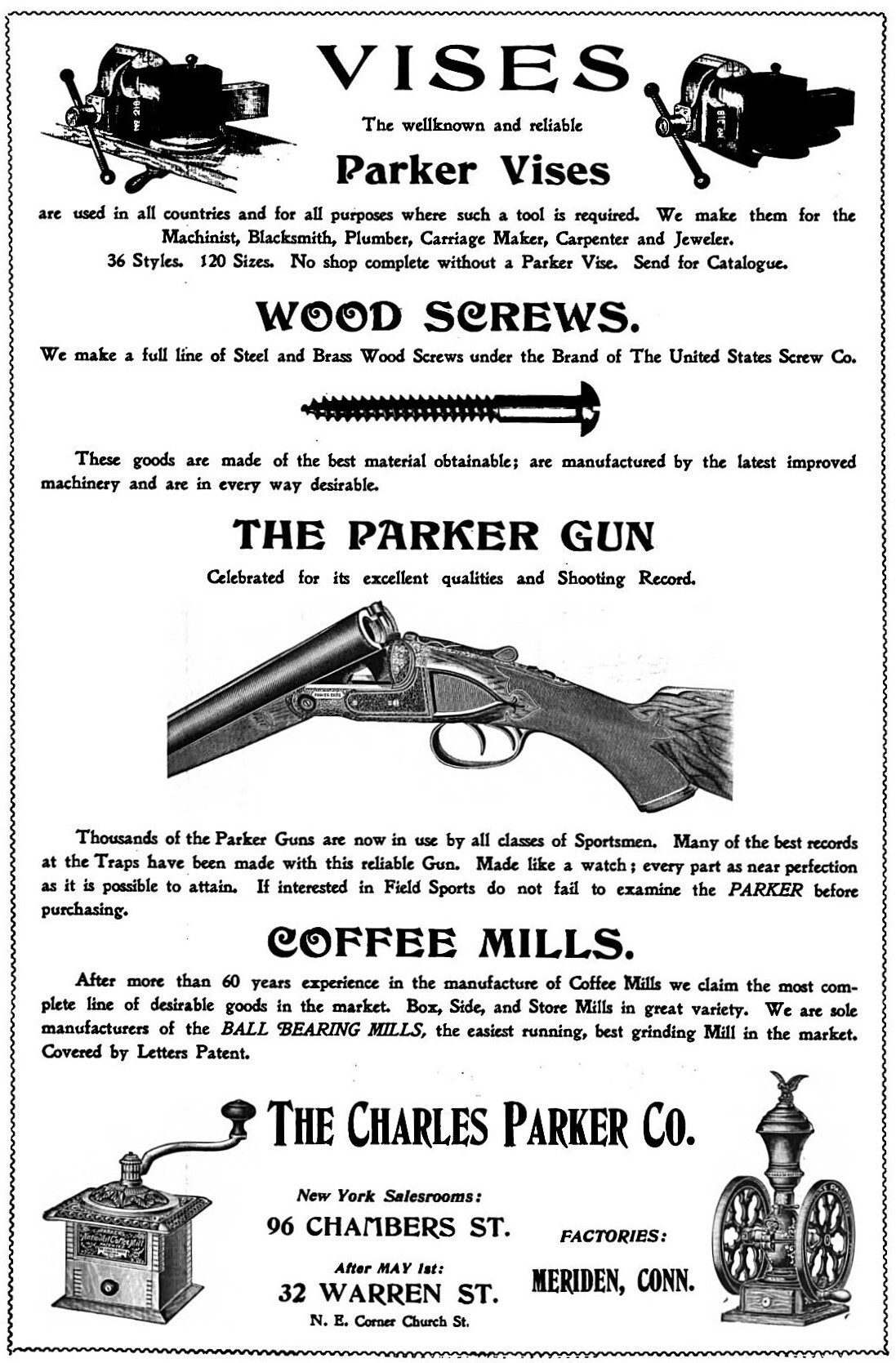
Trying to keep up with Charles Parker's business interests is about as easy as herding cats in a lightning storm. In a word, they were VAST. Some of the things the company was involved in producing included waffle irons, bench vices, spoons, ladles, lamps, brass & iron castings, scales, shade rollers, eyeglasses, spectacle cases, match safes, tobacco boxes, packing boxes, copying presses, window fasteners, machinists' tools, clocks, cabinets, piano benches/chairs/stools, music racks, door latches, handles, hinges, and also their famed shotguns. Of course, that list also includes coffee grinders. Many of these different pieces are highly coveted by collectors today.
Long before the Parker brand was a household word, though, the founder's beginnings were a bit humbler. According to a February 1902 article in the "Meriden Weekly Republican," Charles was born on January 2, 1809. He lived and worked on a farm until he was eighteen. At that time, he began work in Southington, CT., earning $6/month making pewter buttons. In 1828, he moved to Meriden and went to work crafting coffee mills for Patrick Lewis. In December of the following year, he contracted with Lewis and his partner to make mills for them.
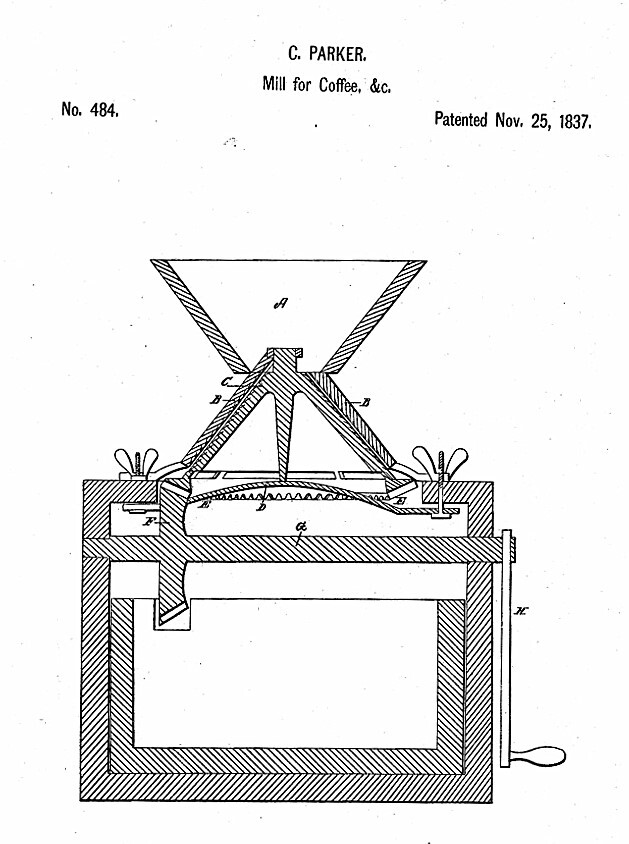
In just over a year, he had tucked away a tidy profit of eighteen hundred dollars. In 1831, business was so good that Parker took on a partner but sold out to him the next year and started over in his own shop. 1832 saw the first U.S. patent for a Parker coffee-grinder awarded to Edmund Parker (Charles' brother) and Herman White of Meriden, CT. Not to be outdone, the Charles Parker Company was founded that same year, and shortly afterward, his brother, Edmund, and Herman White became partners with him. In 1845, that partnership dissolved and Charles continued in the business alone, eventually adding a massive number of products to the Parker lineup.
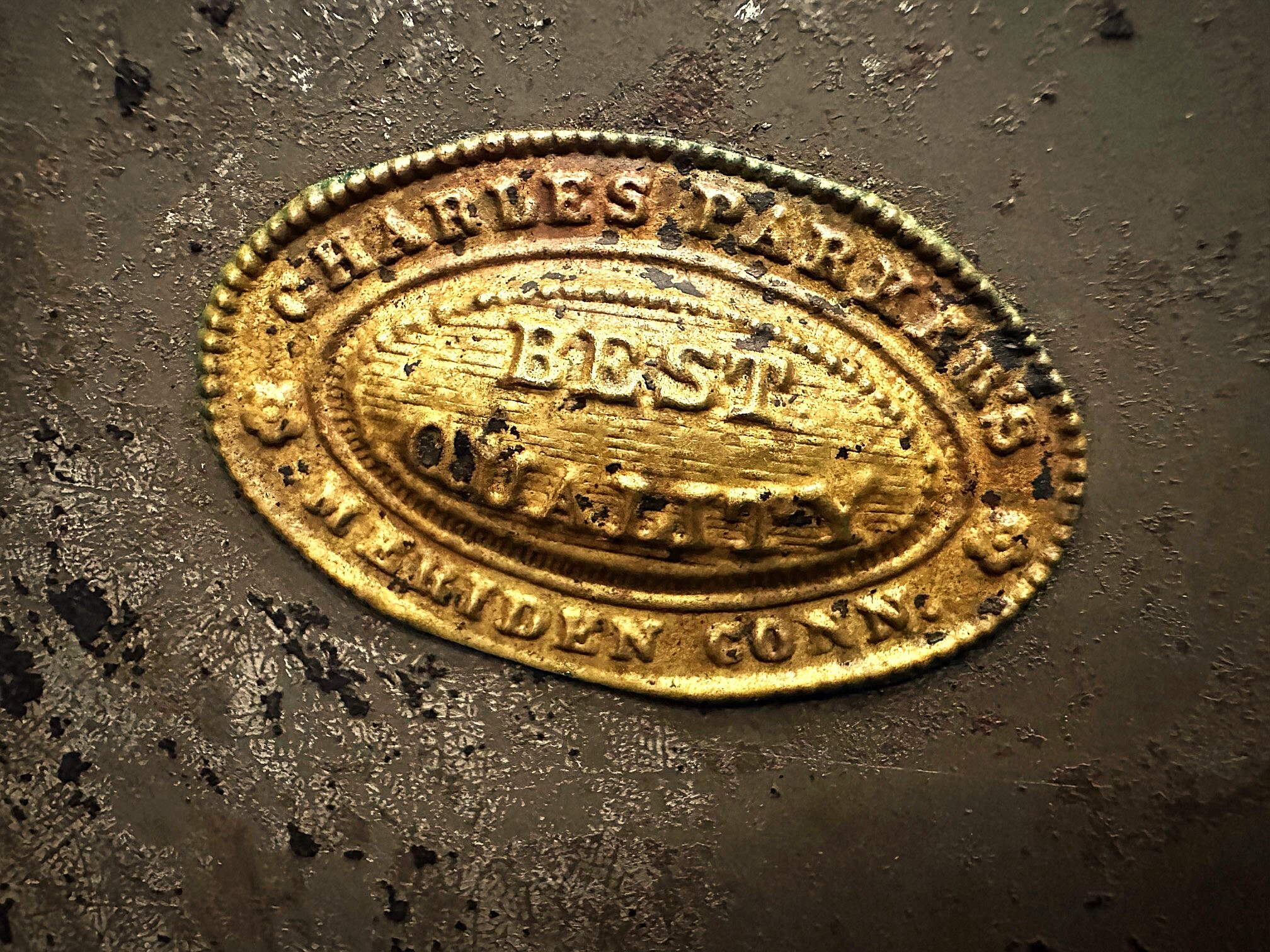
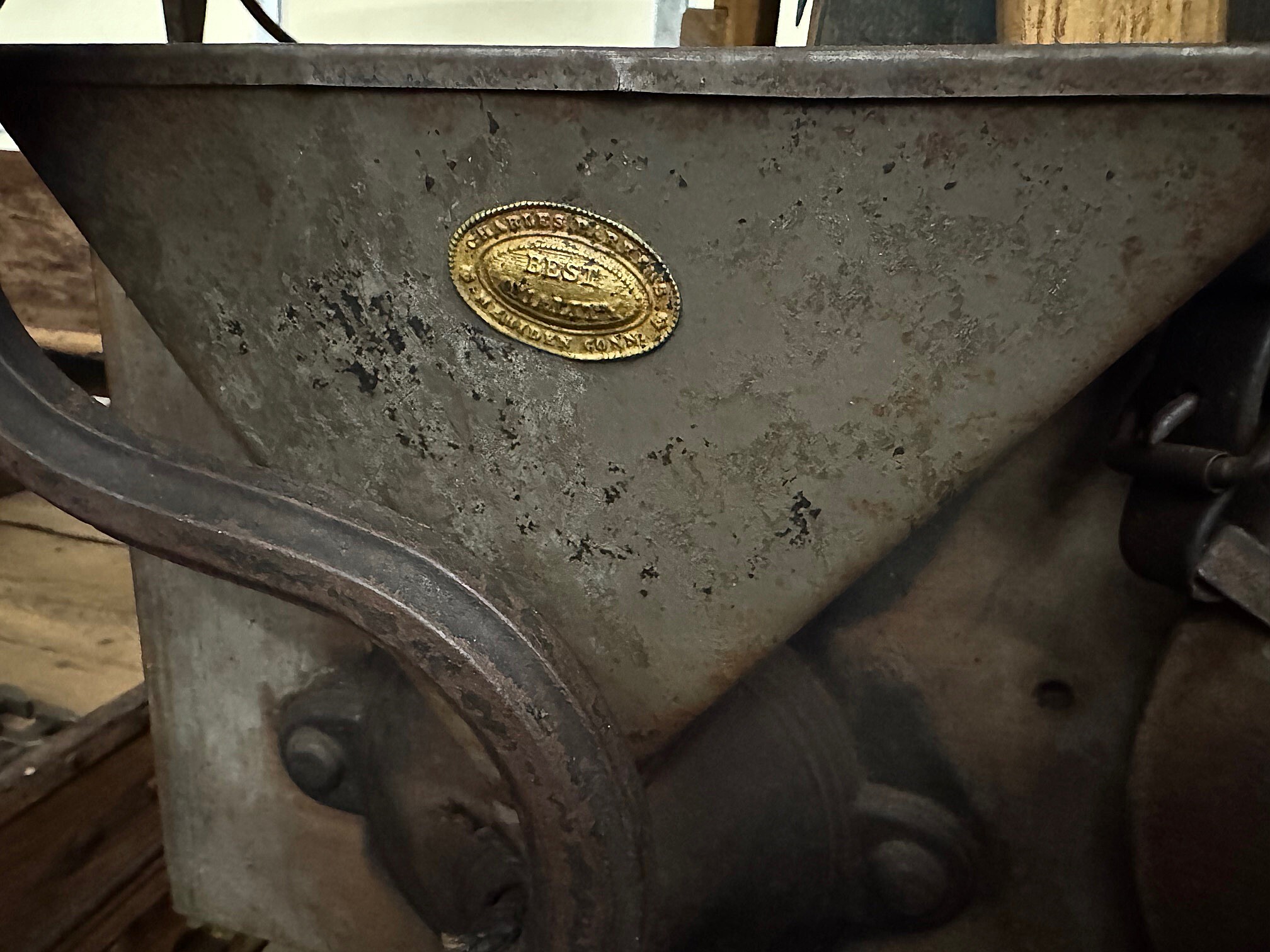
A large Charles Parker-branded coffee mill on a chuck wagon. Image Copyright David E. Sneed, All Rights Reserved.
An 1894 overview of the firm also includes details of multiple government contracts won by Parker for lamps used by the United States Army. Business not only came from the U.S. but all parts of the world, including South America, Europe, Australia, and the West Indies. By the turn of the twentieth century, Parker's companies were employing well over 1,000 folks and raking in close to $2 million dollars each year. Throughout the 1800s and early 1900s, patent after patent was granted to the Parker manufacturing machine. Innovation, leadership, hard work, and strong promotions were central to the company. The brand endured for roughly 140 years before closing in the 1970s.
Even with such a strong background, at the end of the day, a coffee grinder still needs coffee beans (or some other spice) to be useful.This brings us to John Arbuckle...
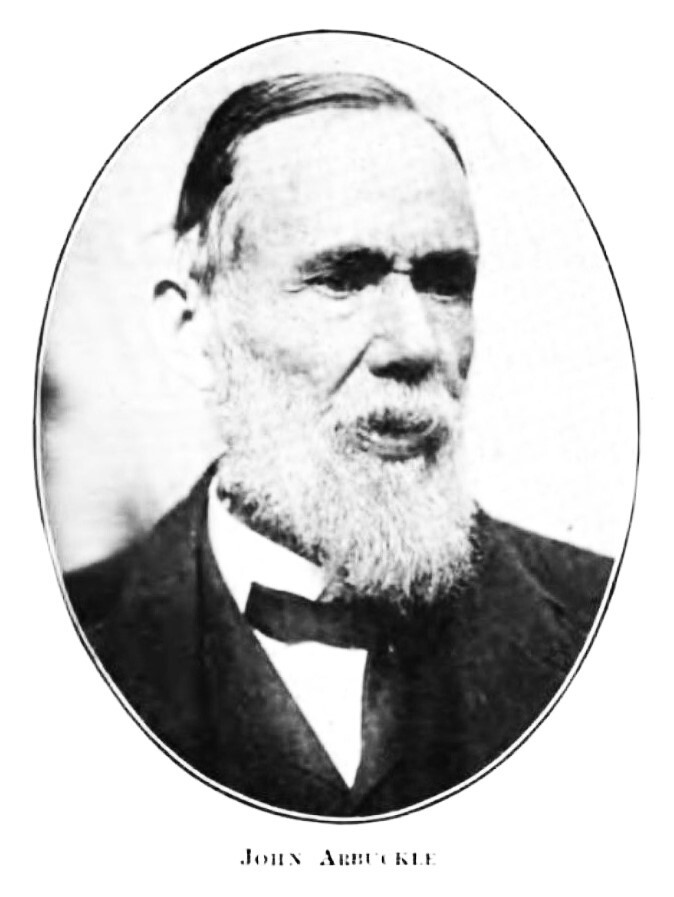
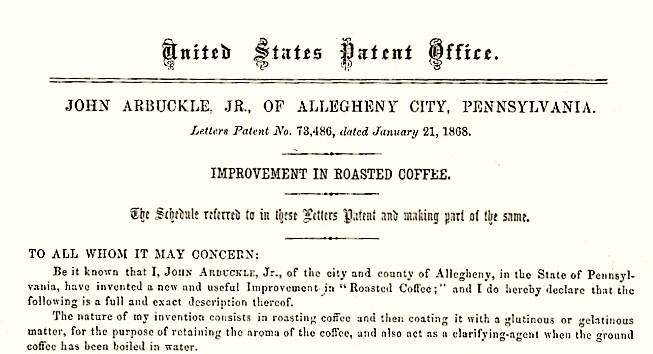
John Arbuckle was also associated with multiple patents. Immediately above is a portion of his 1868 patent for roasting coffee.
In 1859, Charles Arbuckle (John's older brother) and their uncle Duncan McDonald, organized a wholesale grocery with their friend William Roseburg. It was called "McDonald & Arbuckle." A year later, John Arbuckle joined the firm and it was renamed, "McDonald & Arbuckles." Not long afterward, both McDonald and Roseburg retired, leaving the company to the Arbuckle brothers. As the company grew, it became one of the most important wholesale grocers in Pennsylvania. While that was a strong start, this would not be the final destiny for the Arbuckle name.
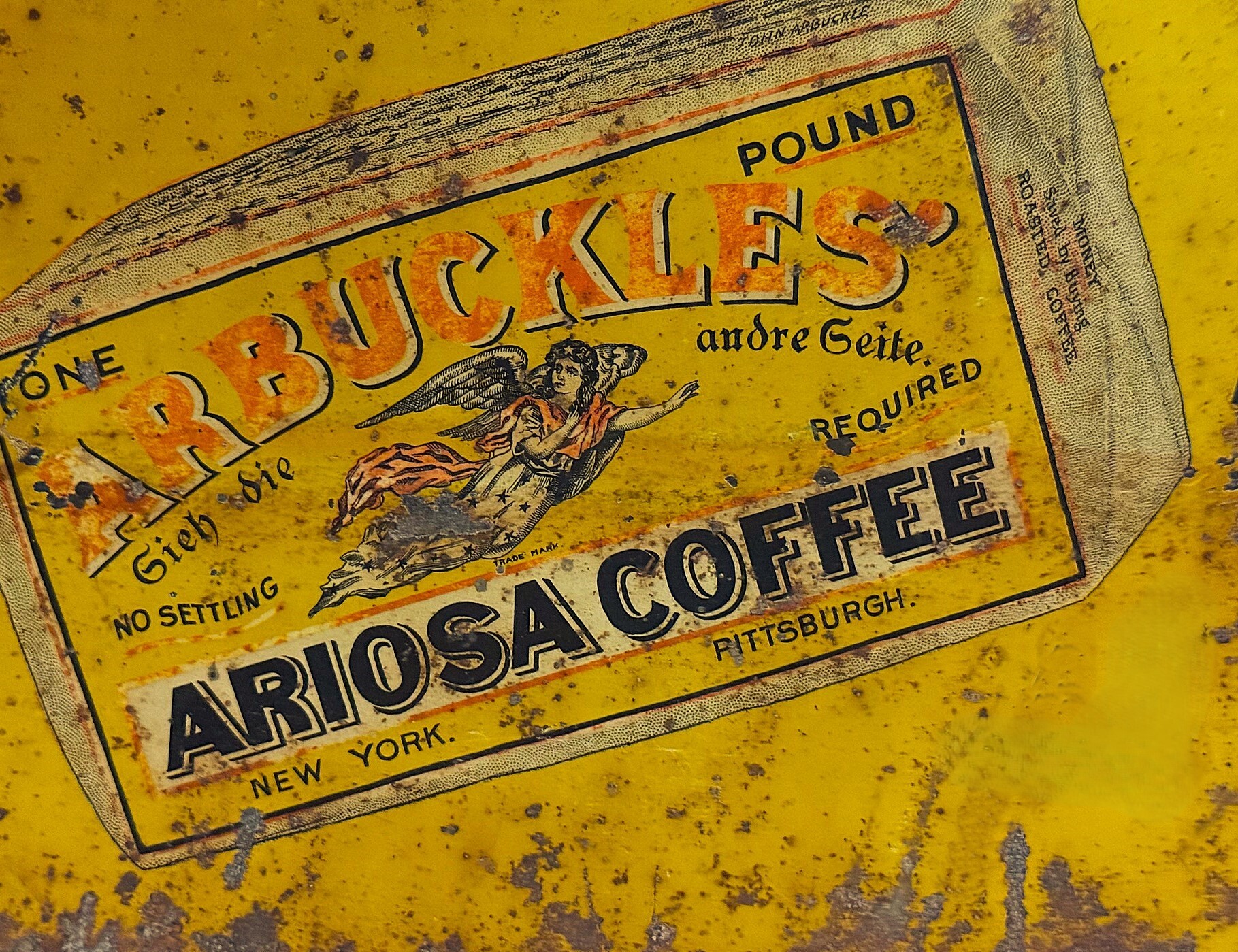
According to the 1922 book, "All About Coffee," prior to the1860s, coffee was not typically sold as a roasted or ground commodity, ready for the pot. Most folks bought their coffee green and roasted it in their own stoves as needed. Arbuckle was convinced there was a better way and, in 1865, his experiments led him to offer a carefully roasted coffee that was packed while still warm in smaller containers. He did this in spite of the ridicule of competitors who likened the idea to that of selling peanuts in a bag. Nonetheless, his formula of coating the beans with a special glaze helped seal in the rich flavor. The individual packages were a hit, eventually earning him the nickname, 'The Coffee King!" Here's a bit of a timeline for some of the Arbuckle accomplishments...
- 1865... John Arbuckle introduces individual packets of roasted coffee. This is the precursor to the Ariosa package.
- 1868... John Arbuckle is awarded a U.S. patent for a roasted-coffee coating consisting of Irish moss, Isinglass, gelatin, sugar, and eggs.
- 1873... The Ariosa brand became the first successful national brand of package coffee put on the U.S. market. (It was registered in 1900)
- One story as to the origin of the 'Ariosa' name is that the 'A' stood for Arbuckle, the 'RIO' was a reference to Brazil, and the 'SA' was an acronym for South America.
- 1874... John Arbuckle granted U.S. patent on coffee-cleaner-and-grader
- 1896... The company became involved in refining sugar. Within two years, their refinery in Brooklyn was producing five thousand barrels of sugar per day.
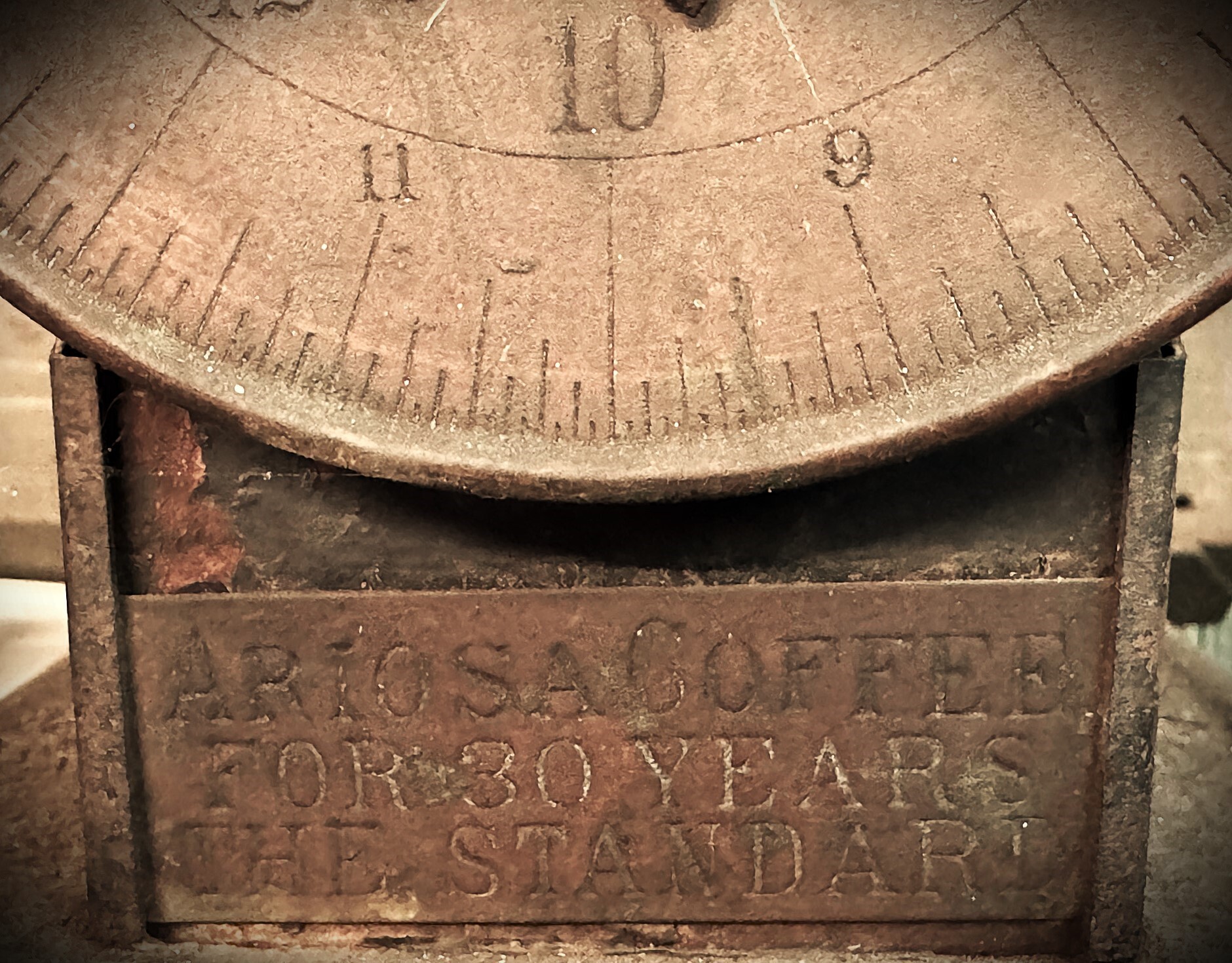
A portion of an Ariosa-branded scale from around 1903. Image Copyright David E. Sneed, All Rights Reserved.
It seems that every coffee drinker has a view on how to best make a cup of joe. Some time back, I ran across an old cowboy recipe. It was more than a century in age and it seems appropriate to include it here...
Making Morning Coffee
Allow 1 tablespoon of coffee to each person. The coffee when ground should be measured, put into the coffee-pot, and boiling water poured over it in the proportion of ¾ pint to each tablespoonful of coffee, and then put it on the fire: the instant it boils, take the pot off, uncover it, and let it stand a minute or two: then cover it again, put it back on the fire, and let it boil up again. Take it from the fire and let it stand for five minutes to settle. It is then ready to pour."
While I haven't tried the specific method above, there's something about the aroma and the smooth, bold flavor of a great cup of coffee in the morning. It gets the mind moving and the body focused. So much so that the subject of coffee mills, special blends, and the 'right' way to make a cup of joe are still a never-ending part of conversations. No matter the recipe, though, from Charles Parker and John Arbuckle to Charlie Goodnight and a host of friends just waiting for your next outing, you're never alone in a chuck wagon camp.
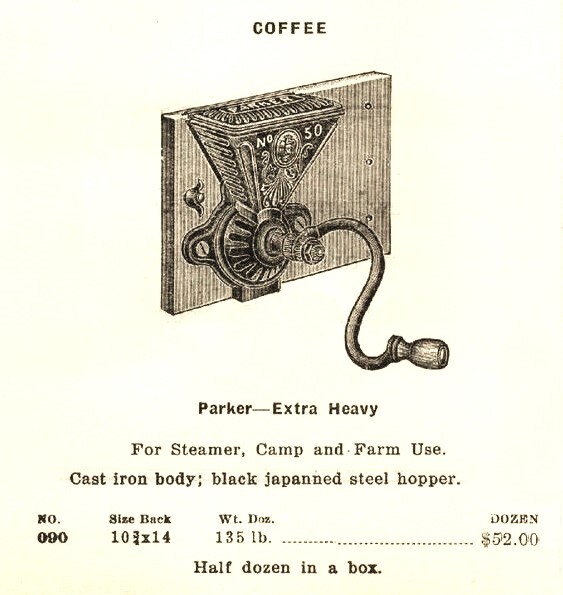
An early 20th century wholesale advertisement for Parker coffee grinders. Image Courtesy Wheels That Won The West® Archives.
For more info on the legendary Arbuckles brand of coffee, visit their website at www.arbucklescoffee.com Likewise, if you'd like to know more about the American Chuck Wagon Association, visit them at www.americanchuckwagons.com
Have a great week and, if you haven't signed up for NOTIFICATIONS on our blog posts and other website updates, make sure you click on the link in the upper right of your screen and leave your email address.
David
Ps. 20:7