
Earlier this year, we highlighted several of the oldest Studebaker wagons and, back on June 16, 2025, we shared a pic of the last Studebaker wagon built in South Bend, Indiana. It was finished in December of 1920 and had a retail value of $130. (Check out that blog entitled, "A Kentucky Studebaker" for info on how the Studebaker brand continued to be made in Louisville, KY after 1920 - It will be located in the 'Archived Blogs' section).
With those thoughts in mind, this week seemed like a good time to focus on what International Harvester initially reported as the final days of another legendary wagon maker. The Weber wagon brand has a long and storied history beginning in 1845 in Chicago, Illinois. (Look back to our 12-17-14 post for more history of the Weber Wagon Company)
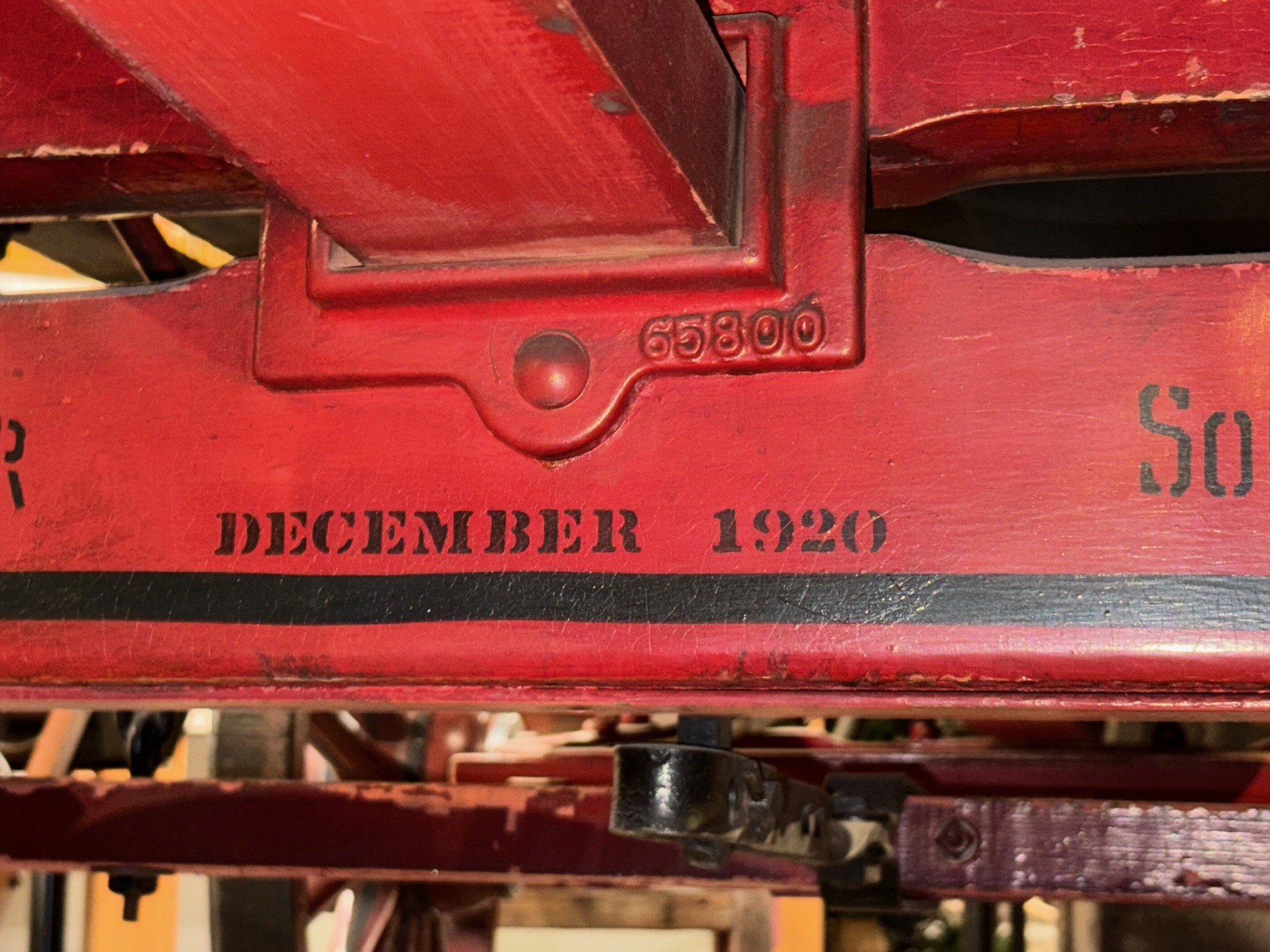
This photo shows a portion of the rear axle on the last Studebaker farm wagon built in South Bend, Indiana. Image Copyright © David E. Sneed, All Rights Reserved.
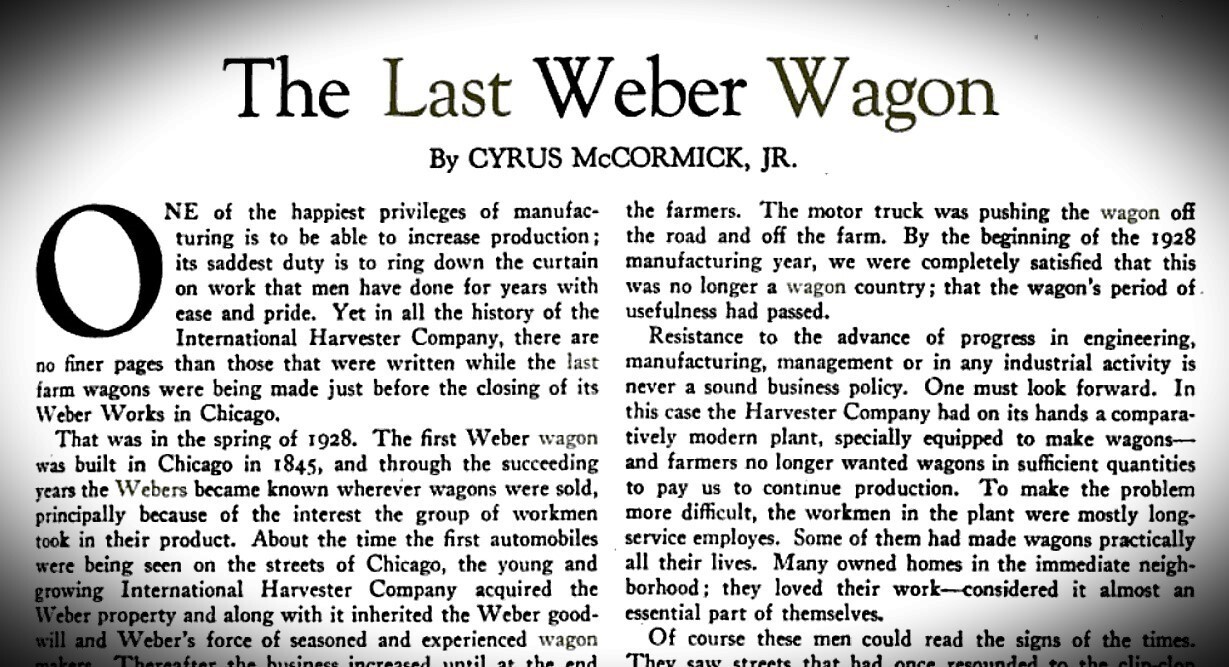
While the Studebaker Manufacturing Company ceased wagon-making in the last days of 1920, according to an IHC article written by Cyrus McCormick, Jr. and published in April of 1929, the final, wood-wheeled Weber was finished on April 3, 1928... and, then again, maybe not. But I digress.Back to the story... after nearly a quarter century under the ownership of IHC and eighty-three years as a brand, during the days of the Great Depression, the empire of horse-drawn transportation in America was indeed coming to an end. Weber had been a highly esteemed wagon name for ages. Nonetheless, the old Weber factory in Chicago, like the Peter Schuttler shops three years earlier, were being considered for other uses. International Harvester Corporation (IHC), as owner of the business, had done all they could to support the legendary vehicles. Times - as they always do - were changing. The agricultural depression of 1920 and 21 had been extremely challenging. By 1922, there seemed to be a little uptick in business but, as explained in the article, it was a short-lived season...
"Although the wagon business improved somewhat in 1923 and 1924, it was soon evident that its strength was being sapped by something other than lack of buying power among the farmers. The motor truck was pushing the wagon off the road and off the farm. By the beginning of the 1928 manufacturing year, we were completely satisfied that this was no longer a wagon country; that the wagon's period of usefulness had passed."
The 'supposed' final day of Weber wagon construction in Chicago was an event like none ever seen at the Weber factory. Surrounded by ceremonies and speeches, the last wagon had a single panel on the box that was left uncoated, waiting for one last layer of varnish. An unnamed employee with forty-one years of experience (he had started building wagons in 1887, the same year generally recognized as the end of the open-range cattle industry) was given the honor of putting the finishing touches on this legacy-laden Weber wagon. The paint gleamed, tears were shed, and countless families were affected. IHC worked to reassign as many employees as possible but it appeared to be a hard bend in the road for production workers, salesmen, dealers, and loyal customers.
The old article carries an air of finality and the industry directories for 1929 definitely reinforce that Weber was out of business that year. However, reports of the brand's death appear to have been premature as the 1930s and 40s directories clearly show new life breathed back into the historic name. A few other major players were convinced that less competition meant more opportunity. It was enough of a reason to keep wood wagons in their respective lineups. Firms like John Deere, Springfield, Thornhill, and dozens more were among those still promoting wagons. Perhaps the same thinking eventually won out at IHC? For whatever reason, Weber wagons were given another chance to stay in the mix. We can see that shift even within paint and construction variations shown on later wagons. Ultimately, time and attrition did win out and the presence of literally thousands of makers became a thing of the past. After roughly two hundred years of America pushing west and the creation of a formidable transportation industry, wood-wheeled wagons were pushed to a new place of near-uselessness.The old assemblies of wood and metal were parked and forgotten - at least for a few decades - until a new generation of collectors, historians, and enthusiasts began to rediscover these parts of America's past.
Just as important, for those doing research, this story is a reminder of the value of cross-referencing multiple sources. Relying on just one period account can be risky when looking for finality and truth. It's another reason our Wheels That Won The West® Archives are filled with a wide variety of background resources, helping provide a clearer image of a complicated past.
Finally, even though this late 1920s announcement in TheSurvey publication might have been a bit premature, it would still be intriguing to find and document that 'last' Weber wagon from 1928. If it has survived, it's a direct connection to a world of history and rare reflection of A Time of Transition.
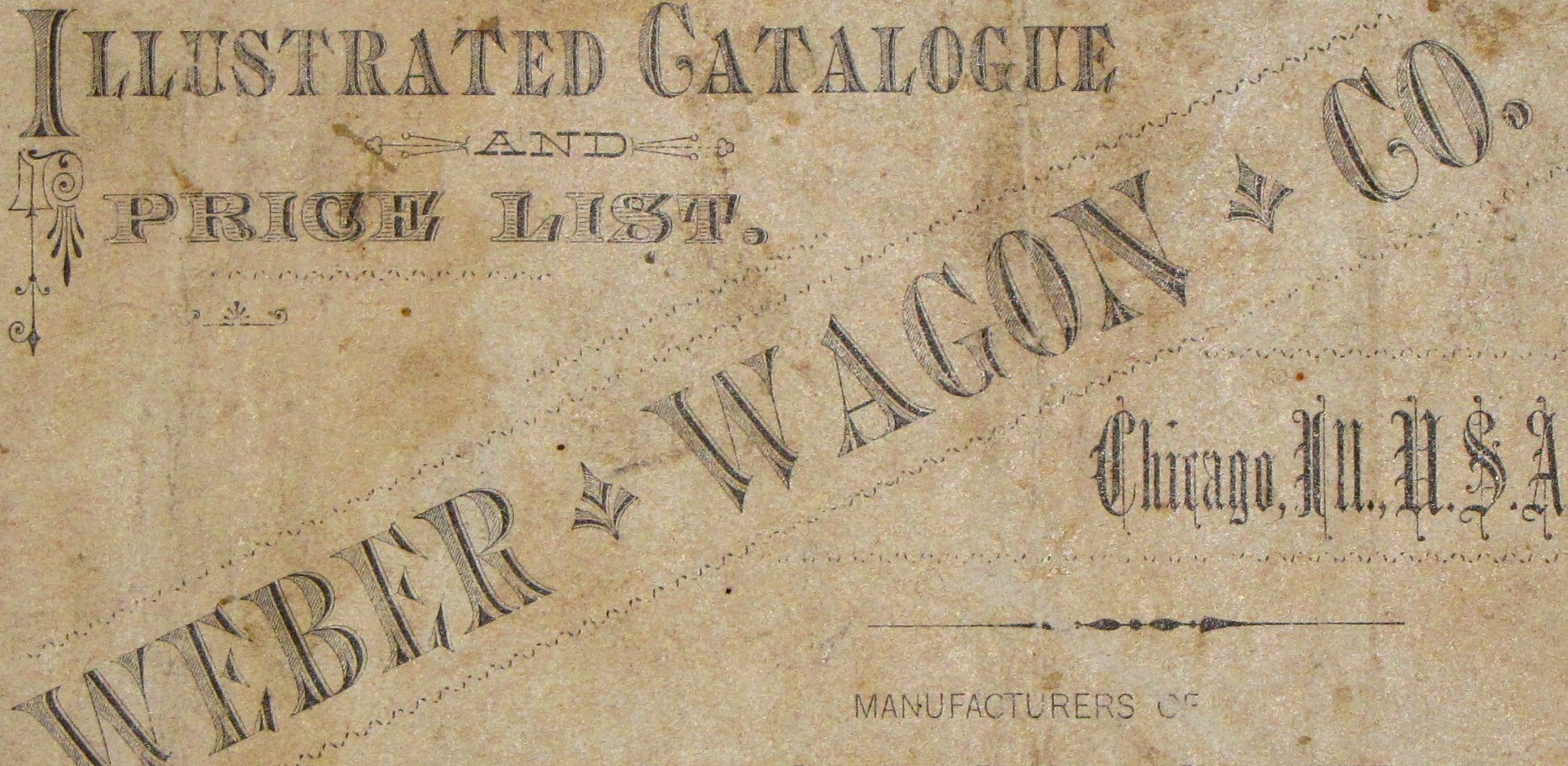
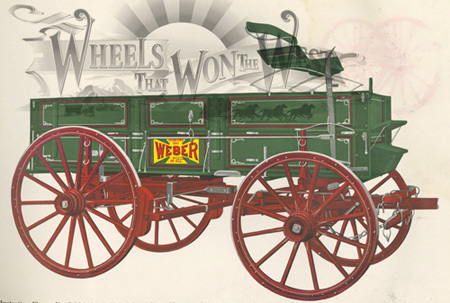
A portion of an 1883 Weber Wagon Company catalog. Image Copyright © David E. Sneed, All Rights Reserved.
For those who may not have signed up for notifications of UPDATES to our blogs, articles, and other parts of our site, it's easy. Just click on the SIGN-UP link in the upper right of your screen and we'll keep you in the loop.
Have a great week!
David
Ps. 20:7