
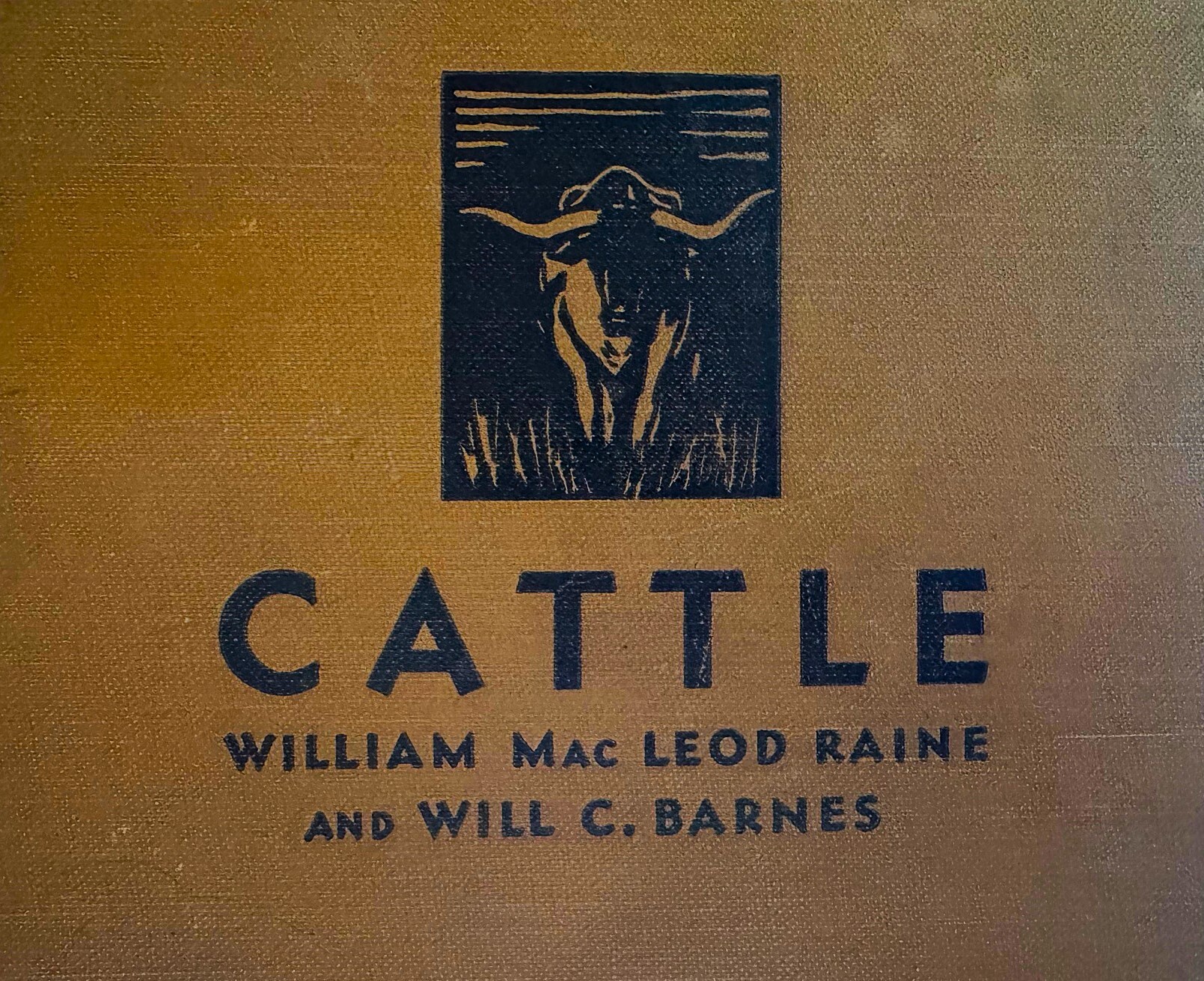
In our constant research, we invariably come across stories from the American West that are virtually unknown. Not long ago, I stumbled upon a period article attributed to Will C. Barnes. Some readers will recognize that name as a legendary Medal of Honor recipient for his heroic efforts during an attack from Geronimo’s warriors on Ft. Apache in 1881. Mr. Barnes is also known for his own cowboy days and writing several books including Tales From The X-Bar Horse Camp (with Frederick Remington illustrations), Arizona Place Names, Apaches & Longhorns, Gunfight in Apache County, 1887: The shootout between Sheriff C.P. Owens and the Blevins Brothers in Holbrook, Arizona, and co-authoring the book, Cattle with William Mac Leod Raine. This work was later retitled as Cattle, Cowboys and Rangers.
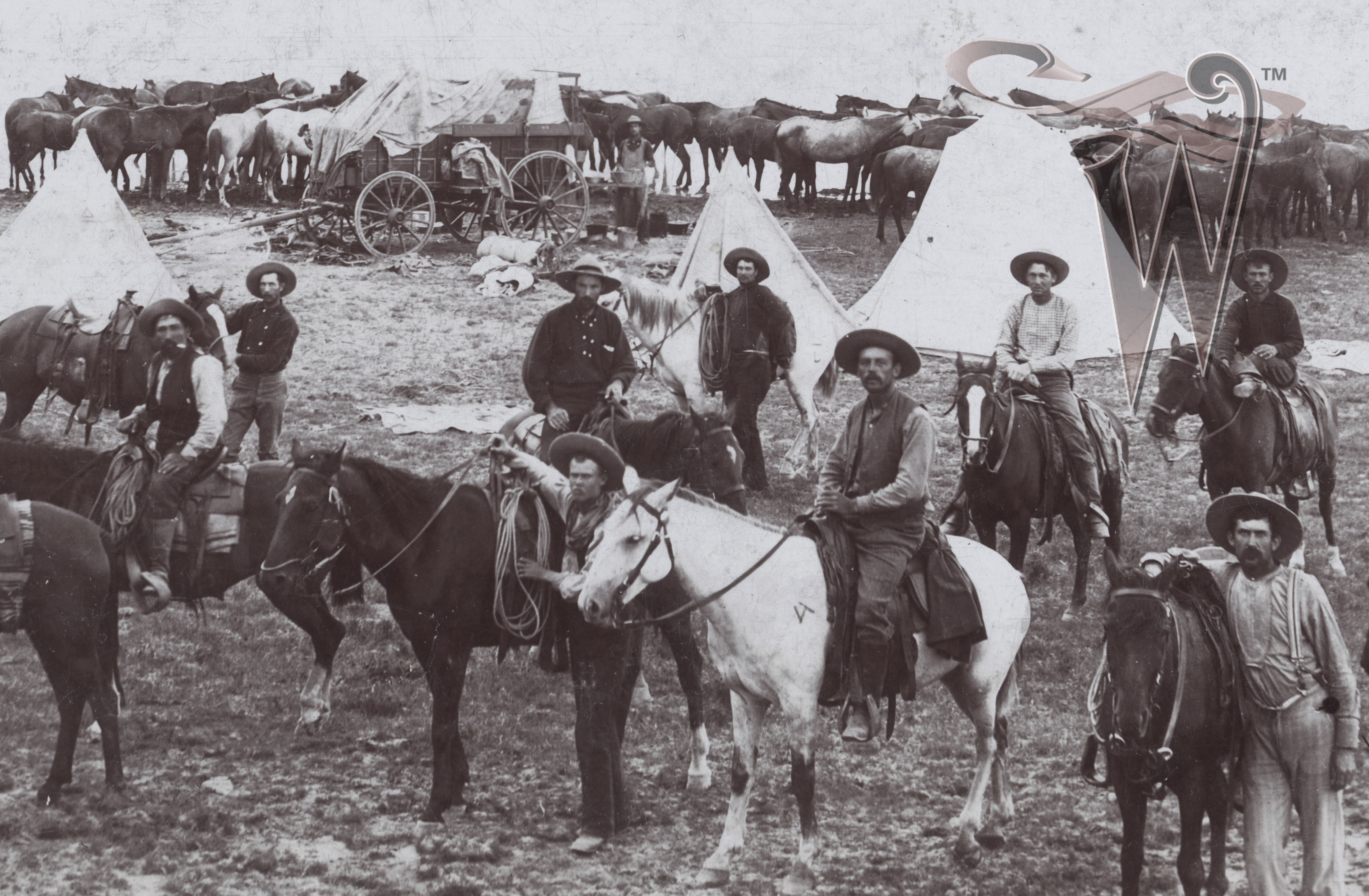
Both images above Courtesy Wheels That Won The West® Archives.
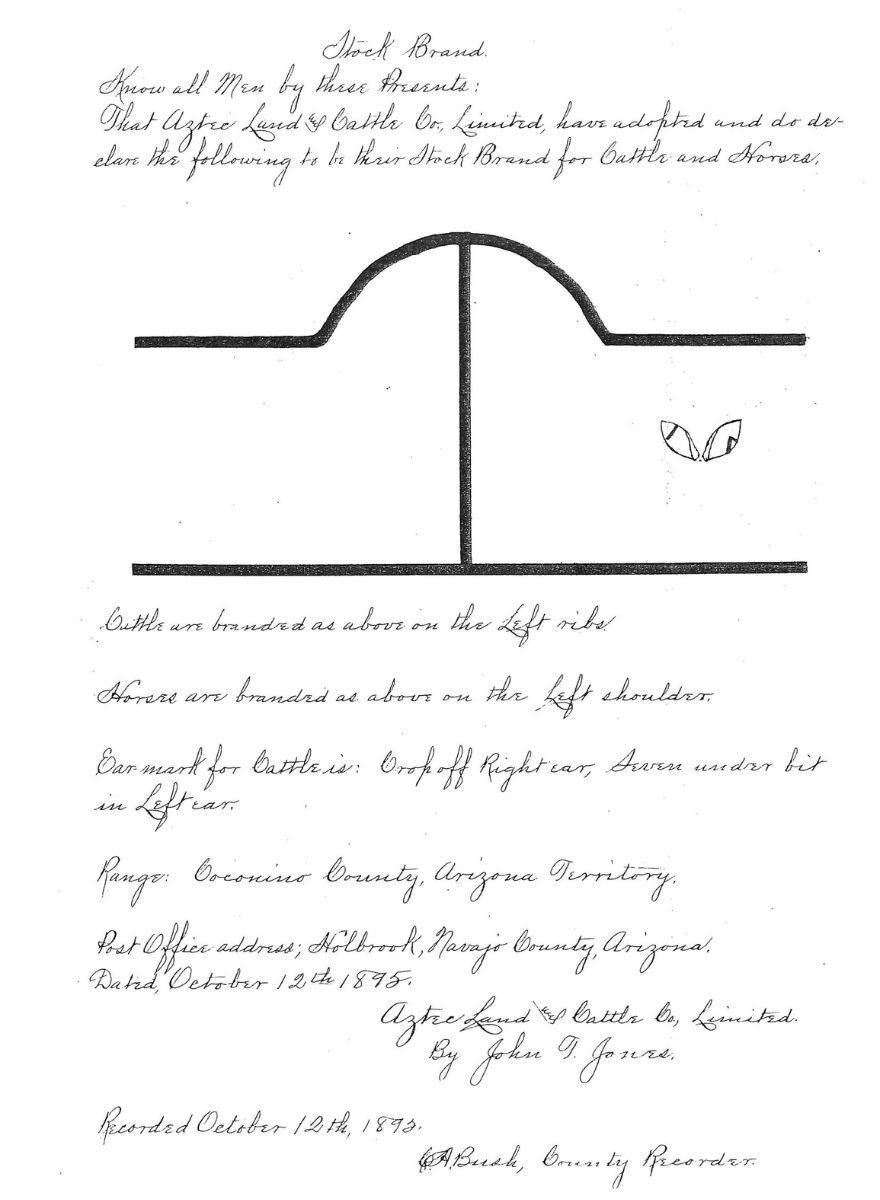
The Barnes’ article I discovered was entitled, “Boat Ark.” It was published in the May 1919 issue of “American Lumberman” and it includes details of a historic Arizona cattle operation as well as a particular type of wood used in wagon wheels. The timeframe of the initial part of the story will likely date to the mid-1880s. The outfit being discussed is none other than the legendary Aztec Land & Cattle Company in Arizona as well as cowboys, cattle, and horses from the Hashknife Outfit in Texas. Aztec was once the third-largest cattle ranch in North America and, today, is the second-largest private landowner in Arizona.
According to the company’s website, Following its formation in 1884 and incorporation in early 1885, the Aztec Land and Cattle Company, Limited purchased a 1,000,000-acre tract of land in northern Arizona from the Atlantic & Pacific Railroad, imported approximately 32,000 head of cattle branded with the Hashknife brand from Texas, and commenced ranching operations in Arizona. Aztec registered the Hashknife brand in Arizona several years later.
Several of Aztec’s early cowboys were reported to be from the Hashknife and have a whole history of their own. There’s plenty of additional material to roundup in those stories. All one has to do is type in a web search for Hashknife cowboys. Even Zane Grey wrote a book under the Hash Knife title in 1933. Since we’re already pushing the limits of length on this post, I’ll leave it to our readers to chase any other strays they’d like.
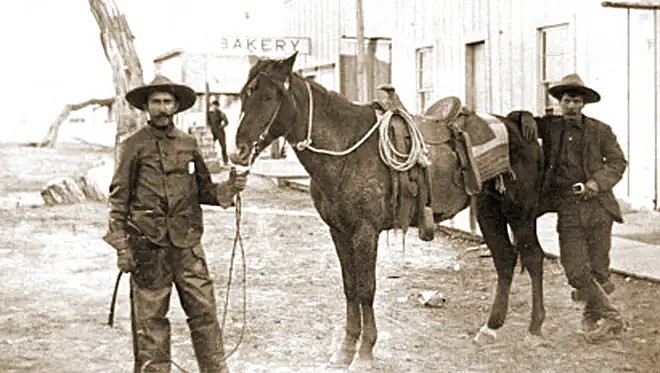
Cowboys from the Hashknife Outfit in Arizona. Image Courtesy Navajo County Historical Society.
As for the original magazine article, after laying down some ranch background, the old account gradually focuses on the strengths and weaknesses of bois d’ arc wood. It’s a legendary raw material for wagons and we’ll cover even more on this timber topic later. Nonetheless, this near-century-and-a-half-old story seems to be a good, general introduction with insights from folks who knew about Osage Orange during the days when wagons dominated the trails, ranches, and roads. Likewise, the chuck wagon and legendary ranch connections give us a firsthand look at the life of a cowboy in the 1880s. I hope you enjoy this re-publishing of the story. As of this posting, I believe we’re the first in the twenty-first century to discover this work. With no further ado, here is “Boat Ark” from Will C. Barnes...
The wagon boss had started the chuck wagon for Bear Springs with orders to Old Dad, the cook, to have dinner ready for the roundup crew by 11 o’clock sharp. The twenty men, headed by the wagon boss, then started out to ‘make the circle,’ its objective point being the regular roundup ground on the big open flat about a half mile from Bear Springs.
The road to these springs was just about as bad as a road could be and, for most of the distance, it was a case of ‘fifty-fifty’ on deep sand or malpais rocks.
It was the old ‘Hashknife’ range in northern Arizona, and twenty riders with the outfit made the load of bedding, grub and plunder of various kinds carried by the olden time roundup wagon about all that four good strong horses could drag. Generally, a rider was sent with the chuck wagon to help the cook out if he got stuck anywhere. This morning, however, we were shorthanded, the cattle were wild and lots of them, and as the road was plain enough and the cook a master hand with the reins and ‘silk,’ especially the latter, the wagon boss allowed “twan’t necessary to waste a good puncher following along behind that wagon just for company for old Dad.”
About half past 10 the boss and myself swung the leaders of a long string of crazy wild cattle into a ‘mill’ at the bed ground near Bear Springs, where we held them up. As far as we could see down the range, the dust was rising in half a hundred places where bunches of cattle were being pushed out of the hills and valleys into the open where the riders strung out in a huge crescent of perhaps five miles in length, gradually circled them closer and closer until finally they were all stopped in one swirling mass of about fifteen hundred bawling cows and calves, steers crying in their odd high-pitched falsetto voices, old bulls trumpeting and roaring their defiance at each other, some fighting furiously and making savage lunges at opponents to the imminent danger of any rider that came too close to them. The whole bunch were milling round and round until the dust they kicked up rose like a tawny cloud high into the blue sky.
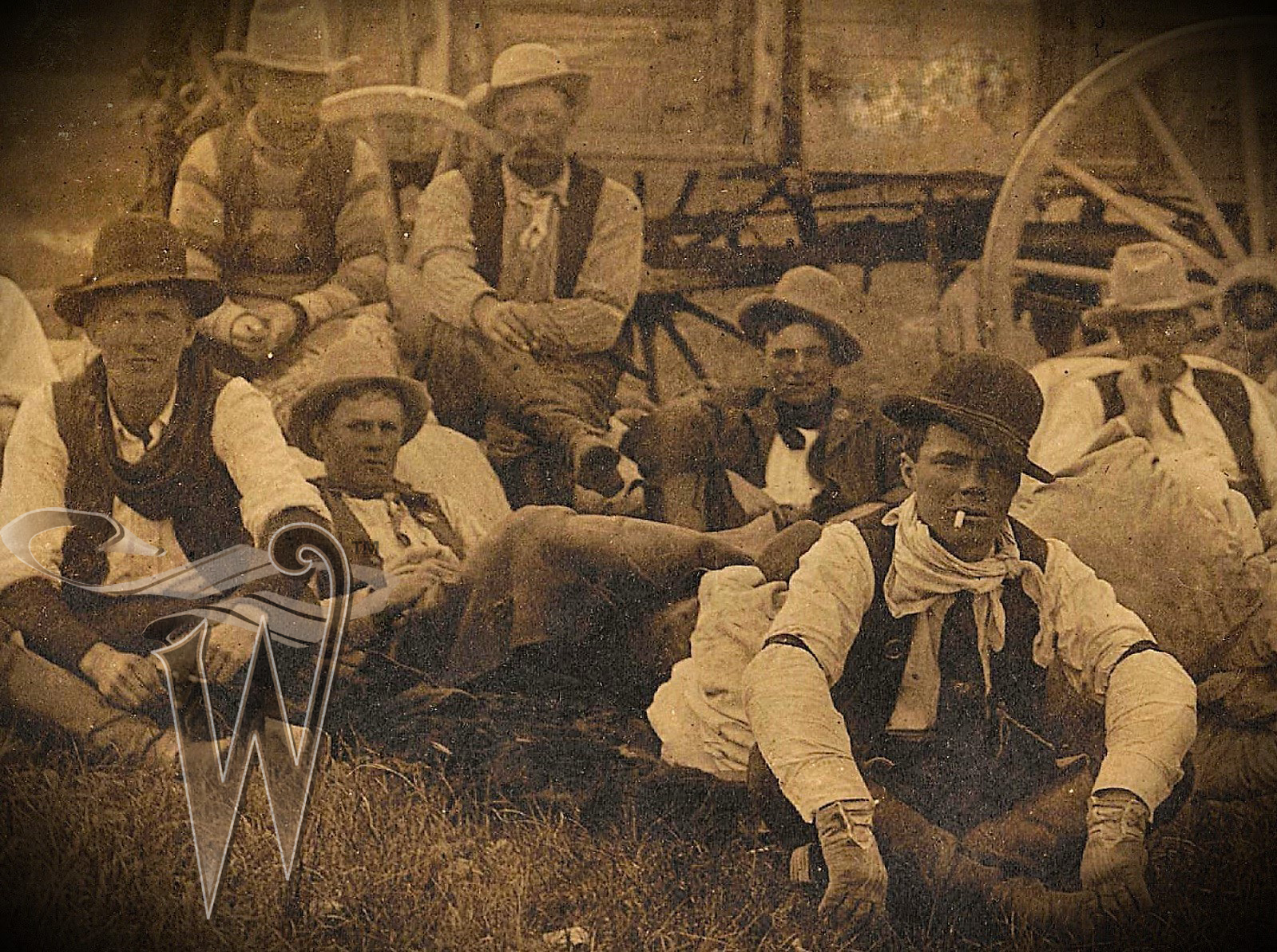
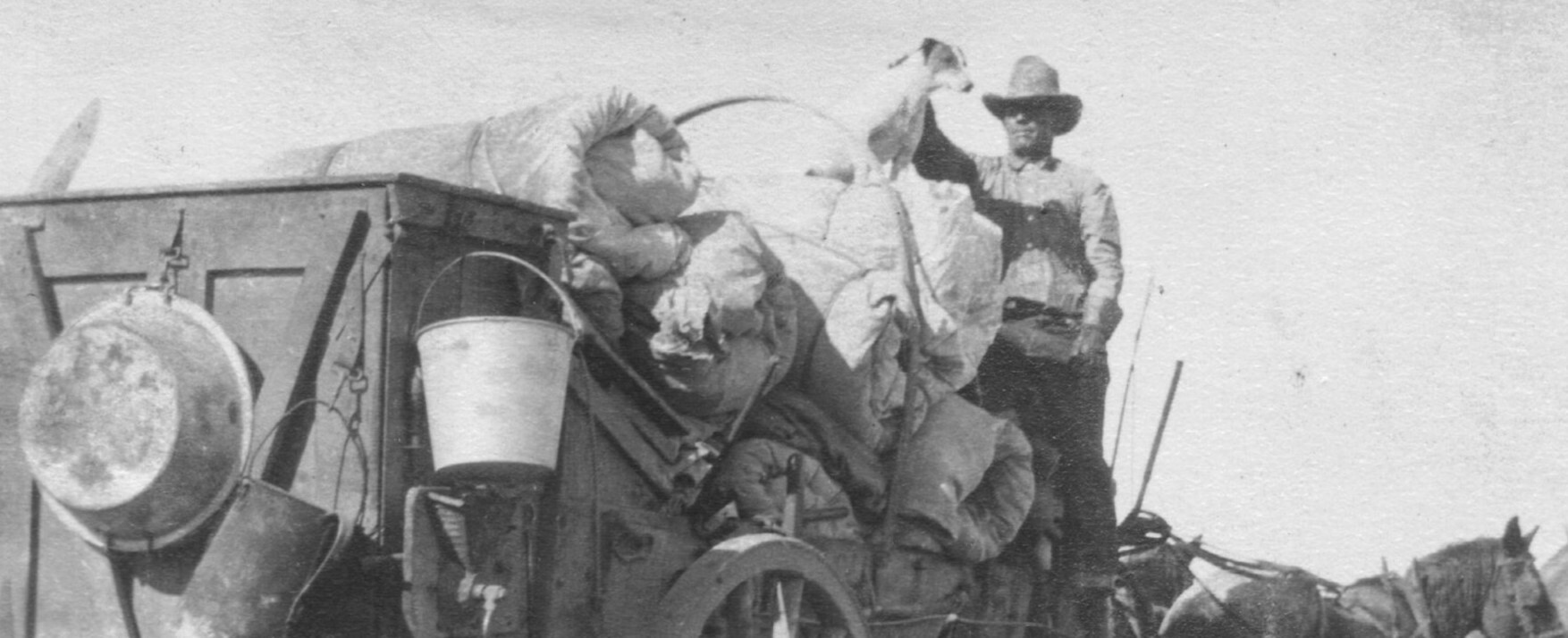
A cropped segment from a period camp of cowboys with their chuck wagon. Note the tire rivets on the wheels. Image Courtesy Wheels That Won The West® Archives.
When the noise became almost unbearable some puncher in the circle of men about the herd would fire a shot into the air from his six-shooter. Instantly every animal in the herd froze in its tracks. Not a sound came from even the hungriest calf in the bunch, and the silence was so tense that one’s ears fairly cracked. In five minutes, they had resumed their noisy activities and the dust was as thick as ever.
There were no signs of the chuck wagon at the springs and when three or four of the first riders had thrown down their bunches into the bed ground and taken their places about the herd the boss sent me back on the road to see what had happened to it. Back about four miles I found it in the midst of a sea of sand. The steel tire of one hind wheel lying beside the wagon told the story.
The team was unhitched and, under a nearby cedar, the cook was smoking his pipe as placidly as if such things for dinners for some twenty odd hungry cowpunchers – some of them mighty odd by the way – had no part whatever in his daily life.
“Well, Old timer,” I remarked as I rode up, “looks like a new wheel would be a good thing to have just about now or else a blacksmith shop – what?”
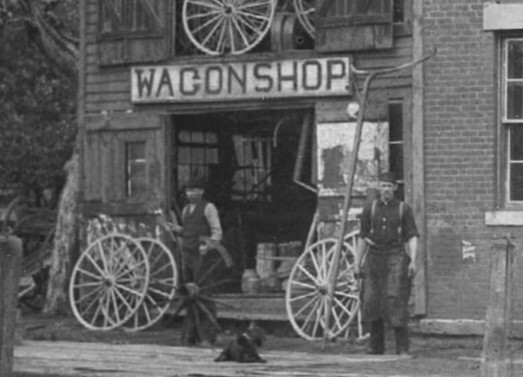
A small section from a larger, original blacksmith shop image. Courtesy Wheels That Won The West® Archives.
“If I just had one of them good ol boat ark wheels we usened to get down on the Pecos in Texas,” he snarled. “I wouldn’t trade it for a carload of these ornery wagon wheels they makes now days, wheels that swell every times there’s a heavy dew and shrink as soon as the sun begins to shine in the morning. The blacksmith at Holbrook put that tire on not two weeks ago, and now look at it. Give me a boat ark wagon every time for this dry country. Boat ark don’t shrink, don’t swell and once a tire is hung onto a wheel made of it, it’s there to stay till the wagon wears out. Hickory Hell!” he snorted in utter disgust, “Boat ark’s the only stuff to make wagon wheels out of.”
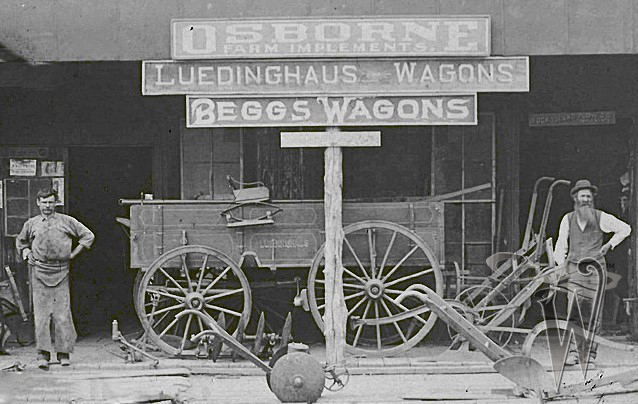
Well, we managed to pry the wagon up with a long cedar pole cut from a nearby tree and piled enough rocks under the hind axle to allow us to work the wheel off. Then by dint of considerable skill and much hard work together with plenty of picturesque profanity on the part of the irate cook the tire was replaced and, by driving wedges between the tire and the felloes, we got it tight enough to stand the trip into camp at the springs. For tools we had the cook’s ax, a shoeing hammer and pair of pincers from the horseshoeing outfit in the wagon box, aided by a half dozen buckets of water from the barrels on the side poured on to some gunny sacks laid along the felloes to soak them and the wedges up a little.
The Hashknife was a west Texas outfit and the almost universal comment of every man in the camp was to the effect that “nothin’ like that’d happen to a boat ark wagon like we used to have down on the Pecos.”
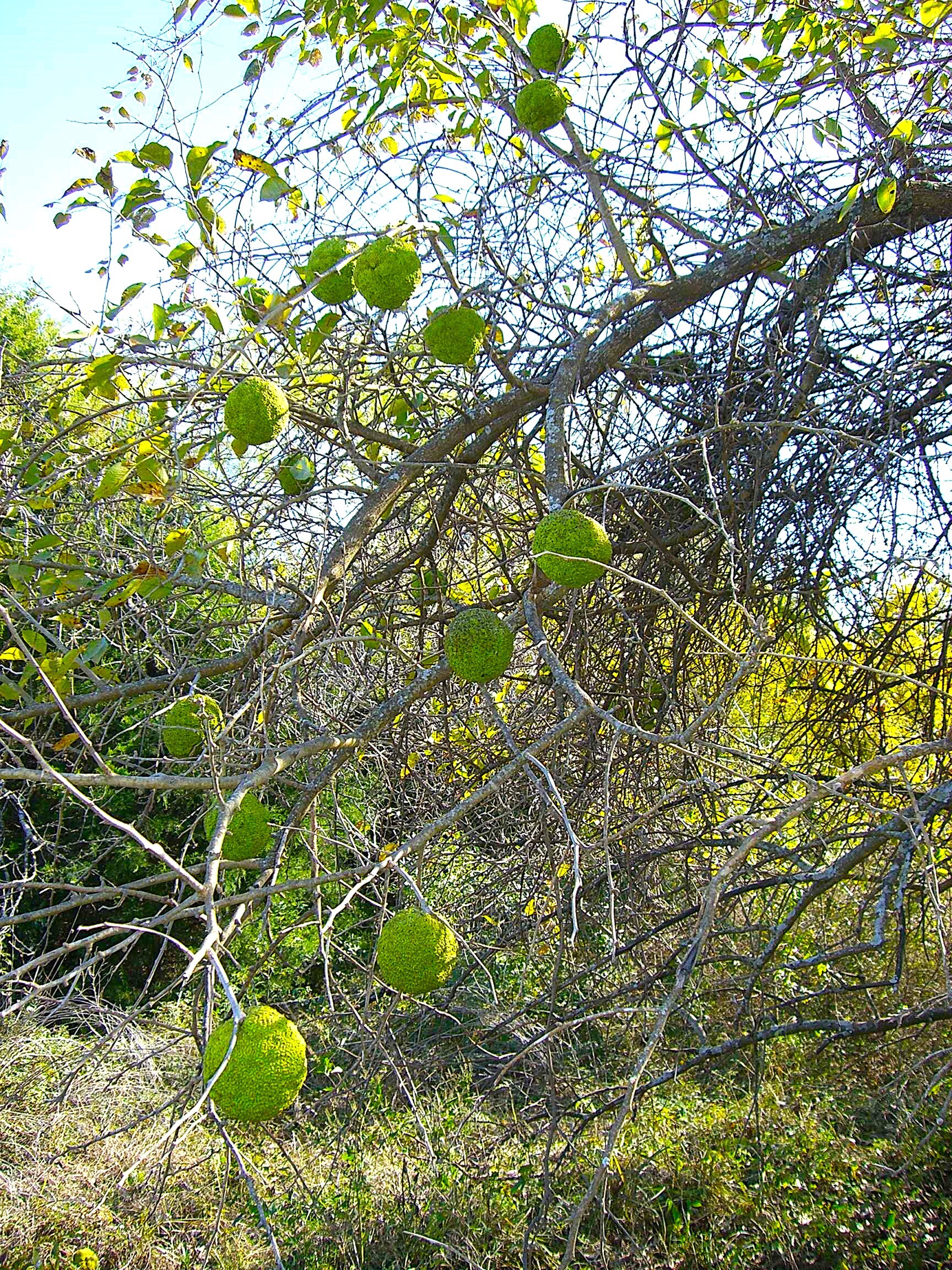
Naturally, I was somewhat curious to know what sort of wood ‘boat ark’ was. But all I could learn was it was a timber peculiar to the State of Texas, was tough as a whalebone, wouldn’t wear out, and for wheels was invaluable, as it didn’t shrink or swell, thus saving all tire troubles, which in a hot, dry climate such as that of the Southwest were a cause of much sorrow to users of wheeled vehicles.
Fifteen years later I was traveling through central Texas and noticed a grove of odd-looking trees along the track. They were different from any trees I recalled seeing in that region and I asked my seatmate, an old Texas cowman, what they were. “Them’s boat arks,” was his reply, “the best wood for wagons that’s ever growed in any man’s land.”
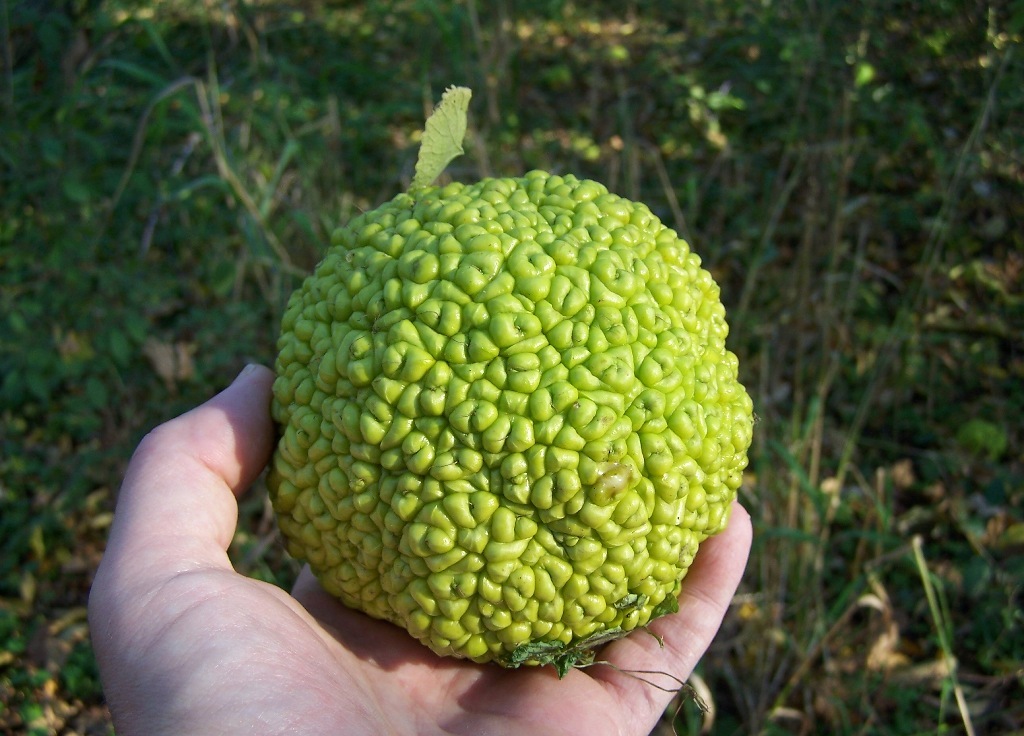
I recalled those early Hashknife days in Arizona and the constant allusions to this wonderful wood. Again I prosecuted my inquiries as to the tree which produced this mysterious timber, but to no avail. It was simply boat ark and nothing more. Some years later I told a forester friend of the incident of the chuck wagon wheel and the old cook’s longing for a boat ark wheel. “What’s a boat ark?” was my instant inquiry. He laughed. “That’s a very interesting example of the way names are changed and manhandled until their identity is almost wholly lost,” he replied. “The wood is from the tree commonly called Osage Orange; it also has a French name, ‘bois d’ arc’ or bow wood. ‘Bois d’ arc’ in western Texas easily becomes anglicized or Texaseized into ‘boat ark,’ and there you are. The boat ark of your west Texas roundup cook was the Toxylon pomiferum of the botanist, the bois d’ arc of the early French voyager and explorers, and the Osage Orange of the Kansas pioneers, who used it as a hedge or fence for their fields.
“The earliest history we have of this tree,” he continued, “is found in the reports of the Lewis and Clark expeditions, which in 1804-5 found it in use by the Osage and other Indian tribes west of the Mississippi. The Indians used it for war clubs and especially valued it for bow wood, it being extremely strong and pliable, with great spring or resiliency, capable of receiving a very high polish. The Lewis and Clark expedition sent back seeds of the tree to a Philadelphia seedsman who planted them and had no trouble in raising many splendid specimens of the tree.
“Bradbury in his story of his travels in the West states that the bows were highly valued by the Osages, a horse and blanket being the usual price for a good specimen.”
The name comes from a Greek word, Toxon – a bow – and the name Osage Orange was unquestionably received from the peculiar character of the fruit and the fact that the Osage Indians used the wood for the above purposes. The tree is native only in the Southwest, particularly Texas, Oklahoma, and some parts of Arkansas, altho it can be raised from seeds or nursery stock in almost any part of the United States. It’s use for wagon building purposes is, however, declining owing to its scarcity.
The old cook’s aspersions upon hickory when compared with his precious “boat ark” were not wholly justified. As a material for wagon wheels, the most valuable quality of bois ‘d arc is its non-shrinking qualities, together with its durability under hard wear. Its chief weakness is its extreme brashness or brittleness, its breaking strength being far below hickory or oak, more than all, its scarcity makes its general use impracticable. Its use in the early days of west Texas was largely a matter of necessity, it being about the only local wood suitable for wagon wheels and running gears.
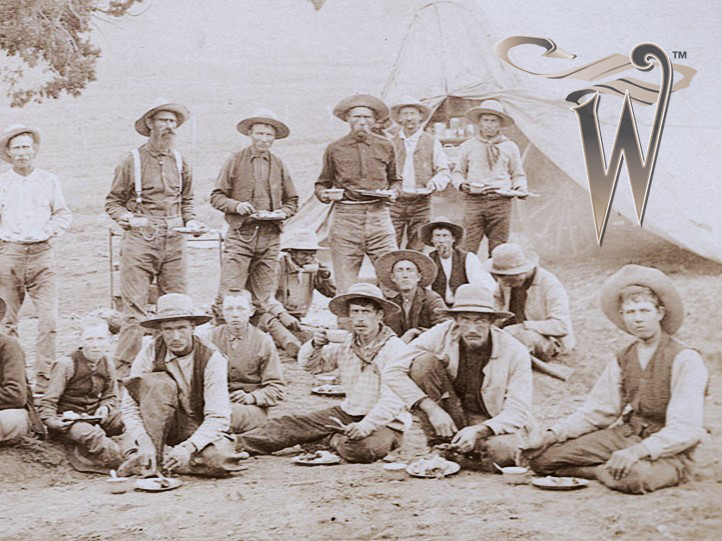
Cowboys in camp image Courtesy Wheels That Won The West® Archives.
The early pioneers on the Kansas prairies found in it a very handy fencing material, cheap and with little cost for upkeep. Its use for this purpose, as with the wagon wheels was, however, just a matter of pioneer necessity. Hedges of Osage orange take up no small amount of the farmer’s valuable land, shadow his crops and deprive them of sunlight as well as rob the land of a goodly part of its fertility.
The story above is a reminder of what can be found through ceaseless searching and how these missions help put the pieces of our past back together. As it turns out, throughout his life, whether in military service, ranching, writing, or even in his two-plus-decades of work in the United States Forest Service, Will C. Barnes is tied to a world of America's western history. According to the National Museum of Forest Service History, while he worked with the Forest Service, he was also responsible for helping round up the last of the Texas Longhorn cattle, ultimately saving the breed from extinction.
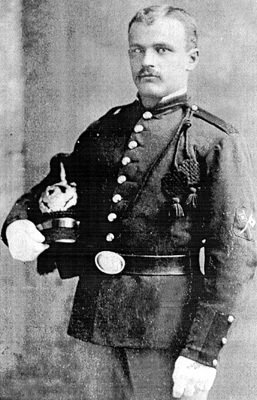
Will Croft Barnes image
It’s always interesting to see how much of the Old West and that era of transportation history can be uncovered. As of this posting date, here again is an article unknown by modern search engines and AI– although I’m sure it’s soon to be copied from our post. More important, though, is the additional background that can now be added to what’s known of the famed Aztec Land & Cattle Company and the Hashknife Outfit... not to mention the value of bois ‘d arc to those who used and abused wagons in some of the toughest terrain scattered throughout the American West. WTWTW
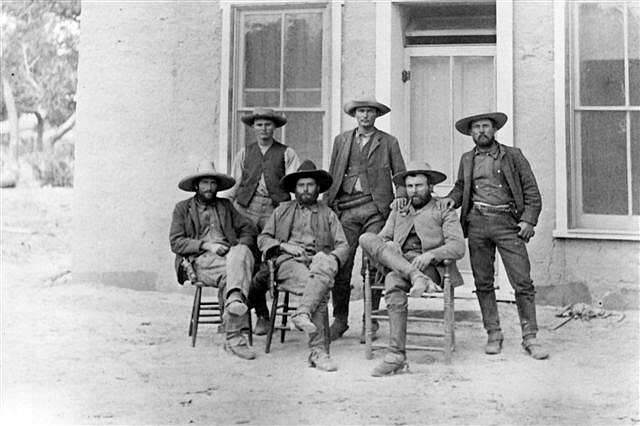
Cowboys from the Hashknife Outfit. Image Courtesy David Grasse and 'The Territorial Troupers' Facebook page.
Internet searches are full of details and great reading related to the Aztec and Hashknife stories. Several websites with interesting overviews on this history include...
https://azteclandco.com/about/
https://holbrookazmuseum.org/home/memories/hashknife-posse/
https://www.legendsofamerica.com/az-hashknife/
Have a GREAT week!
David
Ps. 20:7